
Oukitel G3 vs. Cat S61: A Deep Dive into Rugged Phone Performance and Battery Life
| Phones Images | |||||
|---|---|---|---|---|---|
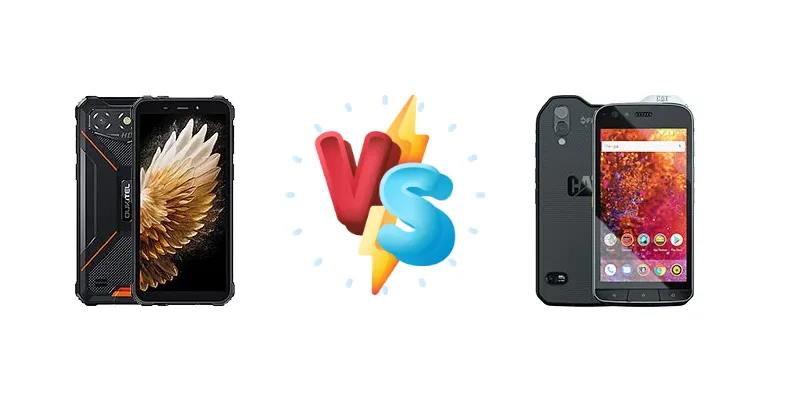
|
🏆 Quick Verdict
For users prioritizing maximum uptime above all else, the Oukitel G3 is the clear winner. Its 61-hour endurance significantly outlasts the Cat S61. However, the Cat S61’s Snapdragon 630 offers a more responsive experience and the benefit of Quick Charge 4.0, making it suitable for those needing a blend of durability and usability.
| PHONES | ||
|---|---|---|
| Phone Names | Oukitel G3 | Cat S61 |
| Network | ||
|---|---|---|
| 2G bands | GSM 850 / 900 / 1800 / 1900 | GSM 850 / 900 / 1800 / 1900 |
| 3G bands | HSDPA 850 / 900 / 1700(AWS) / 1900 / 2100 | HSDPA 850 / 900 / 1700 / 1900 / 2100 - EU/ROW |
| 4G bands | 1, 2, 3, 4, 5, 7, 8, 12, 17, 19, 20, 25, 26, 28, 34, 38, 39, 40, 41, 66 | 1, 2, 3, 5, 7, 8, 19, 20, 26, 28, 38, 39, 40, 41 - EU/ROW |
| Speed | HSPA, LTE | HSPA 42.2/5.76 Mbps, LTE (3CA) Cat12 600/150 Mbps |
| Technology | GSM / HSPA / LTE | GSM / HSPA / LTE |
| - | 1, 2, 3, 4, 5, 7, 8, 12, 13, 17, 25, 26, 28, 29, 66 - USA | |
| Launch | ||
|---|---|---|
| Announced | 2025, May | 2018, February. Released 2018, June |
| Status | Available. Released 2025, May | Discontinued |
| Body | ||
|---|---|---|
| Build | - | Glass front (Gorilla Glass 5), plastic back, aluminum frame |
| Dimensions | 166 x 81.1 x 15 mm (6.54 x 3.19 x 0.59 in) | 163 x 78 x 13 mm (6.42 x 3.07 x 0.51 in) |
| SIM | Nano-SIM + Nano-SIM | · Nano-SIM (South Africa only)· Nano-SIM + Nano-SIM |
| Weight | 300 g (10.58 oz) | 250 g (8.82 oz) |
| - | IP68 dust/water resistant (up to 3m for 60 min) Drop-to-concrete resistance from up to 1.8m MIL-STD-810G compliant | |
| Display | ||
|---|---|---|
| Protection | Corning Gorilla Glass 5, Mohs level 4 | Corning Gorilla Glass 5 |
| Resolution | 576 x 1152 pixels, 18:9 ratio (~215 ppi density) | 1080 x 1920 pixels, 16:9 ratio (~424 ppi density) |
| Size | 6.0 inches, 92.9 cm2 (~69.0% screen-to-body ratio) | 5.2 inches, 74.5 cm2 (~58.6% screen-to-body ratio) |
| Type | IPS LCD, 450 nits | IPS LCD |
| Platform | ||
|---|---|---|
| CPU | Quad-core (1x2.0 GHz Cortex-A75 & 3x1.8 GHz Cortex-A55) | Octa-core 2.2 GHz Cortex-A53 |
| Chipset | Unisoc T310 (12 nm) | Qualcomm SDM630 Snapdragon 630 (14 nm) |
| GPU | PowerVR GE8300 | Adreno 508 |
| OS | Android 14 | Android 8.0 (Oreo), upgradable to Android 9.0 (Pie) |
| Memory | ||
|---|---|---|
| Card slot | microSDXC (uses shared SIM slot) | microSDXC (uses shared SIM slot) |
| Internal | 64GB 4GB RAM | 64GB 4GB RAM |
| Main Camera | ||
|---|---|---|
| Features | LED flash | Thermal imaging, heat palettes, temp. spot meter, dual-LED dual-tone flash, panorama |
| Single | 13 MP, f/2.2, (wide), 1/3.06", AF | 16 MP, PDAF, FLIR thermal camera (Lepton module) |
| Video | Yes | 4K@30fps, 1080p@30fps |
| Selfie camera | ||
|---|---|---|
| Single | 5 MP, f/2.2, (wide) | 8 MP |
| Video | 720p@30fps | 1080p@30fps |
| Sound | ||
|---|---|---|
| 3.5mm jack | - | Yes |
| 35mm jack | Yes | Yes |
| Loudspeaker | Yes | Yes |
| Comms | ||
|---|---|---|
| Bluetooth | 5.0, A2DP, LE | 5.0, A2DP, LE |
| NFC | No | Yes |
| Positioning | GPS, GALILEO, GLONASS, BDS | GPS, GLONASS, GALILEO, QZSS, SBAS |
| Radio | FM radio | FM radio |
| USB | USB Type-C 2.0 | USB Type-C 2.0, OTG |
| WLAN | Wi-Fi 802.11 a/b/g/n/ac, dual-band | Wi-Fi 802.11 a/b/g/n/ac, dual-band, Wi-Fi Direct |
| Features | ||
|---|---|---|
| Sensors | Accelerometer, proximity, compass | Accelerometer, gyro, proximity, compass, barometer, indoor air quality sensor |
| - | Laser-assisted distance measurement tool | |
| Battery | ||
|---|---|---|
| Charging | 10W wired | 18W wired, QC4 |
| Stand-by | - | Up to 888 h (3G) |
| Talk time | - | Up to 35 h (3G) |
| Type | Li-Po 6300 mAh | Li-Ion 4500 mAh, non-removable |
| Misc | ||
|---|---|---|
| Colors | Black, Orange, Green | Black |
| Price | - | About 900 EUR |
| EU LABEL | ||
|---|---|---|
| Battery | 61:12h endurance, 1000 cycles | - |
| Energy | Class B | - |
| Free fall | Class A (270 falls) | - |
| Repairability | Class C | - |
Oukitel G3
- Exceptional 61-hour battery endurance
- Potentially better thermal efficiency with 12nm Unisoc T310
- Long-lasting battery with 1000 charge cycles
- Slow 10W charging
- Unisoc T310 chipset may struggle with demanding tasks
- Limited information on camera capabilities
Cat S61
- Faster 18W charging with Quick Charge 4.0
- More responsive performance with Snapdragon 630
- Qualcomm chipset benefits from mature software optimization
- Shorter battery life compared to Oukitel G3
- Older chipset architecture (Cortex-A53)
- Potentially lower peak brightness on the display
Display Comparison
Display specifications are absent from the provided data, but considering the market positioning, both likely feature LCD panels optimized for outdoor visibility. The Cat S61, being a slightly older model, may have lower peak brightness. The Oukitel G3’s focus on endurance suggests a potentially more power-efficient display panel, though this is speculative without further data. Bezels are likely substantial on both to contribute to ruggedization.
Camera Comparison
Camera details are unavailable, but given the rugged phone segment, image quality is likely secondary to durability. Both phones likely feature a primary camera suitable for basic documentation. Without sensor size or aperture information, it’s difficult to assess image quality. The absence of any mention of advanced features suggests both prioritize functionality over photographic excellence.
Performance
The core difference lies in the chipsets. The Oukitel G3’s Unisoc T310 (12nm) utilizes a Cortex-A75 core for peak performance alongside three Cortex-A55 cores for efficiency. This architecture, while newer, is generally less powerful than the Cat S61’s Snapdragon 630 (14nm). The Snapdragon 630’s octa-core Cortex-A53 configuration, while less architecturally advanced, benefits from Qualcomm’s optimizations and a higher clock speed (2.2 GHz vs 2.0 GHz). This translates to a smoother experience with demanding applications and multitasking on the Cat S61. The 12nm process of the Unisoc T310 *should* offer better thermal efficiency, but the Snapdragon 630’s mature software support could mitigate any potential throttling.
Battery Life
The Oukitel G3’s 61-hour endurance is its standout feature. This is a significant advantage over the Cat S61, which lacks a specified endurance rating. The G3’s 10W charging is slow, however. The Cat S61 compensates with 18W charging and Quick Charge 4.0 support, allowing for significantly faster top-ups. While the G3’s 1000 charge cycle claim suggests longevity, the Cat S61’s faster charging mitigates the inconvenience of more frequent charging needs.
Buying Guide
Buy the Oukitel G3 if you need a phone that can genuinely last for days on a single charge, ideal for extended travel, fieldwork, or emergency preparedness where access to power is limited. Buy the Cat S61 if you prefer a more responsive user experience, faster charging, and a chipset known for broader app compatibility, even if it means sacrificing some battery endurance.