
Oukitel C61 vs Ulefone Note 12P: A Deep Dive into Budget Smartphone Performance
| Phones Images | |||||
|---|---|---|---|---|---|
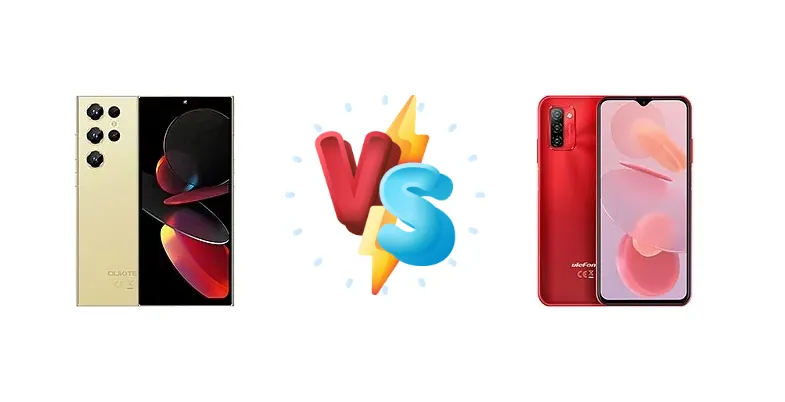
|
🏆 Quick Verdict
For the average user prioritizing responsiveness and future-proofing, the Oukitel C61 is the better choice. Its Unisoc T615 chipset, built on a 12nm process, offers significantly more processing power than the Ulefone Note 12P’s older 28nm Unisoc SC9863A. While both offer 10W charging, the C61’s superior performance justifies its slight price premium.
| PHONES | ||
|---|---|---|
| Phone Names | Oukitel C61 | Ulefone Note 12P |
| Network | ||
|---|---|---|
| 2G bands | GSM 850 / 900 / 1800 / 1900 | GSM 850 / 900 / 1800 / 1900 |
| 3G bands | HSDPA 850 / 900 / 1700(AWS) / 1900 / 2100 | HSDPA 850 / 900 / 1700(AWS) / 1900 / 2100 |
| 4G bands | 1, 2, 3, 4, 5, 7, 8, 12, 17, 18, 19, 20, 25, 26, 28, 34, 38, 39, 40, 41, 66 | 1, 2, 3, 4, 5, 7, 8, 12, 17, 19, 20 |
| Speed | HSPA, LTE | HSPA, LTE |
| Technology | GSM / HSPA / LTE | GSM / HSPA / LTE |
| Launch | ||
|---|---|---|
| Announced | 2025, March | 2021, October 25 |
| Status | Available. Released 2025, May | Available. Released 2021, October 25 |
| Body | ||
|---|---|---|
| Dimensions | 170.7 x 79.6 x 9.5 mm (6.72 x 3.13 x 0.37 in) | 173.6 x 79.1 x 10.2 mm (6.83 x 3.11 x 0.40 in) |
| SIM | Nano-SIM + Nano-SIM | Nano-SIM + Nano-SIM |
| Weight | 216 g (7.62 oz) | 237 g (8.36 oz) |
| Display | ||
|---|---|---|
| Protection | Corning Gorilla Glass, Mohs level 5 | - |
| Resolution | 720 x 1640 pixels (~260 ppi density) | 720 x 1640 pixels (~263 ppi density) |
| Size | 6.88 inches, 112.4 cm2 (~82.7% screen-to-body ratio) | 6.82 inches, 110.5 cm2 (~80.4% screen-to-body ratio) |
| Type | IPS LCD, 90Hz, 450 nits | IPS LCD |
| Platform | ||
|---|---|---|
| CPU | Octa-core (2x1.8 GHz Cortex-A75 & 6x1.6 GHz Cortex-A55) | Octa-core (4x1.6 GHz Cortex-A55 & 4x1.2 GHz Cortex-A55) |
| Chipset | Unisoc T615 (12 nm) | Unisoc SC9863A (28 nm) |
| GPU | Mali-G57 MP1 | IMG8322 |
| OS | Android 15 | Android 11 |
| Memory | ||
|---|---|---|
| Card slot | microSDXC (uses shared SIM slot) | microSDXC (dedicated slot) |
| Internal | 128GB 4GB RAM | 64GB 4GB RAM |
| - | eMMC 5.1 | |
| Main Camera | ||
|---|---|---|
| Features | LED flash, HDR, panorama | LED flash, HDR, panorama |
| Single | 13 MP, f/2.2, (wide), 1/3.06", AF | 8 MP |
| Triple | - | 13 MP, (wide), AF 2 MP (macro) Auxiliary lens |
| Video | 1080p@30fps | 1080p@30fps |
| Selfie camera | ||
|---|---|---|
| Features | - | HDR |
| Single | 5 MP, f/2.2, (wide), 1/5.0" | 8 MP |
| Video | 720p@30fps | 720p@30fps |
| Sound | ||
|---|---|---|
| 3.5mm jack | - | Yes |
| 35mm jack | No | Yes |
| Loudspeaker | Yes | Yes |
| Comms | ||
|---|---|---|
| Bluetooth | 5.0, A2DP, LE | 4.2, A2DP |
| NFC | Yes | No |
| Positioning | GPS, GALILEO, GLONASS, BDS | GPS, GLONASS, BDS |
| Radio | FM radio | Stereo FM radio, RDS, recording |
| USB | USB Type-C | USB Type-C 2.0 |
| WLAN | Wi-Fi 802.11 a/b/g/n/ac, dual-band | Wi-Fi 802.11 b/g/n |
| Features | ||
|---|---|---|
| Sensors | Fingerprint (side-mounted), accelerometer, compass | Fingerprint (side-mounted), accelerometer, proximity |
| Battery | ||
|---|---|---|
| Charging | 10W wired | 10W wired |
| Type | Li-Po 5150 mAh | Li-Po 7700 mAh |
| Misc | ||
|---|---|---|
| Colors | Gold, Purple, Blue, Black | Black, Red, Blue |
| Price | € 89.99 / $ 129.99 / £ 82.99 | About 130 EUR |
| EU LABEL | ||
|---|---|---|
| Battery | 64:19h endurance, 1000 cycles | - |
| Energy | Class A | - |
| Free fall | Class B (180 falls) | - |
| Repairability | Class B | - |
Oukitel C61
- Significantly more powerful Unisoc T615 chipset
- Excellent battery endurance (64:19h)
- Long battery lifespan (1000 charge cycles)
- 10W charging is slow
- Display specifications are unknown and likely basic
Ulefone Note 12P
- Extremely affordable price point
- Basic smartphone functionality
- Likely lightweight design
- Weak Unisoc SC9863A chipset
- Poor performance for anything beyond basic tasks
- Likely shorter battery life
Display Comparison
Neither Oukitel nor Ulefone provide display specifications beyond the basic presence of a screen. Given the price point, expect both to utilize LCD panels with modest resolutions (likely 720p+). The absence of details suggests neither phone will excel in this area. Bezels are likely to be substantial on both devices, and color accuracy will be basic. Without further data, a direct comparison is impossible, but the display is unlikely to be a deciding factor for most buyers.
Camera Comparison
Both phones likely feature basic camera setups geared towards casual photography. Without detailed sensor information, it’s difficult to make a meaningful comparison. It’s safe to assume both will struggle in low-light conditions. The presence of a 2MP macro camera on either device is largely marketing fluff; image quality will be poor. The primary sensor size and aperture are the key determinants of image quality, and this information is currently unavailable. However, given the chipset disparity, the C61 likely has a more capable image signal processor (ISP) for processing images.
Performance
The core difference between these two phones lies in their chipsets. The Oukitel C61’s Unisoc T615, fabricated on a 12nm process, features an octa-core configuration with two Cortex-A75 cores clocked at 1.8 GHz and six Cortex-A55 cores at 1.6 GHz. This architecture provides a significant performance boost over the Ulefone Note 12P’s Unisoc SC9863A. The SC9863A, built on a much older 28nm process, utilizes four Cortex-A55 cores at 1.6 GHz and four at 1.2 GHz. The larger process node and slower, less efficient cores of the SC9863A will result in noticeably slower app loading times, less responsive multitasking, and a generally laggy user experience. The C61 will handle demanding apps and light gaming far better.
Battery Life
The Oukitel C61 boasts a remarkable 64:19h endurance rating, suggesting excellent battery life. While the exact mAh capacity isn’t specified, this endurance score, coupled with 1000 charge cycles, indicates a large battery and efficient power management. The Ulefone Note 12P’s battery capacity is unknown, but its less efficient chipset will likely result in shorter runtimes. Both phones utilize 10W wired charging, meaning 0-100% charge times will be relatively slow – likely exceeding 3 hours. The C61’s superior endurance will be a significant benefit for users who rely heavily on their phones throughout the day.
Buying Guide
Buy the Oukitel C61 if you need a phone capable of handling everyday tasks smoothly, including social media, light gaming, and video streaming. Its more powerful processor will provide a more fluid user experience and better longevity. Buy the Ulefone Note 12P if your primary needs are basic communication – calls, texts, and very light web browsing – and you are on an extremely tight budget. The Note 12P represents the absolute minimum viable smartphone experience.