
Oukitel C59 vs. Ulefone Power Armor 13: A Deep Dive into Rugged Endurance and Performance
| Phones Images | |||||
|---|---|---|---|---|---|
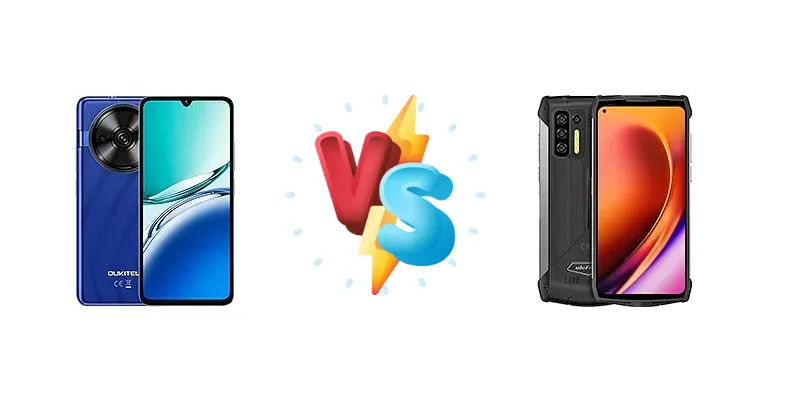
|
🏆 Quick Verdict
For the average user prioritizing longevity and minimizing charging frequency, the Oukitel C59 is the clear winner. Its exceptional 84:47h battery endurance significantly outpaces the Ulefone Power Armor 13’s 296h rating. However, users demanding more processing power for gaming or demanding applications will find the Ulefone Power Armor 13 a more suitable choice.
| PHONES | ||
|---|---|---|
| Phone Names | Oukitel C59 | Ulefone Power Armor 13 |
| Network | ||
|---|---|---|
| 2G bands | GSM 850 / 900 / 1800 / 1900 | GSM 850 / 900 / 1800 / 1900 |
| 3G bands | HSDPA 850 / 900 / 1700(AWS) / 1900 / 2100 | HSDPA 850 / 900 / 1700(AWS) / 1900 / 2100 |
| 4G bands | 1, 2, 3, 4, 5, 7, 8, 12, 17, 18, 19, 20, 25, 26, 28, 34, 38, 39, 40, 41, 66 | 1, 2, 3, 4, 5, 7, 8, 12, 13, 17, 18, 19, 20, 25, 26, 28, 38, 40, 66 |
| Speed | HSPA, LTE | HSPA 42.2/11.5 Mbps, LTE Cat12 600/150 Mbps |
| Technology | GSM / HSPA / LTE | GSM / HSPA / LTE |
| Launch | ||
|---|---|---|
| Announced | 2025, April | 2021, July 22 |
| Status | Available. Released 2025, May 05 | Available. Released 2021, July 26 |
| Body | ||
|---|---|---|
| Dimensions | 171.2 x 77.8 x 13.4 mm (6.74 x 3.06 x 0.53 in) | 183.7 x 85.4 x 20.8 mm (7.23 x 3.36 x 0.82 in) |
| SIM | Nano-SIM + Nano-SIM | Nano-SIM + Nano-SIM |
| Weight | 293 g (10.34 oz) | 492 g (1.08 lb) |
| - | IP68 dust/water resistant (up to 1.5m for 30 min) Drop-to-concrete resistance from up to 1.2m MIL-STD-810G compliant | |
| Display | ||
|---|---|---|
| Protection | HKC Glass, Mohs level 5 | Corning Gorilla Glass 3 |
| Resolution | 720 x 1640 pixels (~260 ppi density) | 1080 x 2400 pixels, 20:9 ratio (~386 ppi density) |
| Size | 6.88 inches, 112.4 cm2 (~84.4% screen-to-body ratio) | 6.81 inches, 112.0 cm2 (~71.4% screen-to-body ratio) |
| Type | IPS LCD, 90Hz, 450 nits | IPS LCD |
| Platform | ||
|---|---|---|
| CPU | Octa-core (2x1.6 GHz Cortex-A75 & 6x1.6 GHz Cortex-A55) | Octa-core (2x2.05 GHz Cortex-A76 & 6x2.0 GHz Cortex-A55) |
| Chipset | Unisoc T606 (12 nm) | Mediatek MT6785V/CD Helio G95 (12 nm) |
| GPU | Mali-G57 MP1 | Mali-G76 MC4 |
| OS | Android 15 | Android 11 |
| Memory | ||
|---|---|---|
| Card slot | microSDXC (uses shared SIM slot) | microSDXC (uses shared SIM slot) |
| Internal | 256GB 8GB RAM | 256GB 8GB RAM |
| Main Camera | ||
|---|---|---|
| Features | LED flash, HDR, panorama | Quad-LED flash, HDR, panorama |
| Penta | - | 48 MP, f/1.8, 26mm (wide), 1/2.0", 0.8µm, PDAF 8 MP, f/2.2, (ultrawide) 2 MP (macro) Auxiliary lens |
| Single | 13 MP, f/2.2, (wide), 1/3.06", AF | - |
| Video | 1080p@30fps | 4K@30fps, 1080p@30fps |
| Selfie camera | ||
|---|---|---|
| Features | - | HDR, panorama |
| Single | 5 MP, f/2.2, (wide), 1/5.0" | 16 MP, f/2.2 |
| Video | 720p@30fps | 1080p@30fps |
| Sound | ||
|---|---|---|
| 3.5mm jack | - | Yes |
| 35mm jack | Yes | Yes |
| Loudspeaker | Yes | Yes |
| Comms | ||
|---|---|---|
| Bluetooth | 5.0, A2DP, LE | 5.0, A2DP, LE |
| NFC | Yes | Yes |
| Positioning | GPS, GALILEO, GLONASS, BDS | GPS, GLONASS, GALILEO, BDS |
| Radio | FM radio | FM radio, RDS, recording |
| USB | USB Type-C, OTG | - |
| WLAN | Wi-Fi 802.11 a/b/g/n/ac, dual-band | Wi-Fi 802.11 a/b/g/n/ac, dual-band |
| Features | ||
|---|---|---|
| Sensors | Fingerprint (side-mounted), accelerometer, compass | Fingerprint (side-mounted), accelerometer, gyro, proximity, compass, baroceptor, coulombmeter |
| - | Infrared distance measure (error range: 1~20m, ±10mm; 20~40m, ±25mm) | |
| Battery | ||
|---|---|---|
| Charging | 18W wired | 33W wired 15W wireless 5W reverse wireless |
| Type | Li-Po 10000 mAh | Li-Po 13200 mAh |
| Misc | ||
|---|---|---|
| Colors | Green, Purple, Blue, Grey | Black |
| Price | - | About 300 EUR |
| Tests | ||
|---|---|---|
| Battery life | - | Endurance rating 296h |
| Camera | - | Photo / Video |
| Display | - | Contrast ratio: 1306:1 (nominal) |
| Loudspeaker | - | -28.3 LUFS (Average) |
| Performance | - | AnTuTu: 294194 (v8), 351678 (v9) GeekBench: 1610 (v5.1) GFXBench: 18fps (ES 3.1 onscreen) |
| EU LABEL | ||
|---|---|---|
| Battery | 84:47h endurance, 1200 cycles | - |
| Energy | Class B | - |
| Free fall | Class B (180 falls) | - |
| Repairability | Class B | - |
Oukitel C59
- Unmatched battery life (84:47h endurance)
- Exceptional battery longevity (1200 charge cycles)
- More affordable price point (likely)
- Less powerful processor for demanding tasks
- Display specifications are unknown and likely basic
Ulefone Power Armor 13
- Faster and more responsive performance (Helio G95)
- Versatile charging options (33W wired, 15W wireless)
- Brighter display (401 nits)
- Significantly shorter battery life (296h endurance)
- Higher price point (likely)
Display Comparison
The Ulefone Power Armor 13 offers a measured peak brightness of 401 nits and a 1306:1 contrast ratio, providing a reasonably viewable experience, though not exceptional. The Oukitel C59’s display specifications are not provided, but given its price point, it likely features a lower brightness and contrast ratio. Both share the same contrast ratio specification, suggesting similar panel characteristics. The Ulefone’s brightness is adequate for outdoor visibility in moderate conditions, while the C59 may struggle in direct sunlight.
Camera Comparison
Both devices list 'Photo / Video' capabilities, but lack specific details regarding sensor size, aperture, or image processing. This suggests a focus on basic functionality rather than photographic excellence. Without further information, it’s difficult to assess camera quality. The absence of details implies neither phone will compete with dedicated camera phones. The Ulefone Power Armor 13, given its higher overall positioning, *may* have a slightly more capable camera system, but this is speculative.
Performance
The Ulefone Power Armor 13’s Mediatek Helio G95 (12nm) chipset, featuring a 2x2.05 GHz Cortex-A76 & 6x2.0 GHz Cortex-A55 CPU, represents a significant performance leap over the Oukitel C59’s Unisoc T606 (12nm) with its 2x1.6 GHz Cortex-A75 & 6x1.6 GHz Cortex-A55 configuration. The G95’s Cortex-A76 cores offer superior single-core performance, translating to snappier app launches and smoother multitasking. While both are built on a 12nm process, the G95’s architecture is more modern and efficient, making it better suited for gaming and resource-intensive tasks. The C59 is adequate for basic tasks, but will show its limitations with demanding applications.
Battery Life
The Oukitel C59’s standout feature is its incredible 84:47h endurance rating, coupled with a claimed 1200 charge cycles, indicating exceptional longevity. This dwarfs the Ulefone Power Armor 13’s 296h endurance. While the Ulefone compensates with faster charging – 33W wired, 15W wireless, and 5W reverse wireless – the Oukitel offers 18W wired charging. The Ulefone’s charging versatility is a clear advantage, but the C59’s sheer battery capacity minimizes the need for frequent top-ups. The C59’s 1200 cycle claim suggests a longer lifespan before battery degradation.
Buying Guide
Buy the Oukitel C59 if you need a phone that can genuinely last for days on a single charge, prioritizing practicality over raw performance. This is ideal for travelers, outdoor workers, or anyone who frequently finds themselves away from power outlets. Buy the Ulefone Power Armor 13 if you prefer a more responsive user experience, enjoy mobile gaming, and value faster charging speeds, even if it means sacrificing some battery endurance.