
Infinix Note 30 Pro vs Oukitel C35: A Detailed Comparison
| Phones Images | |||||
|---|---|---|---|---|---|
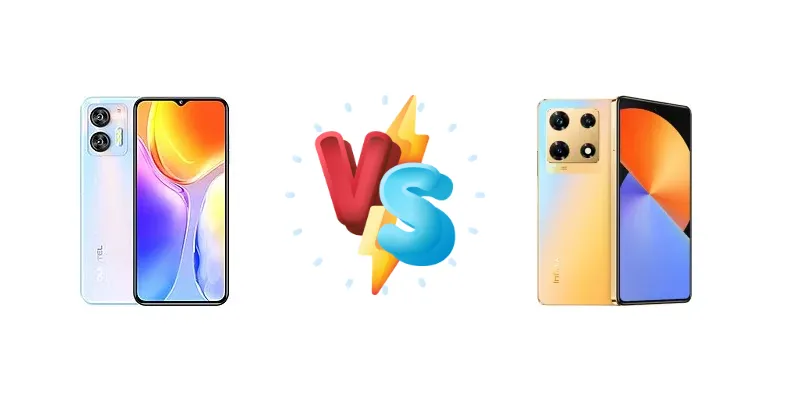
|
🏆 Quick Verdict
For most users, the Infinix Note 30 Pro is the superior choice. Its Mediatek Helio G99 chipset offers a noticeable performance boost over the Oukitel C35’s Unisoc Tiger T616, and the 68W charging is a game-changer, significantly reducing downtime. While the C35 is cheaper, the Note 30 Pro’s advantages justify the price difference.
| PHONES | ||
|---|---|---|
| Phone Names | Oukitel C35 | Infinix Note 30 Pro |
| Network | ||
|---|---|---|
| 2G bands | GSM 850 / 900 / 1800 / 1900 | GSM 850 / 900 / 1800 / 1900 |
| 3G bands | HSDPA 850 / 1700(AWS) / 1900 / 2100 | HSDPA 850 / 900 / 1700(AWS) / 1900 / 2100 |
| 4G bands | 1, 2, 3, 4, 5, 7, 8, 12, 17, 19, 20, 25, 26, 28, 66 | 1, 2, 3, 4, 5, 7, 8, 12, 17, 20, 28, 38, 40, 41, 66 |
| Speed | HSPA, LTE | HSPA, LTE |
| Technology | GSM / HSPA / LTE | GSM / HSPA / LTE |
| Launch | ||
|---|---|---|
| Announced | 2023, August | 2023, May 22 |
| Status | Available. Released 2023, August | Available. Released 2023, May 22 |
| Body | ||
|---|---|---|
| Build | - | Glass front, plastic frame, glass back |
| Dimensions | 163.8 x 75.4 x 9.2 mm (6.45 x 2.97 x 0.36 in) | 162.7 x 76 x 8.2 mm (6.41 x 2.99 x 0.32 in) |
| SIM | Nano-SIM + Nano-SIM | Nano-SIM + Nano-SIM |
| Weight | 199 g (7.02 oz) | 203 g (7.16 oz) |
| - | IP53 | |
| Display | ||
|---|---|---|
| Resolution | 720 x 1600 pixels, 20:9 ratio (~267 ppi density) | 1080 x 2400 pixels, 20:9 ratio (~395 ppi density) |
| Size | 6.56 inches, 103.9 cm2 (~84.1% screen-to-body ratio) | 6.67 inches, 107.4 cm2 (~86.9% screen-to-body ratio) |
| Type | IPS LCD, 400 nits | AMOLED, 1B colors, 120Hz, 900 nits (peak) |
| - | * the display diagonal size and resolution is unconfirmed | |
| Platform | ||
|---|---|---|
| CPU | Octa-core (2x2.0 GHz Cortex-A75 & 6x1.8 GHz Cortex-A55) | Octa-core (2x2.2 GHz Cortex-A76 & 6x2.0 GHz Cortex-A55) |
| Chipset | Unisoc Tiger T616 (12 nm) | Mediatek Helio G99 (6 nm) |
| GPU | Mali-G57 MP1 | Mali-G57 MC2 |
| OS | Android 13 | Android 13, XOS 13 |
| Memory | ||
|---|---|---|
| Card slot | microSDXC (dedicated slot) | microSDXC (dedicated slot) |
| Internal | 256GB 12GB RAM | 256GB 8GB RAM |
| Main Camera | ||
|---|---|---|
| Dual | 50 MP, (wide), AF Secondary unspecified camera | - |
| Features | Dual-LED flash, panorama | Quad-LED flash, HDR, panorama |
| Triple | - | 108 MP, (wide), 1/1.67", PDAF 2 MP (macro) Auxiliary lens |
| Video | 1080p@30fps | 1440p@30fps, 1080p@30fps |
| Selfie camera | ||
|---|---|---|
| Features | - | LED flash, HDR |
| Single | 8 MP | 32 MP, f/2.0, (wide), 1/2.8" |
| Video | Yes | 1080p@30fps |
| Sound | ||
|---|---|---|
| 3.5mm jack | - | Yes |
| 35mm jack | Yes | Yes |
| Loudspeaker | Yes | Yes, with dual speakers |
| - | Sound by JBL 24-bit/192kHz audio | |
| Comms | ||
|---|---|---|
| Bluetooth | 5.1, A2DP, LE | Yes |
| NFC | No | Yes (market/region dependent) |
| Positioning | GPS, GLONASS, GALILEO, BDS | GPS |
| Radio | Unspecified | FM radio |
| USB | USB Type-C 2.0, OTG | USB Type-C 2.0, OTG |
| WLAN | Wi-Fi 802.11 a/b/g/n/ac, dual-band | Wi-Fi 802.11 a/b/g/n/ac, dual-band, Wi-Fi Direct |
| Features | ||
|---|---|---|
| Sensors | Fingerprint (side-mounted), accelerometer, proximity | Fingerprint (side-mounted), accelerometer, gyro, proximity, compass |
| Battery | ||
|---|---|---|
| Charging | 10W wired | 68W wired, PD3.0, 80% in 30 min 15W wireless Reverse wireless |
| Type | Li-Po 5150 mAh | 5000 mAh |
| Misc | ||
|---|---|---|
| Colors | Black, Green, Light Blue | Magic Black, Variable Gold |
| Models | - | X678B |
| Price | About 190 EUR | - |
Oukitel C35
- Lower price point makes it accessible.
- Potentially longer battery life due to less demanding chipset (depending on battery capacity).
- Simple and straightforward user experience.
- Significantly slower performance compared to the Note 30 Pro.
- Extremely slow 10W charging.
- Likely inferior camera quality.
Infinix Note 30 Pro
- Faster and more efficient Mediatek Helio G99 chipset.
- Ultra-fast 68W wired charging with wireless and reverse wireless options.
- Likely better camera performance.
- Higher price compared to the Oukitel C35.
- Potentially shorter battery life under heavy load (depending on battery capacity).
- May require more frequent software updates.
Display Comparison
Neither device’s display specifications are provided, so a direct comparison is limited. However, given the Note 30 Pro’s positioning, it likely features a higher resolution and potentially a higher refresh rate panel than the C35. The C35, being a more budget-oriented device, likely utilizes a standard 60Hz LCD. Color accuracy and peak brightness are also likely superior on the Note 30 Pro, enhancing the viewing experience.
Camera Comparison
Without detailed camera specifications, a precise comparison is difficult. However, the Note 30 Pro, being a more premium device, likely features a more capable main sensor and better image processing algorithms. The C35 likely relies on software enhancements to compensate for a less sophisticated camera system. The absence of OIS information for either device suggests both may struggle in low-light conditions without a stable hand or tripod. It's reasonable to assume the Note 30 Pro will deliver more detailed and dynamic range in most scenarios.
Performance
The core difference lies in the chipsets. The Infinix Note 30 Pro’s Mediatek Helio G99, built on a 6nm process, offers a significant advantage in both performance and efficiency over the Oukitel C35’s Unisoc Tiger T616 (12nm). The G99’s Cortex-A76 cores, clocked at 2.2 GHz, outperform the C35’s Cortex-A75 cores at 2.0 GHz. This translates to faster app loading times, smoother multitasking, and a better gaming experience on the Note 30 Pro. The 6nm process also means the G99 will generate less heat under load, reducing thermal throttling. While both have octa-core CPUs, the architectural improvements in the G99 are substantial.
Battery Life
The battery capacity isn’t specified for either device, but the charging capabilities are drastically different. The Infinix Note 30 Pro’s 68W wired charging, with claims of 80% charge in 30 minutes, is a massive advantage. It also supports 15W wireless charging and reverse wireless charging, adding to its convenience. The Oukitel C35’s 10W charging is comparatively slow, requiring significantly longer to fully charge the device. Even if the C35 has a slightly larger battery capacity, the Note 30 Pro’s faster charging will minimize downtime.
Buying Guide
Buy the Oukitel C35 if you need a basic, functional smartphone for essential tasks like calls, texts, and light social media use, and your budget is extremely limited. Buy the Infinix Note 30 Pro if you prioritize faster performance for gaming and multitasking, demand significantly quicker charging speeds, and appreciate the convenience of wireless charging and reverse wireless charging.