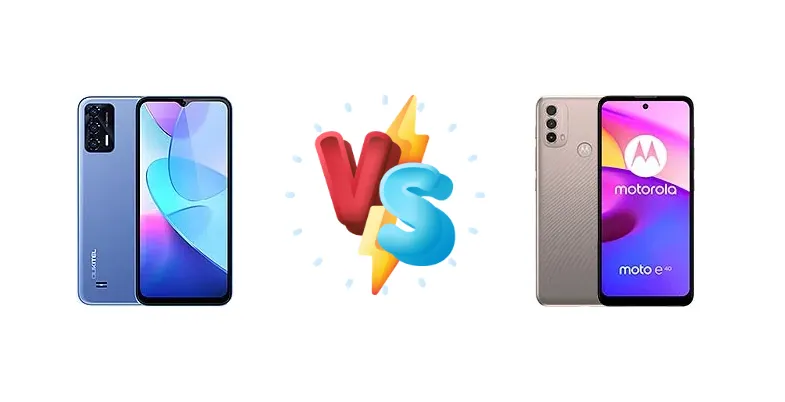
The Oukitel C31 and Motorola Moto E40 represent the ultra-budget end of the smartphone spectrum. While both aim to deliver essential functionality at a low price, they take different approaches to achieving this. The C31 relies on MediaTek’s Helio A22, while the Moto E40 opts for the Unisoc T700. This comparison will dissect the key differences to determine which device offers the best value for users prioritizing affordability.
🏆 Quick Verdict
For the average user seeking a slightly more responsive experience, the Motorola Moto E40 is the better choice. Its Unisoc T700, with its octa-core configuration, provides a noticeable performance uplift over the Oukitel C31’s quad-core Helio A22, despite the slightly lower clock speed. However, the C31 may appeal to those prioritizing absolute lowest cost.
| Network |
|---|
| 2G bands | GSM 850 / 900 / 1800 / 1900 | GSM 850 / 900 / 1800 / 1900 |
| 3G bands | HSDPA 850 / 900 / 2100 | HSDPA 850 / 900 / 1700(AWS) / 1900 / 2100 |
| 4G bands | LTE | 1, 2, 3, 4, 5, 7, 8, 19, 28, 40, 66 - Brazil |
| Speed | HSPA, LTE | HSPA 42.2/5.76 Mbps, LTE Cat4 150/50 Mbps |
| Technology | GSM / HSPA / LTE | GSM / HSPA / LTE |
| Launch |
|---|
| Announced | 2022, August | 2021, October 07 |
| Status | Available. Released 2022, August | Available. Released 2021, October 11 |
| Body |
|---|
| Build | - | Glass front, plastic frame, plastic back |
| Dimensions | 9.5 mm thickness | 165.1 x 75.7 x 9.1 mm (6.5 x 2.98 x 0.36 in) |
| SIM | Nano-SIM + Nano-SIM | · Nano-SIM· Nano-SIM + Nano-SIM |
| Weight | 207 g (7.30 oz) | 198 g (6.98 oz) |
| Display |
|---|
| Resolution | 720 x 1600 pixels, 20:9 ratio (~269 ppi density) | 720 x 1600 pixels, 20:9 ratio (~270 ppi density) |
| Size | 6.52 inches, 102.6 cm2 | 6.5 inches, 102.0 cm2 (~81.6% screen-to-body ratio) |
| Type | IPS LCD, 400 nits | IPS LCD, 90Hz |
| Platform |
|---|
| CPU | Quad-core 2.0 GHz Cortex-A53 | Octa-core 1.8 GHz |
| Chipset | Mediatek MT6761 Helio A22 (12 nm) | Unisoc T700 |
| GPU | PowerVR GE8320 | Mali G52 |
| OS | Android 12 | Android 11 |
| Memory |
|---|
| Card slot | microSDXC (dedicated slot) | microSDXC (dedicated slot) |
| Internal | 16GB 3GB RAM | 64GB 4GB RAM |
| | - | eMMC 5.1 |
| Main Camera |
|---|
| Features | LED flash | LED flash, HDR, panorama |
| Triple | 13 MP, (wide), AF
Other unspecified cameras | 48 MP, f/2.0, 26mm (wide), PDAF
2 MP (macro)
Auxiliary lens |
| Video | 1080p@30fps | 1080p@30fps |
| Selfie camera |
|---|
| Features | - | HDR |
| Single | 5 MP | 8 MP, f/2.0 |
| Video | Yes | 1080p@30fps |
| Sound |
|---|
| 3.5mm jack | - | Yes |
| 35mm jack | Yes | Yes |
| Loudspeaker | Yes | Yes |
| Comms |
|---|
| Bluetooth | Yes | 5.0, A2DP, LE |
| NFC | No | No |
| Positioning | GPS, GLONASS, GALILEO, BDS | GPS, GLONASS, GALILEO |
| Radio | Unspecified | FM radio |
| USB | USB Type-C 2.0 | USB Type-C 2.0 |
| WLAN | Yes | Wi-Fi 802.11 b/g/n |
| Features |
|---|
| Sensors | Fingerprint (rear-mounted); unspecified sensors | Fingerprint (rear-mounted), accelerometer, proximity |
| Battery |
|---|
| Charging | - | 10W wired |
| Type | Li-Po 5150 mAh | Li-Po 5000 mAh |
| Misc |
|---|
| Colors | Blue, Purple, Black | Carbon Gray, Pink Clay |
| Price | About 110 EUR | About 90 EUR |
Oukitel C31
- Potentially lower price point
- Functional for basic tasks
- May have larger battery capacity (inferred)
- Inferior processor performance
- Likely slower charging speeds
- Less efficient chipset
Motorola Moto E40
- Octa-core processor for smoother performance
- 10W wired charging for convenience
- More modern chipset architecture
- Potentially higher price
- May have smaller battery capacity (inferred)
- Unisoc chipset may have limited software support
Display Comparison
Neither device boasts a standout display. Given the context data focuses on processing power, we can infer both likely utilize basic LCD panels. The absence of specifications like resolution or refresh rate suggests both are targeting the lowest possible bill of materials. Bezels are likely substantial on both, and color accuracy will be basic. The user experience will be similar in terms of visual fidelity, prioritizing functionality over aesthetics.
Camera Comparison
Without detailed camera specifications, a direct comparison is difficult. However, given the price point, both devices likely feature basic camera setups. It’s reasonable to assume both will include a primary camera and potentially a depth sensor. The Oukitel C31’s camera performance will likely be limited by the Helio A22’s image signal processor (ISP). The Unisoc T700 in the Moto E40 will offer a more capable ISP, potentially resulting in better image quality, especially in low-light conditions. Expect limited dynamic range and detail from both.
Performance
The core difference lies in the chipsets. The Motorola Moto E40’s Unisoc T700 is an octa-core processor clocked at 1.8 GHz, offering significantly more processing threads than the Oukitel C31’s MediaTek Helio A22, which features a quad-core setup at 2.0 GHz. While the A22 has a higher clock speed, the T700’s eight cores will provide superior multitasking and smoother performance in apps. The Helio A22, built on a 12nm process, is an older architecture, meaning it’s less efficient than the T700. This translates to potentially shorter battery life under load for the C31. The T700’s architecture is more modern, offering better performance per watt.
Battery Life
Battery capacity isn’t specified for either device, but both will likely feature batteries in the 4000-5000 mAh range, typical for this price segment. The Motorola Moto E40 benefits from 10W wired charging, a feature absent from the C31’s specifications, suggesting slower or no fast charging support. This means the Moto E40 can be topped up more quickly, offering greater convenience for users who need to recharge frequently. While the C31 might have a slightly larger battery, the more efficient Unisoc T700 in the Moto E40 could result in comparable or even better real-world battery life.
Buying Guide
Buy the Oukitel C31 if you need a functional smartphone for basic tasks like calls, texts, and light social media, and your budget is extremely limited. It’s a no-frills device for those who prioritize cost above all else. Buy the Motorola Moto E40 if you prefer a smoother, more responsive user experience, even for moderately demanding apps, and appreciate the convenience of 10W wired charging, making it a better all-rounder for daily use.
Frequently Asked Questions
❓ Will the Oukitel C31 struggle with popular apps like WhatsApp and Facebook?
The Helio A22 in the Oukitel C31 is a basic processor. While it can run apps like WhatsApp and Facebook, expect slower loading times and potential lag when multitasking or using more demanding features within those apps. The experience won't be as fluid as on the Moto E40.
❓ Is the Unisoc T700 in the Moto E40 a reliable chipset?
Unisoc has been steadily improving its chipsets. The T700 offers a good balance of performance and efficiency for the price. While it doesn't match the performance of Snapdragon or MediaTek's higher-end chips, it's a capable processor for everyday tasks and light gaming. Software support and long-term updates may be less extensive than with Qualcomm or MediaTek.
❓ Can either of these phones handle basic mobile games?
Both phones can handle basic 2D games. However, more demanding 3D games will likely be unplayable or experience significant frame rate drops on the Oukitel C31. The Moto E40, with its octa-core processor, will offer a slightly better gaming experience, but don't expect to play graphically intensive titles at high settings.