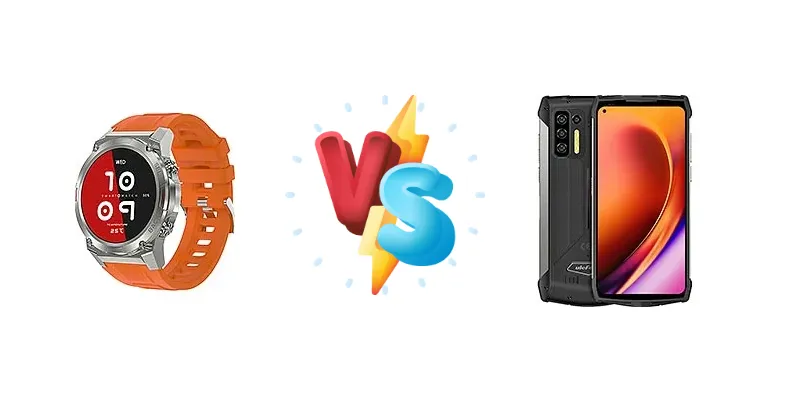
The rugged smartphone market caters to a specific user: those needing a device that can withstand drops, dust, and water. Both the Oukitel BT50 and Ulefone Power Armor 13 aim to deliver this durability, but they approach it with potentially different priorities. Given the limited information available on the BT50, this comparison will focus on the known strengths of the Power Armor 13 and infer the BT50's positioning based on Oukitel's typical market strategy.
🏆 Quick Verdict
For the user prioritizing proven endurance and a solid chipset, the Ulefone Power Armor 13 emerges as the stronger choice. Its Helio G95 processor and 296-hour endurance rating offer a tangible advantage, while the Oukitel BT50 remains an unknown quantity without detailed specifications.
| Network |
|---|
| 2G bands | N/A | GSM 850 / 900 / 1800 / 1900 |
| 3G bands | N/A | HSDPA 850 / 900 / 1700(AWS) / 1900 / 2100 |
| 4G bands | N/A | 1, 2, 3, 4, 5, 7, 8, 12, 13, 17, 18, 19, 20, 25, 26, 28, 38, 40, 66 |
| EDGE | No | - |
| GPRS | No | - |
| Speed | No | HSPA 42.2/11.5 Mbps, LTE Cat12 600/150 Mbps |
| Technology | No cellular connectivity | GSM / HSPA / LTE |
| Launch |
|---|
| Announced | 2024, January 15 | 2021, July 22 |
| Status | Available. Released 2024, January | Available. Released 2021, July 26 |
| Body |
|---|
| Dimensions | 51.2 x 51.2 x 13 mm (2.02 x 2.02 x 0.51 in) | 183.7 x 85.4 x 20.8 mm (7.23 x 3.36 x 0.82 in) |
| SIM | No | Nano-SIM + Nano-SIM |
| Weight | 76 g (2.68 oz) | 492 g (1.08 lb) |
| | - | IP68 dust/water resistant (up to 1.5m for 30 min)
Drop-to-concrete resistance from up to 1.2m
MIL-STD-810G compliant |
| Display |
|---|
| Protection | - | Corning Gorilla Glass 3 |
| Resolution | 466 x 466 pixels (~326 ppi density) | 1080 x 2400 pixels, 20:9 ratio (~386 ppi density) |
| Size | 1.43 inches | 6.81 inches, 112.0 cm2 (~71.4% screen-to-body ratio) |
| Type | AMOLED, 600 nits | IPS LCD |
| Platform |
|---|
| CPU | - | Octa-core (2x2.05 GHz Cortex-A76 & 6x2.0 GHz Cortex-A55) |
| Chipset | - | Mediatek MT6785V/CD Helio G95 (12 nm) |
| GPU | - | Mali-G76 MC4 |
| OS | Proprietary OS | Android 11 |
| Memory |
|---|
| Card slot | No | microSDXC (uses shared SIM slot) |
| Internal | - | 256GB 8GB RAM |
| Main Camera |
|---|
| Features | - | Quad-LED flash, HDR, panorama |
| Penta | - | 48 MP, f/1.8, 26mm (wide), 1/2.0", 0.8µm, PDAF
8 MP, f/2.2, (ultrawide)
2 MP (macro)
Auxiliary lens |
| Video | - | 4K@30fps, 1080p@30fps |
| Selfie camera |
|---|
| Features | - | HDR, panorama |
| Single | - | 16 MP, f/2.2 |
| Video | - | 1080p@30fps |
| Sound |
|---|
| 3.5mm jack | - | Yes |
| 35mm jack | No | Yes |
| Loudspeaker | Yes | Yes |
| Comms |
|---|
| Bluetooth | 5.2 | 5.0, A2DP, LE |
| NFC | No | Yes |
| Positioning | No | GPS, GLONASS, GALILEO, BDS |
| Radio | No | FM radio, RDS, recording |
| USB | No | - |
| WLAN | No | Wi-Fi 802.11 a/b/g/n/ac, dual-band |
| Features |
|---|
| Sensors | Accelerometer, heart rate, SpO2 | Fingerprint (side-mounted), accelerometer, gyro, proximity, compass, baroceptor, coulombmeter |
| | - | Infrared distance measure (error range: 1~20m, ±10mm; 20~40m, ±25mm) |
| Battery |
|---|
| Charging | - | 33W wired
15W wireless
5W reverse wireless |
| Type | Li-Po 400 mAh | Li-Po 13200 mAh |
| Misc |
|---|
| Colors | Silver, Gray | Black |
| Price | About 100 EUR | About 300 EUR |
| Tests |
|---|
| Battery life | - |
Endurance rating 296h
|
| Camera | - |
Photo / Video |
| Display | - |
Contrast ratio: 1306:1 (nominal) |
| Loudspeaker | - |
-28.3 LUFS (Average)
|
| Performance | - |
AnTuTu: 294194 (v8), 351678 (v9)
GeekBench: 1610 (v5.1)
GFXBench: 18fps (ES 3.1 onscreen) |
Oukitel BT50
- Potentially lower price point
- Rugged design (assumed)
- May offer unique features not found on the Ulefone
- Unknown specifications
- Likely lower performance
- Uncertain battery life
Ulefone Power Armor 13
- Excellent 296-hour battery life
- Capable Helio G95 processor
- 33W fast charging and wireless charging
- May be more expensive than the Oukitel
- Camera likely not a primary strength
- Rugged design may add bulk
Display Comparison
The Ulefone Power Armor 13 boasts a display with a 1306:1 contrast ratio and a measured peak brightness of 401 nits. This contrast ratio suggests deep blacks and vibrant colors, while the 401 nits brightness is adequate for outdoor visibility, though not exceptional. Without display specifications for the Oukitel BT50, it's difficult to compare directly. However, given its likely lower price point, it may utilize a less advanced panel with lower brightness and contrast.
Camera Comparison
Both devices list 'Photo / Video' capabilities, but lack specific details. The absence of sensor size or megapixel counts makes a direct comparison impossible. However, rugged phones often prioritize durability over camera quality. It's reasonable to assume both phones offer functional cameras for basic photography, but shouldn't be considered contenders for serious mobile photography. The lack of detail suggests neither phone will excel in this area.
Performance
The Ulefone Power Armor 13 is powered by the MediaTek Helio G95 (12 nm) chipset, featuring an octa-core CPU configuration with 2x2.05 GHz Cortex-A76 and 6x2.0 GHz Cortex-A55 cores. This chipset provides a solid mid-range performance, capable of handling everyday tasks and even some gaming. The 12nm process node offers a reasonable balance between performance and power efficiency. The Oukitel BT50's processor remains unknown, but given its likely positioning, it may utilize a less powerful chipset, potentially impacting multitasking and gaming performance.
Battery Life
The Ulefone Power Armor 13 shines with an impressive endurance rating of 296 hours. This translates to multiple days of use on a single charge, making it ideal for users who spend extended periods away from power outlets. It also supports 33W wired charging, 15W wireless charging, and even 5W reverse wireless charging for topping up accessories. The Oukitel BT50's battery capacity and charging capabilities are currently unknown, but a comparable endurance rating would require a substantial battery capacity and efficient power management.
Buying Guide
Buy the Oukitel BT50 if you need a budget-friendly entry point into the rugged phone category and are willing to accept potential compromises in performance and battery life. Buy the Ulefone Power Armor 13 if you prioritize long-lasting battery life, a capable processor for everyday tasks and moderate gaming, and a device that can demonstrably withstand harsh conditions. The Power Armor 13 is for those who need reliability above all else.
Frequently Asked Questions
❓ Does the Ulefone Power Armor 13's Helio G95 chip get excessively hot during prolonged gaming sessions?
The Helio G95 is a reasonably efficient chipset. While it will generate heat during demanding tasks like gaming, the Power Armor 13's rugged design likely incorporates heat dissipation features to prevent overheating and throttling. User reports suggest manageable temperatures during extended gameplay, but performance may slightly decrease after prolonged use.
❓ What type of water and dust resistance does the Ulefone Power Armor 13 offer?
The Ulefone Power Armor 13 typically boasts an IP68 rating, meaning it's dust-tight and can withstand immersion in up to 1.5 meters of water for 30 minutes. This level of protection makes it suitable for use in harsh outdoor environments, but it's still advisable to avoid prolonged exposure to saltwater or chlorinated water.
❓ Given the limited information on the Oukitel BT50, is it a risky purchase?
Yes, purchasing the Oukitel BT50 without detailed specifications carries a higher risk. You're relying on Oukitel's brand reputation and potentially accepting compromises in performance, battery life, and build quality. If you need a guaranteed level of durability and performance, the Ulefone Power Armor 13 is the safer choice.