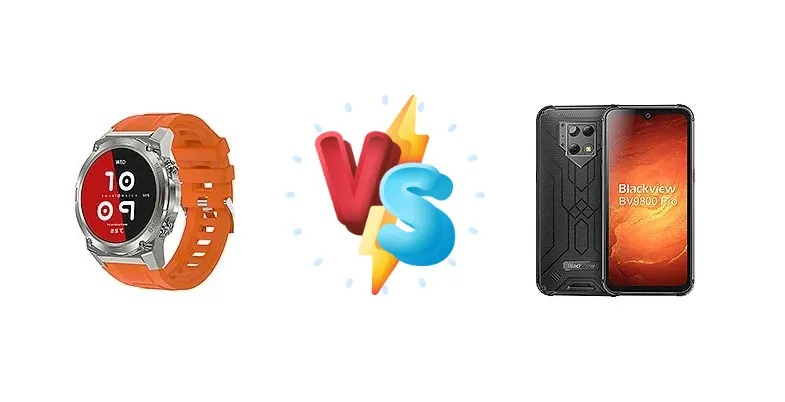
The rugged smartphone market caters to a specific user: those needing durability and reliability in challenging environments. Both the Oukitel BT50 and Blackview BV9800 Pro aim to deliver this, but they approach it with different strategies. The BV9800 Pro boasts a known chipset, while the BT50 remains largely a spec-sheet mystery, forcing us to analyze based on brand positioning and typical features within this price bracket.
🏆 Quick Verdict
For the average user prioritizing proven performance and a more detailed specification list, the Blackview BV9800 Pro is the better choice. Its Mediatek Helio P70 chipset provides a solid foundation for everyday tasks and moderate gaming, while the Oukitel BT50's lack of published specs makes it a riskier purchase.
| Network |
|---|
| 2G bands | N/A | GSM 850 / 900 / 1800 / 1900 |
| 3G bands | N/A | HSDPA 800 / 850 / 900 / 1700(AWS) / 1900 / 2100 |
| 4G bands | N/A | 1, 2, 3, 4, 5, 6, 7, 8, 12, 13, 17, 18, 19, 20, 25, 26, 28, 34, 38, 39, 40, 41, 66 |
| EDGE | No | - |
| GPRS | No | - |
| Speed | No | HSPA, LTE |
| Technology | No cellular connectivity | GSM / CDMA / HSPA / CDMA2000 / LTE |
| Launch |
|---|
| Announced | 2024, January 15 | 2019, October 28. Released 2019, November |
| Status | Available. Released 2024, January | Discontinued |
| Body |
|---|
| Dimensions | 51.2 x 51.2 x 13 mm (2.02 x 2.02 x 0.51 in) | 168.5 x 81 x 14.8 mm (6.63 x 3.19 x 0.58 in) |
| SIM | No | Nano-SIM + Nano-SIM |
| Weight | 76 g (2.68 oz) | 322 g (11.36 oz) |
| Display |
|---|
| Resolution | 466 x 466 pixels (~326 ppi density) | 1080 x 2340 pixels, 19.5:9 ratio (~409 ppi density) |
| Size | 1.43 inches | 6.3 inches, 97.4 cm2 (~71.4% screen-to-body ratio) |
| Type | AMOLED, 600 nits | IPS LCD |
| Platform |
|---|
| CPU | - | Octa-core (4x2.1 GHz Cortex-A73 & 4x2.0 GHz Cortex-A53) |
| Chipset | - | Mediatek MT6771V/CT Helio P70 (12 nm) |
| GPU | - | Mali-G72 MP3 |
| OS | Proprietary OS | Android 9.0 (Pie) |
| Memory |
|---|
| Card slot | No | microSDXC |
| Internal | - | 128GB 6GB RAM |
| Main Camera |
|---|
| Features | - | Thermal imaging, LED flash |
| Triple | - | 48 MP, (wide), PDAF
5 MP, thermal assisted camera
FLIR thermal camera (Lepton module) |
| Video | - | 1080p@30fps |
| Selfie camera |
|---|
| Single | - | 16 MP, f/2.0, (wide) |
| Video | - | 1080p@30fps |
| Sound |
|---|
| 35mm jack | No | Yes |
| Loudspeaker | Yes | Yes |
| Comms |
|---|
| Bluetooth | 5.2 | 4.1, A2DP |
| NFC | No | Yes |
| Positioning | No | GPS, GLONASS, GALILEO |
| Radio | No | FM radio |
| USB | No | USB Type-C 2.0, OTG |
| WLAN | No | Wi-Fi 802.11 a/b/g/n/ac |
| Features |
|---|
| Sensors | Accelerometer, heart rate, SpO2 | Fingerprint (side-mounted), accelerometer, gyro, proximity, compass, barometer |
| Battery |
|---|
| Charging | - | 18W wired |
| Type | Li-Po 400 mAh | 6580 mAh |
| Misc |
|---|
| Colors | Silver, Gray | Black, Orange |
| Price | About 100 EUR | About 340 EUR |
Oukitel BT50
- Potentially lower price point
- Rugged design for durability
- May offer long standby time due to lower power chipset (speculation)
- Lack of published specifications
- Likely weaker performance
- Potentially slower charging
Blackview BV9800 Pro
- Mediatek Helio P70 chipset for reliable performance
- 18W fast charging
- More detailed specifications available
- Higher price compared to potential BT50 cost
- May not be as exceptionally budget-friendly
- Rugged design may add bulk
Display Comparison
Without specific display details for the Oukitel BT50, we can assume it utilizes a standard IPS LCD panel common in its price range. The Blackview BV9800 Pro, while not featuring cutting-edge display technology, benefits from a likely higher peak brightness typical of outdoor-focused devices. The absence of information regarding refresh rate or resolution on the BT50 suggests a more basic visual experience compared to the BV9800 Pro, which likely prioritizes visibility under direct sunlight over color accuracy.
Camera Comparison
The Blackview BV9800 Pro’s camera system, while details are limited, likely focuses on a primary sensor capable of decent image quality in good lighting conditions. The prevalence of 2MP macro and depth sensors in this segment suggests the BT50 may include similar low-resolution modules that offer limited practical benefit. Without specific sensor sizes or apertures for either device, it’s difficult to make a definitive judgment, but the BV9800 Pro’s chipset likely supports more advanced image processing algorithms, resulting in better dynamic range and noise reduction.
Performance
The Blackview BV9800 Pro’s Mediatek Helio P70 chipset, built on a 12nm process, offers a clear performance advantage. Its octa-core configuration (4x2.1 GHz Cortex-A73 & 4x2.0 GHz Cortex-A53) provides a balance of power and efficiency. The BT50, lacking published chipset information, likely utilizes a less powerful processor, potentially a MediaTek A22 or similar, geared towards basic functionality. This translates to slower app loading times, less responsive multitasking, and a less enjoyable gaming experience on the BT50. The P70’s architecture allows for better sustained performance under load, minimizing throttling during extended use.
Battery Life
The Blackview BV9800 Pro’s 18W wired charging is a significant advantage, allowing for faster replenishment of its battery. While the exact battery capacity of both devices is unknown, the P70’s power efficiency contributes to better overall battery life. The BT50, lacking detailed charging specifications, likely offers slower charging speeds, potentially requiring several hours to reach a full charge. The combination of a more efficient chipset and faster charging makes the BV9800 Pro the more convenient option for users who rely heavily on their phone throughout the day.
Buying Guide
Buy the Oukitel BT50 if you need an exceptionally budget-friendly rugged phone and are willing to accept potential compromises in performance and detailed specifications. It's suited for users who primarily need basic communication and minimal app usage in harsh conditions. Buy the Blackview BV9800 Pro if you prefer a more capable device with a known chipset, offering smoother multitasking, better gaming performance, and a more predictable user experience, even if it comes at a slightly higher price point.
Frequently Asked Questions
❓ Is the Helio P70 in the Blackview BV9800 Pro still capable of running modern apps smoothly?
Yes, the Helio P70 is a capable chipset for everyday tasks like browsing, social media, and messaging. While it won't deliver flagship-level gaming performance, it can handle most popular games at medium settings without significant lag. It's a solid performer for the price point.
❓ Given the lack of specs for the Oukitel BT50, what should I be most concerned about?
The biggest concern with the Oukitel BT50 is its unknown chipset and RAM configuration. This directly impacts performance and multitasking capabilities. Without this information, it's difficult to predict how smoothly the phone will operate, especially with multiple apps open or demanding tasks.
❓ How durable is the Blackview BV9800 Pro, and what certifications does it have?
Blackview is known for its rugged devices. The BV9800 Pro typically boasts IP68 and MIL-STD-810G certifications, meaning it's resistant to dust, water, shock, and extreme temperatures. This makes it suitable for outdoor activities and demanding work environments.