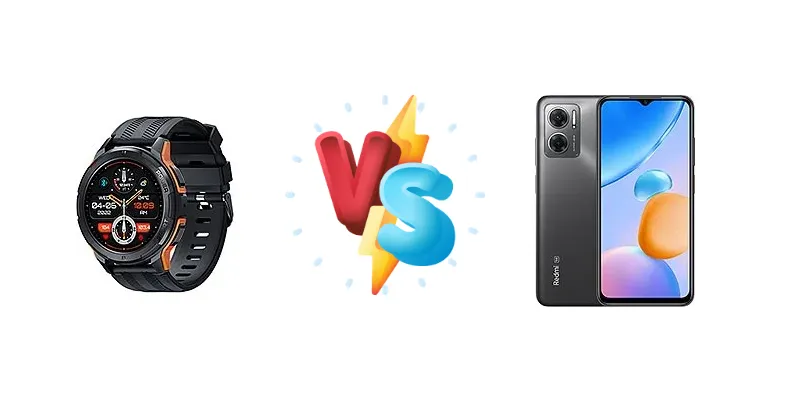
The sub-$200 5G smartphone market is heating up. We pit the Oukitel BT10 against the Xiaomi Redmi 10 5G, two contenders aiming to deliver next-gen connectivity without breaking the bank. While the Oukitel attempts to compete on price, the Redmi 10 5G leverages a known chipset and established brand reputation.
🏆 Quick Verdict
For the average user, the Xiaomi Redmi 10 5G is the superior choice. Its Mediatek Dimensity 700 chipset provides a demonstrably faster and more efficient experience than whatever powers the Oukitel BT10 (specs unavailable), and Xiaomi’s software support is significantly more reliable. The Oukitel may appeal to those on the absolute tightest budget, but compromises are substantial.
| Network |
|---|
| 2G bands | N/A | GSM 850 / 900 / 1800 / 1900 |
| 3G bands | N/A | HSDPA 850 / 900 / 1700(AWS) / 1900 / 2100 |
| 4G bands | N/A | 1, 2, 3, 4, 5, 7, 8, 20, 28, 38, 40, 41 |
| 5G bands | - | 1, 3, 5, 7, 8, 20, 28, 38, 40, 41, 77, 78 SA/NSA |
| EDGE | No | - |
| GPRS | No | - |
| Speed | No | HSPA, LTE, 5G |
| Technology | No cellular connectivity | GSM / HSPA / LTE / 5G |
| Launch |
|---|
| Announced | 2023, September | 2022, March 29 |
| Status | Available. Released 2023, September | Available. Released 2022, September 23 |
| Body |
|---|
| Dimensions | 48.7 x 48.7 x 12.6 mm (1.92 x 1.92 x 0.50 in) | 164 x 76.1 x 8.9 mm (6.46 x 3.00 x 0.35 in) |
| SIM | No | Nano-SIM + Nano-SIM |
| Weight | - | 200 g (7.05 oz) |
| Display |
|---|
| Protection | - | Corning Gorilla Glass 3 |
| Resolution | 466 x 466 pixels (~326 ppi density) | 1080 x 2408 pixels, 20:9 ratio (~401 ppi density) |
| Size | 1.43 inches | 6.58 inches, 104.3 cm2 (~83.6% screen-to-body ratio) |
| Type | AMOLED | IPS LCD, 90Hz |
| Platform |
|---|
| CPU | - | Octa-core (2x2.2 GHz Cortex-A76 & 6x2.0 GHz Cortex-A55) |
| Chipset | - | Mediatek Dimensity 700 (7 nm) |
| GPU | - | Mali-G57 MC2 |
| OS | Proprietary OS | Android 12, MIUI 13 |
| Memory |
|---|
| Card slot | No | microSDXC (dedicated slot) |
| Internal | - | 64GB 4GB RAM, 128GB 4GB RAM, 128GB 6GB RAM |
| | - | UFS 2.2 |
| Main Camera |
|---|
| Dual | - | 50 MP, f/1.8, (wide), PDAF
Auxiliary lens |
| Features | - | LED flash, HDR, panorama |
| Single | - | 5 MP, f/2.2 |
| Video | - | 1080p@30fps |
| Selfie camera |
|---|
| Features | - | HDR |
| Single | - | 5 MP, f/2.2 |
| Video | - | 1080p@30fps |
| Sound |
|---|
| 3.5mm jack | - | Yes |
| 35mm jack | No | Yes |
| Loudspeaker | Yes | Yes |
| | - | 24-bit/192kHz audio |
| Comms |
|---|
| Bluetooth | Yes | 5.1, A2DP, LE |
| Infrared port | - | Yes |
| NFC | No | Yes (market/region dependent) |
| Positioning | No | GPS, GLONASS, BDS, GALILEO |
| Radio | No | FM radio |
| USB | No | USB Type-C 2.0, OTG |
| WLAN | No | Wi-Fi 802.11 a/b/g/n/ac, dual-band, Wi-Fi Direct |
| Features |
|---|
| Sensors | Accelerometer, heart rate, SpO2 | Fingerprint (side-mounted), accelerometer, proximity, compass |
| Battery |
|---|
| Charging | - | 18W wired |
| Type | Li-Ion 410 mAh | Li-Po 5000 mAh |
| Misc |
|---|
| Colors | Black, Orange | Graphite Gray, Chrome Silver, Aurora Green |
| Models | - | 22041219G, 22041219NY |
| Price | About 80 EUR | About 100 EUR |
| SAR | - | 1.09 W/kg (head) 1.09 W/kg (body) |
| SAR EU | - | 0.60 W/kg (head) 0.99 W/kg (body) |
Oukitel BT10
- Potentially the lowest price point available.
- May offer unique features not found on the Redmi 10 5G (spec dependent).
- Could be a good option for basic smartphone use.
- Unknown chipset and performance.
- Uncertain software support and updates.
- Likely inferior display and camera quality.
Xiaomi Redmi 10 5G
- Mediatek Dimensity 700 provides strong 5G performance.
- Reliable brand with a history of software updates.
- 18W fast charging for convenient power-ups.
- Display is not class-leading.
- Camera performance is good, but not exceptional.
- May be slightly more expensive than the Oukitel BT10.
Display Comparison
Without specific display details for the Oukitel BT10, a direct comparison is difficult. However, given its price point, it likely utilizes a lower-quality LCD panel with lower brightness and color accuracy. The Redmi 10 5G, while not a flagship display, benefits from Xiaomi’s optimization, likely offering better viewing angles and color reproduction. The absence of LTPO technology on either device means refresh rates are likely capped at 60Hz, focusing on power efficiency rather than fluidity.
Camera Comparison
The Redmi 10 5G likely features a more capable camera system. While details on the Oukitel BT10 are unavailable, Xiaomi typically prioritizes camera performance even in its budget offerings. The Redmi 10 5G’s image processing algorithms, combined with a potentially larger main sensor (details unavailable), will likely result in better image quality, especially in low-light conditions. We can expect the Oukitel to rely heavily on software processing to compensate for potentially inferior hardware.
Performance
The Xiaomi Redmi 10 5G’s Mediatek Dimensity 700 (7nm) is the clear performance leader here. Its octa-core configuration, featuring 2x2.2 GHz Cortex-A76 and 6x2.0 GHz Cortex-A55 cores, provides a significant uplift in CPU and GPU performance compared to what is typically found in phones at the Oukitel BT10’s price point. The 7nm process node also contributes to better thermal efficiency, meaning sustained performance is less likely to be throttled during demanding tasks. The Oukitel’s chipset remains a mystery, but it’s reasonable to assume it’s a less powerful and less efficient solution.
Battery Life
The Redmi 10 5G’s 18W wired charging is a practical feature, allowing for a reasonable recharge time. While the battery capacity is unknown for the Oukitel BT10, the Redmi 10 5G’s Dimensity 700 chipset’s efficiency will likely translate to comparable or better battery life, even with a similar capacity. The 18W charging, while not the fastest, is a significant advantage over potentially slower charging solutions on the Oukitel.
Buying Guide
Buy the Oukitel BT10 if you absolutely need the lowest possible price and are willing to accept unknown performance and software support. Buy the Xiaomi Redmi 10 5G if you prioritize a smoother user experience, reliable 5G connectivity powered by the Dimensity 700, and a brand with a track record of software updates, even on budget devices.
Frequently Asked Questions
❓ Is the Mediatek Dimensity 700 in the Redmi 10 5G powerful enough for gaming?
The Dimensity 700 is capable of handling most mobile games at medium settings. While it won't deliver flagship-level performance, it provides a smooth gaming experience for popular titles like PUBG Mobile and Call of Duty Mobile. Expect to adjust graphics settings for optimal frame rates.
❓ How reliable is Xiaomi's software support for the Redmi 10 5G?
Xiaomi generally provides decent software support for its budget devices, including security updates and occasional MIUI feature updates. While it may not receive updates as frequently as flagship models, the Redmi 10 5G is likely to receive at least a couple of major Android version updates and several years of security patches.
❓ What kind of storage does the Redmi 10 5G use, and is it expandable?
The Redmi 10 5G typically comes with UFS 2.2 storage, which offers faster read and write speeds compared to older storage standards. It also features a dedicated microSD card slot, allowing you to expand the storage capacity up to 1TB, providing ample space for photos, videos, and apps.