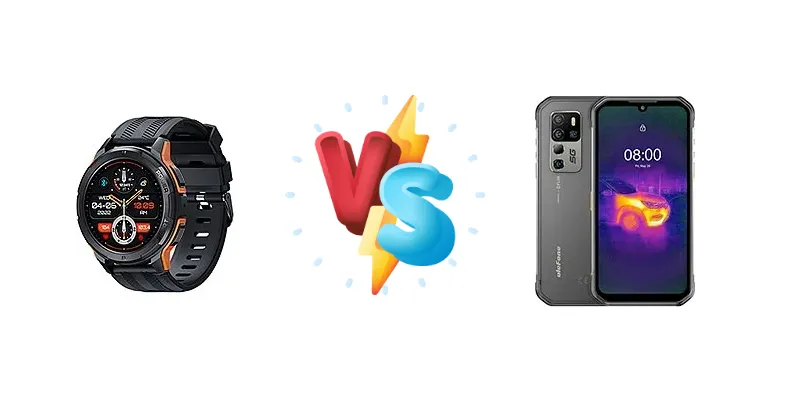
The rugged smartphone market caters to a specific need: durability. However, performance and features vary wildly. We pit the Oukitel BT10, a potentially budget-focused option with limited publicly available specs, against the Ulefone Armor 11T 5G, which boasts a Mediatek Dimensity 800 chipset, to determine which device offers the best balance of toughness and usability.
🏆 Quick Verdict
For the average user prioritizing performance and 5G connectivity, the Ulefone Armor 11T 5G is the clear winner. Its Dimensity 800 chipset provides a substantial advantage in processing power. However, if the Oukitel BT10 is significantly cheaper, it may appeal to those needing basic rugged functionality on a tight budget.
| Network |
|---|
| 2G bands | N/A | GSM 850 / 900 / 1800 / 1900 |
| 3G bands | N/A | HSDPA 850 / 900 / 1700(AWS) / 1900 / 2100 |
| 4G bands | N/A | 1, 2, 3, 4, 5, 7, 8, 12, 13, 17, 18, 19, 20, 25, 26, 28, 34, 38, 39, 40, 41, 66 |
| 5G bands | - | 1, 3, 5, 8, 20, 28, 38, 41, 77, 78, 79 SA/NSA |
| EDGE | No | - |
| GPRS | No | - |
| Speed | No | HSPA, LTE, 5G |
| Technology | No cellular connectivity | GSM / CDMA / HSPA / EVDO / LTE / 5G |
| | - | CDMA2000 1xEV-DO |
| Launch |
|---|
| Announced | 2023, September | 2021, May 29 |
| Status | Available. Released 2023, September | Available. Released 2021, June 07 |
| Body |
|---|
| Build | - | Front glass, aluminum back with rubber, aluminum frame |
| Dimensions | 48.7 x 48.7 x 12.6 mm (1.92 x 1.92 x 0.50 in) | 163.8 x 81.6 x 14.2 mm (6.45 x 3.21 x 0.56 in) |
| SIM | No | Nano-SIM + Nano-SIM |
| Weight | - | 293 g (10.34 oz) |
| | - | IP69K dust/water resistant (up to 1.5m for 30 min)
Drop-to-concrete resistance from up to 1.2m
MIL-STD-810G compliant |
| Display |
|---|
| Protection | - | Oleophobic coating |
| Resolution | 466 x 466 pixels (~326 ppi density) | 720 x 1560 pixels, 19.5:9 ratio (~282 ppi density) |
| Size | 1.43 inches | 6.1 inches, 91.3 cm2 (~68.3% screen-to-body ratio) |
| Type | AMOLED | IPS LCD |
| Platform |
|---|
| CPU | - | Octa-core (4x2.0 GHz Cortex-A76 & 4x2.0 GHz Cortex-A55) |
| Chipset | - | Mediatek Dimensity 800 (7 nm) |
| GPU | - | Mali-G57 MP4 |
| OS | Proprietary OS | Android 11 |
| Memory |
|---|
| Card slot | No | No |
| Internal | - | 256GB 8GB RAM |
| | - | UFS 2.1 |
| Main Camera |
|---|
| Features | - | Dual-LED dual-tone flash, HDR, panorama |
| Penta | - | 48 MP, f/1.8, 26mm (wide), 1/2.0", 0.8µm, PDAF
FLIR thermal camera (Lepton module)
5 MP
2 MP (macro)
Auxiliary lens |
| Single | - | 16 MP, f/2.0 |
| Video | - | 4K@30fps, 1080p@30fps |
| Selfie camera |
|---|
| Features | - | HDR, panorama |
| Single | - | 16 MP, f/2.0 |
| Video | - | 1080p@30fps |
| Sound |
|---|
| 3.5mm jack | - | Yes |
| 35mm jack | No | Yes |
| Loudspeaker | Yes | Yes |
| Comms |
|---|
| Bluetooth | Yes | 5.0, A2DP, LE |
| NFC | No | Yes |
| Positioning | No | GPS, GLONASS, GALILEO, BDS |
| Radio | No | FM radio, RDS, recording |
| USB | No | USB Type-C 2.0, OTG |
| WLAN | No | Wi-Fi 802.11 a/b/g/n/ac, Wi-Fi Direct |
| Features |
|---|
| Sensors | Accelerometer, heart rate, SpO2 | Fingerprint (side-mounted), accelerometer, gyro, proximity, compass, baroceptor |
| Battery |
|---|
| Charging | - | 18W wired
10W wireless |
| Type | Li-Ion 410 mAh | Li-Po 5200 mAh |
| Misc |
|---|
| Colors | Black, Orange | Black |
| Price | About 80 EUR | About 590 EUR |
Oukitel BT10
- Potentially very affordable
- Rugged design for durability
- Likely long battery life under light use
- Unknown chipset and performance
- Limited feature set expected
- Potentially poor display quality
Ulefone Armor 11T 5G
- Powerful Mediatek Dimensity 800 chipset
- 5G connectivity for fast data speeds
- 18W wired and 10W wireless charging
- Higher price point
- Rugged design may add bulk
- Battery life may be impacted by 5G usage
Display Comparison
Without specific display details for the Oukitel BT10, a direct comparison is difficult. The Ulefone Armor 11T 5G likely features an IPS LCD panel, common in rugged phones for its durability. The absence of information regarding refresh rate, resolution, or peak brightness on the BT10 suggests a more basic display experience. Users prioritizing outdoor visibility will likely find the Armor 11T's display more usable, assuming it achieves a reasonable peak brightness level.
Camera Comparison
The Ulefone Armor 11T 5G’s camera specifications are unavailable, but typical rugged phones in this price range prioritize durability over camera quality. The Oukitel BT10’s camera details are also missing. Without sensor size, aperture, or image processing information, it’s impossible to make a meaningful comparison. It’s reasonable to assume both phones will offer adequate, but not exceptional, camera performance, focusing on capturing usable images in challenging outdoor conditions rather than delivering flagship-level image quality. The inclusion of a 2MP macro lens on either device is likely a marketing feature with limited real-world benefit.
Performance
The Ulefone Armor 11T 5G’s Mediatek Dimensity 800 (7nm) chipset is the defining performance factor. Its octa-core configuration – 4x2.0 GHz Cortex-A76 and 4x2.0 GHz Cortex-A55 – delivers significantly more processing power than what is typically found in budget rugged phones. This translates to faster app loading times, smoother multitasking, and improved gaming performance. The 7nm process node also contributes to better thermal efficiency compared to older, larger node chipsets. The Oukitel BT10, lacking chipset information, likely utilizes a less powerful processor, suitable only for basic tasks. This difference will be most noticeable when running demanding applications or multiple apps simultaneously.
Battery Life
The Ulefone Armor 11T 5G offers both 18W wired and 10W wireless charging. While 18W isn’t exceptionally fast, it’s a reasonable charging speed for a rugged device. The addition of wireless charging provides convenience. The Oukitel BT10’s battery capacity and charging speed are unknown. Given its likely lower price point, it may feature a smaller battery and slower charging. However, a less powerful processor could offset a smaller battery capacity, resulting in comparable battery life under light usage. The Armor 11T’s 5G connectivity will, however, impact battery life more significantly during data-intensive tasks.
Buying Guide
Buy the Oukitel BT10 if you need a basic, durable phone for essential communication and are extremely price-sensitive, accepting limited performance. Buy the Ulefone Armor 11T 5G if you require 5G connectivity, smoother multitasking, and a more responsive user experience, even in demanding scenarios, and are willing to pay a premium for it.
Frequently Asked Questions
❓ Will the Ulefone Armor 11T 5G overheat during prolonged gaming sessions?
The Mediatek Dimensity 800’s 7nm process node and the Armor 11T 5G’s rugged design (which often includes heat dissipation features) should mitigate overheating. However, sustained high-intensity gaming will inevitably generate heat. Expect some thermal throttling, but it shouldn’t be severe enough to cause performance crashes.
❓ Is the Oukitel BT10 a good choice for someone who primarily uses their phone for calls and texts?
If basic communication is your primary need and budget is a major concern, the Oukitel BT10 could be a viable option. However, its limited processing power may result in a sluggish user experience even for simple tasks. Consider whether the potential cost savings outweigh the compromises in performance.
❓ Does the Ulefone Armor 11T 5G support all 5G bands?
5G band support varies by region. It's crucial to check the Ulefone Armor 11T 5G's specifications on Ulefone's official website or with your carrier to ensure compatibility with the 5G bands used in your area. Not all 5G bands are universally supported.