
Oscal Tiger 13 vs Cubot KingKong 7: A Deep Dive into Budget Rugged Performance
| Phones Images | |||||
|---|---|---|---|---|---|
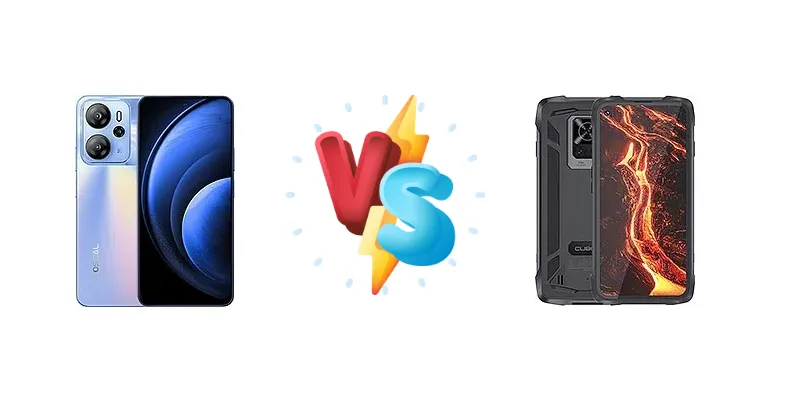
|
🏆 Quick Verdict
For the average user seeking a durable phone with exceptional battery life, the Oscal Tiger 13 is the clear winner. Its Unisoc T760 chipset, built on a 6nm process, provides a significant performance advantage and improved efficiency over the Cubot KingKong 7’s older 12nm Helio P60, while also boasting impressive 49:06h endurance.
| PHONES | ||
|---|---|---|
| Phone Names | Oscal Tiger 13 | Cubot KingKong 7 |
| Network | ||
|---|---|---|
| 2G bands | GSM 850 / 900 / 1800 / 1900 | GSM 850 / 900 / 1800 / 1900 |
| 3G bands | HSDPA 850 / 900 / 1900 / 2100 | HSDPA 850 / 900 / 1700(AWS) / 1900 / 2100 |
| 4G bands | 1, 2, 3, 4, 5, 7, 8, 12, 17, 19, 20, 26, 28, 38, 39, 40, 41, 66 | 1, 2, 3, 4, 5, 7, 8, 12, 13, 17, 18, 19, 20, 25, 26, 28, 38, 40, 41, 66 |
| 5G bands | 1, 2, 3, 5, 7, 8, 20, 26, 28, 38, 40, 41, 66, 77, 78 SA/NSA | - |
| Speed | HSPA, LTE, 5G | HSPA, LTE |
| Technology | GSM / HSPA / LTE / 5G | GSM / CDMA / HSPA / LTE |
| Launch | ||
|---|---|---|
| Announced | 2024, October 21 | 2022 |
| Status | Available. Released 2024, October 21 | Available. Released 2022 |
| Body | ||
|---|---|---|
| Dimensions | 164.8 x 75.6 x 8.7 mm (6.49 x 2.98 x 0.34 in) | 166.8 x 83.5 x 14 mm (6.57 x 3.29 x 0.55 in) |
| SIM | Nano-SIM + Nano-SIM | Nano-SIM + Nano-SIM |
| Weight | 200 g (7.05 oz) | 267 g (9.42 oz) |
| Display | ||
|---|---|---|
| Protection | Mohs level 7 | - |
| Resolution | 720 x 1604 pixels, 20:9 ratio (~264 ppi density) | 1080 x 2300 pixels (~400 ppi density) |
| Size | 6.67 inches, 107.2 cm2 (~86.1% screen-to-body ratio) | 6.36 inches, 100.4 cm2 (~72.1% screen-to-body ratio) |
| Type | IPS LCD, 90Hz, 700 nits | IPS LCD |
| Platform | ||
|---|---|---|
| CPU | Octa-core (1x2.2 GHz Cortex-A76 & 3x Cortex-A76 & 4x Cortex-A55) | Octa-core (4x2.0 GHz Cortex-A73 & 4x2.0 GHz Cortex-A53) |
| Chipset | Unisoc T760 (6 nm) | Mediatek MT6771V/CA Helio P60 (12 nm) |
| GPU | Mali-G57 | Mali-G72 MP3 |
| OS | Android 14, Doke OS 4.0 | Android 11 |
| Memory | ||
|---|---|---|
| Card slot | microSDXC (uses shared SIM slot) | microSDXC (uses shared SIM slot) |
| Internal | 256GB 8GB RAM | 128GB 8GB RAM |
| Main Camera | ||
|---|---|---|
| Features | LED flash, HDR, panorama | LED flash |
| Triple | 50 MP, (wide), PDAF 2 MP (macro) Auxiliary lens | 64 MP, (wide), AF 16 MP, (ultrawide) 5 MP (macro) |
| Video | 4K@30fps, 1080p@30fps | Yes |
| Selfie camera | ||
|---|---|---|
| Single | 8 MP, (wide) | 32 MP |
| Video | 1080p@30fps | Yes |
| Sound | ||
|---|---|---|
| 35mm jack | Yes | Unspecified |
| Loudspeaker | Yes, with stereo speakers | Yes |
| Comms | ||
|---|---|---|
| Bluetooth | 5.0, A2DP, LE | 4.2, A2DP |
| NFC | Yes | Yes |
| Positioning | GPS, GLONASS, GALILEO, BDS | GPS, GLONASS, BDS |
| Radio | FM radio | Unspecified |
| USB | USB Type-C 2.0, OTG | USB Type-C, OTG |
| WLAN | Wi-Fi 802.11 a/b/g/n/ac, dual-band | Wi-Fi 802.11 a/b/g/n |
| Features | ||
|---|---|---|
| Sensors | Fingerprint (side-mounted), accelerometer, proximity | Fingerprint (rear-mounted), accelerometer, gyro, proximity, compass |
| Battery | ||
|---|---|---|
| Charging | 18W wired | - |
| Type | 5000 mAh | 5000 mAh |
| Misc | ||
|---|---|---|
| Colors | Hurricane Black, Violet Blue | Black |
| EU LABEL | ||
|---|---|---|
| Battery | 49:06h endurance, 800 cycles | - |
| Energy | Class B | - |
| Free fall | Class C (138 falls) | - |
| Repairability | Class B | - |
Oscal Tiger 13
- Superior processing power with the Unisoc T760
- Exceptional battery life (49:06h endurance)
- More efficient 6nm chipset reduces heat and throttling
- Charging speed is standard (18W)
- Camera specifications are unknown, potentially average
Cubot KingKong 7
- Potentially lower price point
- Rugged design for durability
- Acceptable for basic smartphone tasks
- Older and less efficient Helio P60 chipset
- Significantly shorter battery life
- Likely limited performance for demanding apps
Display Comparison
Neither device’s display specifications are provided, so a direct comparison is limited. However, given the price points, we can assume both utilize LCD panels. The KingKong 7’s older chipset suggests it may have a lower refresh rate. The Tiger 13’s newer processor could potentially support a higher refresh rate, leading to smoother scrolling and animations, though this is speculative. Bezels are likely comparable, focusing on durability rather than minimizing size.
Camera Comparison
Without detailed camera specifications, a precise comparison is impossible. However, the market segment suggests both phones will feature basic camera setups. The focus is likely on functionality rather than high-end image quality. We can assume both will include a primary sensor, and potentially a depth or macro lens. The absence of information regarding sensor size or optical image stabilization (OIS) suggests neither phone will excel in low-light photography. The 2MP macro lens commonly found in this price range is unlikely to provide significant value.
Performance
The core difference lies in the chipsets. The Oscal Tiger 13’s Unisoc T760 (6nm) is a modern processor featuring a Cortex-A76-based CPU configuration (1x2.2 GHz Cortex-A76 & 3x Cortex-A76 & 4x Cortex-A55). This architecture provides a substantial performance uplift compared to the Cubot KingKong 7’s MediaTek Helio P60 (12nm) with its Cortex-A73/A53 configuration (4x2.0 GHz Cortex-A73 & 4x2.0 GHz Cortex-A53). The 6nm fabrication process of the T760 also translates to better thermal efficiency, reducing the likelihood of throttling during sustained workloads. Users who engage in moderate gaming or multitasking will experience a noticeably smoother experience on the Tiger 13.
Battery Life
The Oscal Tiger 13 truly shines in battery endurance, achieving an impressive 49:06h of usage. While the KingKong 7’s battery capacity isn’t specified, the older, less efficient Helio P60 chipset will inevitably result in shorter runtimes. The Tiger 13’s 18W charging is standard for this price point, and while not exceptionally fast, it’s adequate for topping up the battery overnight. The combination of a modern, efficient chipset and likely a large battery capacity makes the Tiger 13 the clear winner for users prioritizing longevity.
Buying Guide
Buy the Oscal Tiger 13 if you need a phone that can genuinely last for days on a single charge and handle everyday tasks with ease. It’s ideal for travelers, outdoor enthusiasts, or anyone who dislikes frequent charging. Buy the Cubot KingKong 7 if you prioritize a lower upfront cost and are willing to compromise on processing power and battery endurance, primarily using the phone for basic communication and light tasks.