
Oscal Pilot 3 vs. Blackview BV9200: A Deep Dive into Rugged Smartphone Performance and Battery Life
| Phones Images | |||||
|---|---|---|---|---|---|
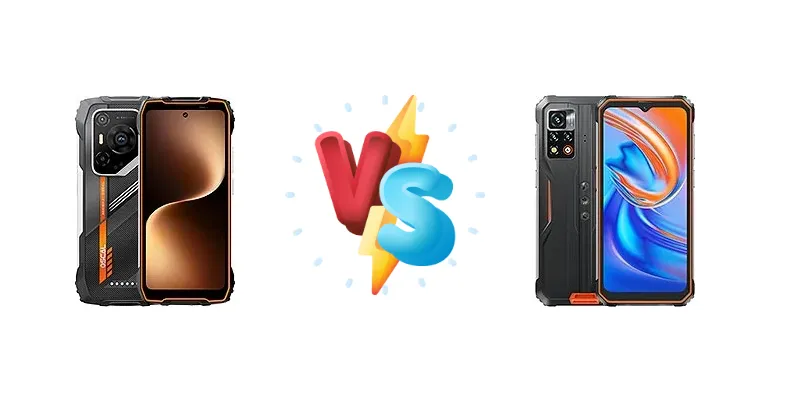
|
🏆 Quick Verdict
For users prioritizing longevity and sustained performance, the Oscal Pilot 3 emerges as the winner. Its Dimensity 6300 chipset and impressive 118:45h endurance significantly outweigh the Blackview BV9200’s faster charging, especially for those frequently away from power outlets.
| PHONES | ||
|---|---|---|
| Phone Names | Oscal Pilot 3 | Blackview BV9200 |
| Network | ||
|---|---|---|
| 2G bands | GSM 850 / 900 / 1800 / 1900 | GSM 850 / 900 / 1800 / 1900 |
| 3G bands | HSDPA 800 / 850 / 900 / 1700(AWS) / 1900 / 2100 | HSDPA 850 / 900 / 1700(AWS) / 1900 / 2100 |
| 4G bands | 1, 2, 3, 4, 5, 7, 8, 12, 13, 17, 18, 19, 20, 25, 26, 28, 30, 34, 38, 39, 40, 41, 66 | 1, 2, 3, 4, 5, 7, 8, 12, 13, 17, 18, 19, 20, 25, 26, 28, 34, 38, 39, 40, 41, 66 |
| 5G bands | 1, 3, 5, 7, 8, 20, 28, 38, 40, 41, 77, 78, 79 | - |
| Speed | HSPA, LTE, 5G | HSPA, LTE |
| Technology | GSM / CDMA / HSPA / LTE / 5G | GSM / CDMA / HSPA / LTE |
| - | CDMA 800 / 1900 | |
| Launch | ||
|---|---|---|
| Announced | 2025, June | 2022, December 28 |
| Status | Available. Released 2025, June 16 | Available. Released 2023, January 09 |
| Body | ||
|---|---|---|
| Dimensions | 182.2 x 86 x 14.5 mm (7.17 x 3.39 x 0.57 in) | 174.5 x 81.8 x 13.6 mm (6.87 x 3.22 x 0.54 in) |
| SIM | Nano-SIM + Nano-SIM | Nano-SIM + Nano-SIM |
| Weight | 357 g (12.59 oz) | 310 g (10.93 oz) |
| - | IP68/IP69K dust/water resistant (up to 1.5m for 30 min) Drop-to-concrete resistance from up to 1.8m MIL-STD-810H compliant | |
| Display | ||
|---|---|---|
| Protection | Corning Gorilla Glass 5, Mohs level 5 | Corning Gorilla Glass 5 |
| Resolution | 1080 x 2460 pixels (~396 ppi density) | 1080 x 2408 pixels, 20:9 ratio (~400 ppi density) |
| Size | 6.78 inches, 109.2 cm2 (~69.7% screen-to-body ratio) | 6.6 inches, 104.9 cm2 (~73.5% screen-to-body ratio) |
| Type | IPS LCD, 120Hz, 750 nits | IPS LCD, 120Hz |
| Platform | ||
|---|---|---|
| CPU | Octa-core (2x2.4 GHz Cortex-A76 & 6x2.0 GHz Cortex-A55) | Octa-core (2x2.05 GHz Cortex-A76 & 6x2.0 GHz Cortex-A55) |
| Chipset | Mediatek Dimensity 6300 (6 nm) | Mediatek MT6781 Helio G96 (12 nm) |
| GPU | Mali-G57 MC2 | Mali-G52 MC2 |
| OS | Android 15, DokeOS 4.1 | Android 12, Doke-OS 3.1 |
| Memory | ||
|---|---|---|
| Card slot | microSDXC (uses shared SIM slot) | microSDXC (dedicated slot) |
| Internal | 256GB 12GB RAM | 256GB 8GB RAM |
| - | UFS 2.1 | |
| Main Camera | ||
|---|---|---|
| Features | LED flash, HDR, panorama | LED flash, HDR, panorama |
| Single | - | 16 MP, (wide), 1/3", 1.0µm |
| Triple | 50 MP, f/1.8, (wide), 1/2.76", PDAF 20 MP, f/2.0, (night vision), 1/2.8", 2 infrared night vision lights Auxiliary lens | 50 MP, f/1.8, (wide), 1/2.76", 0.64µm, PDAF 8 MP, f/1.8, 120˚, (ultrawide), AF Auxiliary lens |
| Video | 1440p@30fps, 1080p@30fps | 1440p@30fps, 1080p@30fps |
| Selfie camera | ||
|---|---|---|
| Features | HDR | - |
| Single | 32 MP, f/2.2, (wide), 1/3.1" | 16 MP, f/2.0, (wide), 1/3", 1.0µm |
| Video | 1080p@30fps | 1080p |
| Sound | ||
|---|---|---|
| 3.5mm jack | - | No |
| 35mm jack | Yes | No |
| Loudspeaker | Yes | Yes, with dual speakers |
| Comms | ||
|---|---|---|
| Bluetooth | 5.2, A2DP, LE | 5.2, A2DP, LE |
| NFC | Yes | Yes |
| Positioning | GPS, GALILEO, GLONASS, BDS, QZSS | GPS, GLONASS, GALILEO, BDS |
| Radio | FM radio | FM radio |
| USB | USB Type-C, OTG | USB Type-C, OTG |
| WLAN | Wi-Fi 802.11 a/b/g/n/ac, dual-band | Wi-Fi 802.11 a/b/g/n/ac, dual-band |
| Features | ||
|---|---|---|
| Sensors | Fingerprint (side-mounted), accelerometer, gyro, proximity, compass | Fingerprint (side-mounted), accelerometer, gyro, proximity, compass, barometer |
| Battery | ||
|---|---|---|
| Charging | 33W wired 6W reverse wired | 66W wired 30W wireless |
| Type | Li-Ion 7500 mAh | 5000 mAh |
| Misc | ||
|---|---|---|
| Colors | Black, Orange | Black, Orange, Green |
| Price | $ 198.16 / £ 219.99 / € 269.99 | About 200 EUR |
| EU LABEL | ||
|---|---|---|
| Battery | 118:45h endurance, 800 cycles | - |
| Energy | Class A | - |
| Free fall | Class A (270 falls) | - |
| Repairability | Class C | - |
Oscal Pilot 3
- Exceptional battery life (118:45h endurance)
- More efficient Dimensity 6300 chipset (6nm)
- Longer battery lifespan (800 charge cycles)
- Slower charging speeds (33W wired)
- Display specifications largely unknown
Blackview BV9200
- Faster charging (66W wired, 30W wireless)
- Brighter display (481 nits)
- Higher contrast ratio (1423:1)
- Less efficient Helio G96 chipset (12nm)
- Likely shorter battery life
Display Comparison
The Blackview BV9200 distinguishes itself with a measured 481 nits of peak brightness, offering superior visibility in direct sunlight compared to the Oscal Pilot 3 (brightness data unavailable). While the Pilot 3’s panel specifics are unknown, the BV9200’s 1423:1 contrast ratio suggests a more vibrant image. However, without knowing the Pilot 3’s panel technology (e.g., IPS, AMOLED) or refresh rate, a definitive display quality assessment is difficult. The BV9200’s brightness is a clear advantage for outdoor use.
Camera Comparison
Detailed camera specifications are lacking for both devices. However, given the market segment, it’s reasonable to assume both phones prioritize practicality over flagship-level imaging. Without sensor size or aperture data, it’s difficult to assess image quality. The presence of a 2MP macro lens on the BV9200 is likely a marketing feature with limited real-world utility. The focus should be on the main sensor performance, which remains unknown for both devices. Image processing algorithms will play a crucial role in differentiating the final image quality.
Performance
The Oscal Pilot 3’s Mediatek Dimensity 6300 (6nm) chipset represents a significant architectural leap over the Blackview BV9200’s Helio G96 (12nm). The 6nm process node inherently delivers better power efficiency and thermal performance, meaning the Pilot 3 is likely to sustain peak performance for longer periods. While both CPUs feature a 2x Cortex-A76 and 6x Cortex-A55 configuration, the Dimensity 6300’s A76 cores operate at a higher clock speed (2.4 GHz vs 2.05 GHz), translating to faster single-core performance. This benefits responsiveness and app loading times. The Pilot 3 will likely handle demanding tasks and multitasking more efficiently.
Battery Life
The Oscal Pilot 3’s standout feature is its exceptional battery endurance, rated at 118:45 hours. This is significantly higher than what’s typically seen in this price range. While the Blackview BV9200 offers faster charging – 66W wired and 30W wireless – its battery capacity is not specified, making a direct comparison challenging. The Pilot 3’s 33W wired and 6W reverse wired charging are slower, but the extended battery life mitigates the need for frequent top-ups. The 800 charge cycles rating for the Pilot 3 also suggests a longer lifespan for the battery itself.
Buying Guide
Buy the Oscal Pilot 3 if you need a phone that can genuinely last for days on a single charge, and value efficient processing for everyday tasks. It’s ideal for outdoor enthusiasts, travelers, or anyone who dislikes frequent charging. Buy the Blackview BV9200 if you prioritize quick top-ups with its 66W wired and 30W wireless charging, and need a brighter screen for outdoor visibility, even if it comes at the cost of battery life.