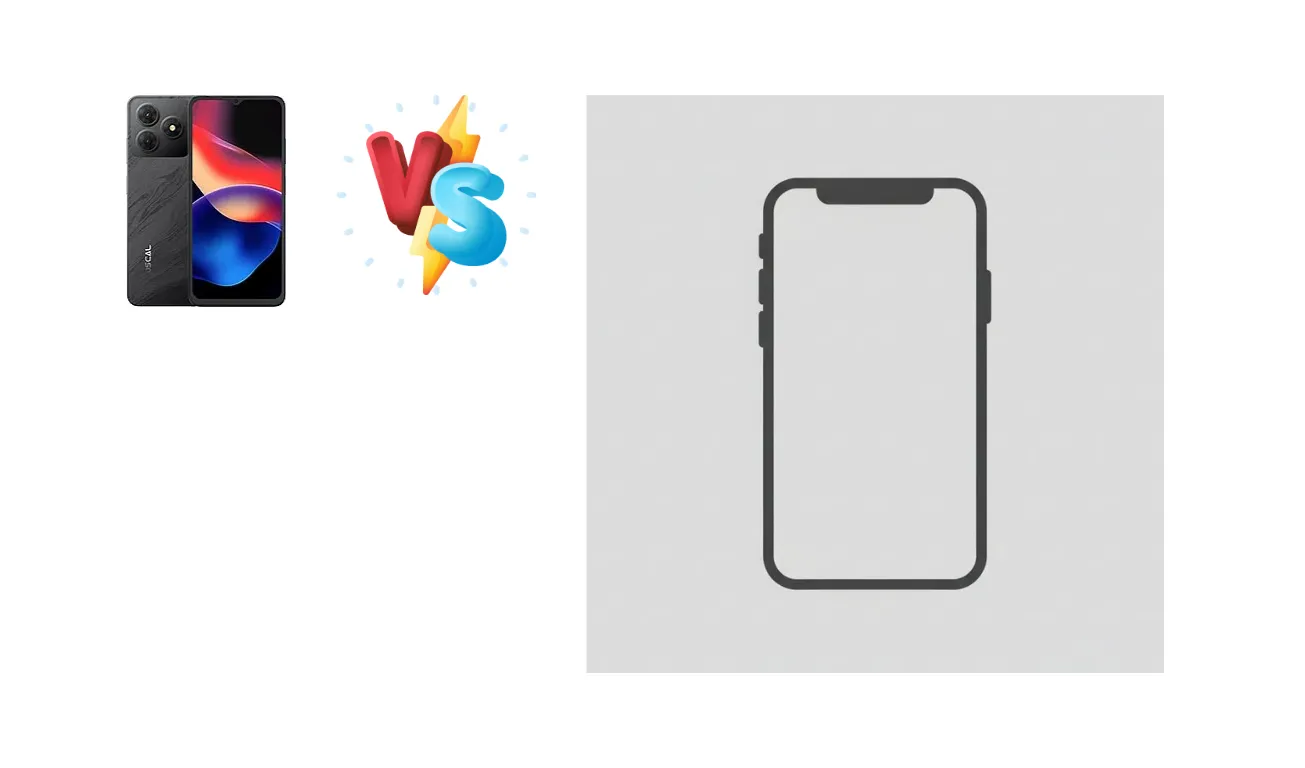
The Oscal Flat 2C and Blackview Oscal S80 represent compelling options in the ultra-budget smartphone space. While both aim to deliver functionality without breaking the bank, they take distinctly different approaches. The Flat 2C prioritizes exceptional battery endurance, while the S80 focuses on a more responsive experience thanks to a more powerful chipset and faster charging. This comparison dissects these trade-offs to help you choose the right device.
🏆 Quick Verdict
For the average user prioritizing longevity and consistent performance over raw speed, the Oscal Flat 2C is the better choice. Its impressive 51-hour battery life and 1100 charge cycles significantly outweigh the S80’s faster charging, especially considering the S80’s more power-hungry chipset.
| Network |
|---|
| 2G bands | GSM 850 / 900 / 1800 / 1900 | GSM 850 / 900 / 1800 / 1900 - SIM 1 & SIM 2 |
| 3G bands | HSDPA 900 / 2100 | HSDPA 900 / 2100 |
| 4G bands | 1, 3, 7, 8, 19, 20, 38, 40, 41 | 1, 3, 7, 8, 20, 40 |
| Speed | HSPA, LTE | HSPA, LTE |
| Technology | GSM / HSPA / LTE | GSM / HSPA / LTE |
| Launch |
|---|
| Announced | 2025, January | 2023, January 03 |
| Status | Available. Released 2025, January | Available. Released 2023, February 13 |
| Body |
|---|
| Dimensions | 163.2 x 75.2 x 8.8 mm (6.43 x 2.96 x 0.35 in) | 174 x 81.4 x 18.9 mm (6.85 x 3.20 x 0.74 in) |
| SIM | Nano-SIM + Nano-SIM | Hybrid Dual SIM (Nano-SIM, dual stand-by) |
| Weight | 193 g (6.81 oz) | 460 g (1.01 lb) |
| | - | IP68/IP69K dust/water resistant (up to 1.5m for 30 min)
Drop-to-concrete resistance from up to 1.5m
MIL-STD-810H compliant |
| Display |
|---|
| Protection | Mohs level 5 | - |
| Resolution | 720 x 1612 pixels, 20:9 ratio (~269 ppi density) | 1080 x 2408 pixels, 20:9 ratio (~401 ppi density) |
| Size | 6.56 inches, 103.4 cm2 (~84.2% screen-to-body ratio) | 6.58 inches, 104.3 cm2 (~73.6% screen-to-body ratio) |
| Type | IPS LCD, 450 nits | IPS LCD |
| Platform |
|---|
| CPU | Octa-core 8x1.6 GHz Cortex-A55 | Octa-core (2x2.0 GHz Cortex-A75 & 6x1.8 GHz Cortex-A55) |
| Chipset | Unisoc T603 (22 nm) | Mediatek MT6769 Helio G85 (12nm) |
| GPU | IMG8322 | Mali-G52 MC2 |
| OS | Android 14 (Go edition), DokeOS 4.0 | Android 12, Doke-OS 3.0 |
| Memory |
|---|
| Card slot | microSDXC (dedicated slot) | microSDXC (uses shared SIM slot) |
| Internal | 64GB 2GB RAM | 128GB 6GB RAM |
| | - | eMMC 5.1 |
| Main Camera |
|---|
| Features | LED flash, HDR, panorama | LED flash, HDR, panorama |
| Single | 13 MP, (wide), 1/4.0", 1.12 μm | 8 MP |
| Triple | - | 12 MP, f/2.0, (wide), 1/2.55", PDAF
8 MP, 117˚ (ultrawide)
2 MP, (depth) |
| Video | 1080p@30fps | 1440p@30fps, 1080p@30fps |
| Selfie camera |
|---|
| Single | 8 MP, (wide) | 8 MP |
| Video | 1080p@30fps | 1080p@30fps |
| Sound |
|---|
| 3.5mm jack | - | Unspecified |
| 35mm jack | Yes | - |
| Loudspeaker | Yes | Yes |
| Comms |
|---|
| Bluetooth | 4.2, A2DP | 5.0, A2DP, LE |
| NFC | No | Yes |
| Positioning | GPS, GLONASS, GALILEO | GPS, GLONASS, GALILEO, BDS |
| Radio | FM radio | FM radio |
| USB | USB Type-C, OTG | USB Type-C, OTG |
| WLAN | Wi-Fi 802.11 b/g/n | Wi-Fi 802.11 a/b/g/n/ac, dual-band |
| Features |
|---|
| Sensors | Accelerometer, proximity | Fingerprint (side-mounted), accelerometer, gyro, proximity, compass |
| Battery |
|---|
| Charging | 10W wired | 33W wired, 51% in 66 min (advertised)
Reverse charging |
| Type | 5000 mAh | Li-Po 13000 mAh, non-removable |
| Misc |
|---|
| Colors | Phantom Black, Ripple Blue, Sky Purple | Navy Green, Mecha Orange, Conquest Black |
| Price | - | About 170 EUR |
| EU LABEL |
|---|
| Battery | 51:18h endurance, 1100 cycles | - |
| Energy | Class B | - |
| Free fall | Class C (90 falls) | - |
| Repairability | Class B | - |
Oscal Flat 2C
- Exceptional battery life (51:18h endurance)
- High battery cycle count (1100 cycles)
- Power-efficient Unisoc T603 chipset
- Lower processing power compared to the S80
- Slower charging speed (10W)
Blackview Oscal S80
- Faster processing power with the Helio G85
- 33W fast charging capability
- Reverse charging functionality
- Shorter battery life
- Potential for thermal throttling during gaming
Display Comparison
Neither device boasts a standout display. Given the context data focuses on internals, we can infer both likely utilize standard IPS LCD panels. The key difference lies in the processing power needed to drive them. The S80’s Helio G85, being more capable, *could* support higher refresh rates (though not confirmed), while the Flat 2C’s T603 is geared towards efficiency. Bezels are likely comparable given the price point, and color accuracy will be standard for this segment.
Camera Comparison
Without detailed camera specs, a direct comparison is difficult. However, it’s safe to assume both phones feature basic camera setups geared towards social media sharing. The S80’s more powerful ISP (Image Signal Processor) within the Helio G85 chipset *could* result in slightly better image processing, particularly in low-light conditions. The presence of a 2MP macro camera on either device is largely a marketing tactic, offering minimal practical benefit due to the low resolution and lack of optical image stabilization (OIS).
Performance
The Blackview Oscal S80’s Mediatek Helio G85 (12nm) represents a significant leap in processing power over the Oscal Flat 2C’s Unisoc T603 (22nm). The G85’s octa-core configuration, featuring two high-performance Cortex-A75 cores clocked at 2.0 GHz, provides a noticeable advantage in CPU-intensive tasks and gaming. The T603 relies solely on Cortex-A55 cores at 1.6 GHz, prioritizing efficiency. This translates to smoother multitasking and faster app launch times on the S80, but also increased power consumption. The 12nm process node of the G85, while more efficient than 22nm, still means the S80 will generate more heat under load.
Battery Life
The Oscal Flat 2C’s 51:18h endurance is its standout feature. This is a direct result of the power-efficient Unisoc T603 chipset and likely a larger battery capacity (though not specified). The Blackview Oscal S80, while offering the convenience of 33W fast charging (advertised 51% in 66 minutes), will drain its battery faster due to the more demanding Helio G85. The S80’s reverse charging capability is a niche feature, useful for topping up accessories but not a primary reason to choose this device. The Flat 2C’s impressive 1100 charge cycles also suggest superior long-term battery health.
Buying Guide
Buy the Oscal Flat 2C if you need a phone that will reliably last through two full days of moderate use, and if consistent performance is more important than demanding gaming. Buy the Blackview Oscal S80 if you prioritize quicker app loading times, smoother multitasking, and the convenience of 33W fast charging, even at the expense of battery life and potential thermal throttling during extended gaming sessions.
Frequently Asked Questions
❓ Will the Helio G85 in the Oscal S80 overheat during prolonged gaming sessions?
The Mediatek Helio G85 is known to generate more heat than power-efficient chips like the Unisoc T603. While the S80 likely has basic thermal management, extended gaming at high settings could lead to noticeable throttling, reducing performance to prevent overheating. The Flat 2C will maintain consistent performance for longer, albeit at a lower graphical fidelity.
❓ How much faster is the 33W charging on the Oscal S80 compared to the 10W charging on the Flat 2C?
The Oscal S80 advertises 51% charge in 66 minutes with its 33W charging. The Flat 2C’s 10W charging will take considerably longer – likely exceeding 3 hours for a full charge. While 33W isn’t exceptionally fast by modern standards, it offers a significant convenience boost for users who frequently need to top up their battery quickly.
❓ Is the Unisoc T603 in the Oscal Flat 2C powerful enough for everyday tasks like browsing and social media?
Yes, the Unisoc T603 is perfectly adequate for everyday tasks. While it won’t deliver a flagship-level experience, it provides a smooth and responsive experience for browsing, social media, messaging, and basic app usage. The focus on efficiency means these tasks will be completed with minimal battery drain.