
Oscal Elite 1 vs. Xiaomi 13 Pro: A Detailed Comparison of Performance, Camera, and Value
| Phones Images | |||||
|---|---|---|---|---|---|
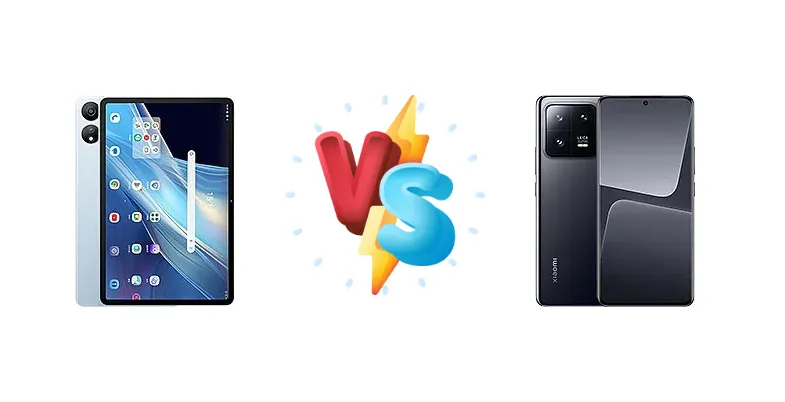
|
🏆 Quick Verdict
For the average user prioritizing raw performance, camera quality, and fast charging, the Xiaomi 13 Pro is the clear winner. However, the Oscal Elite 1 presents a compelling value proposition for budget-conscious users who need a functional and capable device without breaking the bank.
| PHONES | ||
|---|---|---|
| Phone Names | Oscal Elite 1 | Xiaomi 13 Pro |
| Network | ||
|---|---|---|
| 2G bands | GSM 850 / 900 / 1800 / 1900 | GSM 850 / 900 / 1800 / 1900 |
| 3G bands | HSDPA 900 / 2100 | HSDPA 800 / 850 / 900 / 1700(AWS) / 1900 / 2100 |
| 4G bands | 1, 3, 7, 8, 19, 20, 28, 40, 41 | 1, 2, 3, 4, 5, 7, 8, 12, 13, 17, 18, 19, 20, 25, 26, 28, 32, 38, 39, 40, 41, 42, 48, 66 - International |
| 5G bands | - | 1, 3, 5, 7, 8, 20, 28, 38, 40, 41, 66, 71, 75, 77, 78 SA/NSA - International |
| Speed | HSPA, LTE | HSPA, LTE, 5G |
| Technology | GSM / HSPA / LTE | GSM / CDMA / HSPA / CDMA2000 / LTE / 5G |
| - | 1, 3, 5, 8, 28, 38, 40, 41, 77, 78, 79 SA/NSA - China | |
| Launch | ||
|---|---|---|
| Announced | 2024, May | 2022, December 11 |
| Status | Available. Released 2024, May | Available. Released 2022, December 14 |
| Body | ||
|---|---|---|
| Build | - | Glass front (Gorilla Glass Victus), ceramic back or silicone polymer back, aluminum frame |
| Dimensions | 278.5 x 180.5 x 7.4 mm (10.96 x 7.11 x 0.29 in) | 162.9 x 74.6 x 8.4 mm or 8.7 mm |
| SIM | Nano-SIM + Nano-SIM | · Nano-SIM + eSIM· Nano-SIM + Nano-SIM |
| Weight | 587 g (1.29 lb) | 210 g or 229 g (7.41 oz) |
| - | IP68 dust/water resistant (up to 1.5m for 30 min) | |
| Display | ||
|---|---|---|
| Protection | - | Corning Gorilla Glass Victus |
| Resolution | 1080 x 2560 pixels (~230 ppi density) | 1440 x 3200 pixels, 20:9 ratio (~522 ppi density) |
| Size | 12.1 inches, 338.3 cm2 (~67.3% screen-to-body ratio) | 6.73 inches, 108.9 cm2 (~89.6% screen-to-body ratio) |
| Type | IPS LCD, 120Hz, 600 nits | LTPO AMOLED, 1B colors, 120Hz, Dolby Vision, HDR10+, 1200 nits (HBM), 1900 nits (peak) |
| Platform | ||
|---|---|---|
| CPU | Octa-core (2x2.2 GHz Cortex-A76 & 6x2.0 GHz Cortex-A55) | Octa-core (1x3.2 GHz Cortex-X3 & 2x2.8 GHz Cortex-A715 & 2x2.8 GHz Cortex-A710 & 3x2.0 GHz Cortex-A510) |
| Chipset | Mediatek Helio G99 (6 nm) | Qualcomm SM8550-AB Snapdragon 8 Gen 2 (4 nm) |
| GPU | Mali-G57 MC2 | Adreno 740 |
| OS | Android 14, DokeOS_P 4.0 | Android 13, upgradable to Android 14, HyperOS |
| Memory | ||
|---|---|---|
| Card slot | microSDXC (uses shared SIM slot) | No |
| Internal | 256GB 8GB RAM | 128GB 8GB RAM, 256GB 8GB RAM, 256GB 12GB RAM, 512GB 12GB RAM |
| - | UFS 3.1 - 128GB UFS 4.0 - 256/512GB | |
| Main Camera | ||
|---|---|---|
| Features | LED flash | Laser AF, color spectrum sensor, Leica lens, Dual-LED dual-tone flash, HDR, panorama |
| Single | 12 MP, (wide), 1/2.55" | - |
| Triple | - | 50.3 MP, f/1.9, 23mm (wide), 1.0"-type, 1.6µm, dual pixel PDAF, OIS 50 MP, f/2.0, 75mm (telephoto), PDAF (10cm - ∞), 3.2x optical zoom 50 MP, f/2.2, 14mm, 115˚ (ultrawide), AF |
| Video | 1080p@30fps | 8K@24fps (HDR), 4K@24/30/60fps (HDR10+, 10-bit Dolby Vision HDR, 10-bit LOG), 1080p@30/120/240/960fps, 1080p@1920fps, gyro-EIS |
| Selfie camera | ||
|---|---|---|
| Features | - | HDR, panorama |
| Single | 13 MP | 32 MP, f/2.0, 22mm (wide), 1/3.14", 0.7µm |
| Video | 1080p@30fps | 1080p@30fps |
| Sound | ||
|---|---|---|
| 3.5mm jack | - | No |
| 35mm jack | No | No |
| Loudspeaker | Yes, with stereo speakers (4 speakers) | Yes, with stereo speakers |
| - | 24-bit/192kHz audio | |
| Comms | ||
|---|---|---|
| Bluetooth | 5.0, A2DP, LE | 5.3, A2DP, aptX HD, aptX Adaptive |
| Infrared port | - | Yes |
| NFC | No | Yes |
| Positioning | GPS, GLONASS, GALILEO, BDS | GPS (L1+L5), GLONASS (G1), BDS (B1I+B1c+B2a), GALILEO (E1+E5a), QZSS (L1+L5), NavIC (L5) |
| Radio | FM radio | No |
| USB | USB Type-C, OTG | USB Type-C 2.0, OTG |
| WLAN | Wi-Fi 802.11 a/b/g/n/ac, dual-band | Wi-Fi 802.11 a/b/g/n/ac/6e, dual-band, Wi-Fi Direct |
| Features | ||
|---|---|---|
| Sensors | Accelerometer, proximity (accessories only), gyro | Fingerprint (under display, optical), accelerometer, proximity, gyro, compass, barometer |
| Battery | ||
|---|---|---|
| Charging | 33W wired | 120W wired, PD3.0, QC4, 100% in 19 min 50W wireless, 100% in 36 min 10W reverse wireless |
| Type | 8800 mAh | Li-Po 4820 mAh |
| Misc | ||
|---|---|---|
| Colors | Gray, White, Blue | Ceramic White, Ceramic Black, Ceramic Flora Green, Mountain Blue |
| Models | - | 2210132G, 2210132C |
| Price | - | About 750 EUR |
| Tests | ||
|---|---|---|
| Battery life | - | Endurance rating 115h |
| Camera | - | Photo / Video |
| Display | - | Contrast ratio: Infinite (nominal) |
| Loudspeaker | - | -25.6 LUFS (Very good) |
| Performance | - | AnTuTu: 1281666 (v9) GeekBench: 5087 (v5.1), 5323 (v6) GFXBench: 64fps (ES 3.1 onscreen) |
Oscal Elite 1
- Significantly more affordable
- Decent performance for basic tasks
- Functional and reliable
- Inferior camera performance
- Slower charging speeds
- Less powerful processor
Xiaomi 13 Pro
- Exceptional performance with Snapdragon 8 Gen 2
- Fastest charging available (120W wired)
- Superior camera system
- High price point
- May be overkill for basic users
- Larger and heavier than the Oscal
Display Comparison
The Xiaomi 13 Pro boasts a significantly brighter display, reaching a measured 1253 nits, compared to an unspecified brightness for the Oscal Elite 1. While the Oscal’s display specs are missing, the 13 Pro’s infinite (nominal) contrast ratio suggests a superior viewing experience, particularly with HDR content. The 13 Pro likely utilizes an LTPO panel for adaptive refresh rates, conserving battery life, a feature absent in the Oscal. The 13 Pro’s display is geared towards media consumption and outdoor visibility.
Camera Comparison
Both devices feature 'Photo / Video' capabilities, but the Xiaomi 13 Pro is expected to offer a far superior camera experience. While specific sensor details are missing for both, Xiaomi flagships are known for their advanced image processing and high-quality sensors. The 13 Pro likely includes features like Optical Image Stabilization (OIS) and larger sensor sizes, resulting in better low-light performance and dynamic range. The Oscal Elite 1 will likely rely on software processing to compensate for its less capable hardware. We can assume the Oscal will lack the advanced computational photography features found on the Xiaomi.
Performance
The performance gap is substantial. The Xiaomi 13 Pro’s Qualcomm Snapdragon 8 Gen 2 (4nm) is a flagship chipset featuring a Cortex-X3 prime core clocked at 3.2 GHz, vastly outperforming the Oscal Elite 1’s MediaTek Helio G99 (6nm). The Snapdragon 8 Gen 2’s architecture – incorporating Cortex-A715, A710, and A510 cores – provides a significant advantage in multi-tasking and demanding applications. The 4nm process node of the Snapdragon 8 Gen 2 also translates to better thermal efficiency, reducing throttling during prolonged gaming sessions. The Helio G99 is adequate for everyday tasks, but will struggle with graphically intensive games at high settings.
Battery Life
The Xiaomi 13 Pro’s battery life is rated at an endurance rating of 115 hours and achieves 10:55h of active use, demonstrating excellent efficiency. Crucially, the 13 Pro supports 120W wired charging, achieving a full charge in just 19 minutes, alongside 50W wireless and 10W reverse wireless charging. The Oscal Elite 1, with its 33W wired charging, will take considerably longer to charge. While the Oscal’s battery capacity is unknown, the Xiaomi’s faster charging and efficient chipset offset any potential capacity difference.
Buying Guide
Buy the Oscal Elite 1 if you need a reliable smartphone for everyday tasks, light gaming, and prioritize affordability above all else. It’s ideal for users who don’t demand the absolute best in camera performance or processing power. Buy the Xiaomi 13 Pro if you demand a top-tier experience, including exceptional camera capabilities, blazing-fast performance for demanding apps and games, and the convenience of incredibly fast wired and wireless charging.