
Motorola Edge 40 Pro vs. Oscal Elite 1: A Deep Dive into Performance and Value
| Phones Images | |||||
|---|---|---|---|---|---|
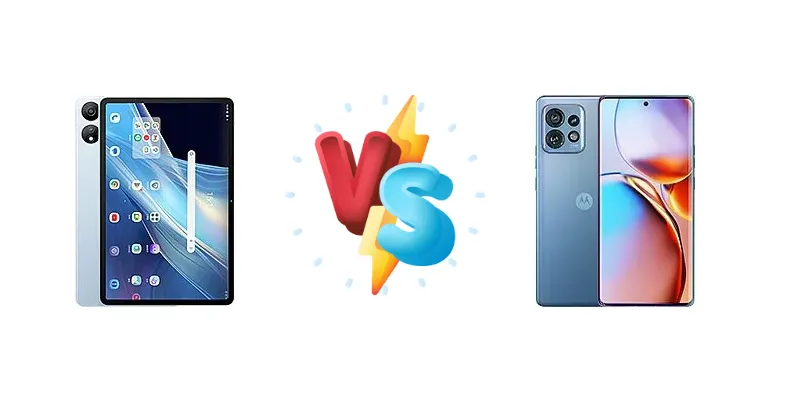
|
🏆 Quick Verdict
For users prioritizing raw power, rapid charging, and a premium experience, the Motorola Edge 40 Pro is the clear winner. However, the Oscal Elite 1 provides a surprisingly capable gaming experience and excellent value for budget-conscious consumers.
| PHONES | ||
|---|---|---|
| Phone Names | Oscal Elite 1 | Motorola Edge 40 Pro |
| Network | ||
|---|---|---|
| 2G bands | GSM 850 / 900 / 1800 / 1900 | GSM 850 / 900 / 1800 / 1900 |
| 3G bands | HSDPA 900 / 2100 | HSDPA 850 / 900 / 1700(AWS) / 1900 / 2100 |
| 4G bands | 1, 3, 7, 8, 19, 20, 28, 40, 41 | 1, 2, 3, 4, 5, 7, 8, 12, 13, 17, 18, 19, 20, 25, 26, 28, 32, 38, 39, 40, 41, 42, 43, 48, 66 |
| 5G bands | - | 1, 2, 3, 5, 7, 8, 20, 28, 38, 40, 41, 66, 77, 78 SA/NSA/Sub6 |
| Speed | HSPA, LTE | HSPA, LTE, 5G |
| Technology | GSM / HSPA / LTE | GSM / HSPA / LTE / 5G |
| Launch | ||
|---|---|---|
| Announced | 2024, May | 2023, April 04 |
| Status | Available. Released 2024, May | Available. Released 2023, April 04 |
| Body | ||
|---|---|---|
| Build | - | Glass front (Gorilla Glass Victus), glass back (Gorilla Glass Victus), aluminum frame |
| Dimensions | 278.5 x 180.5 x 7.4 mm (10.96 x 7.11 x 0.29 in) | 161.2 x 74 x 8.6 mm (6.35 x 2.91 x 0.34 in) |
| SIM | Nano-SIM + Nano-SIM | Nano-SIM + eSIM |
| Weight | 587 g (1.29 lb) | 199 g (7.02 oz) |
| - | IP68 dust/water resistant (up to 1.5m for 30 min) | |
| Display | ||
|---|---|---|
| Protection | - | Corning Gorilla Glass Victus |
| Resolution | 1080 x 2560 pixels (~230 ppi density) | 1080 x 2400 pixels, 20:9 ratio (~394 ppi density) |
| Size | 12.1 inches, 338.3 cm2 (~67.3% screen-to-body ratio) | 6.67 inches, 108.0 cm2 (~90.5% screen-to-body ratio) |
| Type | IPS LCD, 120Hz, 600 nits | OLED, 1B colors, 165Hz, HDR10+, Dolby Vision, 1300 nits (peak) |
| Platform | ||
|---|---|---|
| CPU | Octa-core (2x2.2 GHz Cortex-A76 & 6x2.0 GHz Cortex-A55) | Octa-core (1x3.2 GHz Cortex-X3 & 2x2.8 GHz Cortex-A715 & 2x2.8 GHz Cortex-A710 & 3x2.0 GHz Cortex-A510) |
| Chipset | Mediatek Helio G99 (6 nm) | Qualcomm SM8550-AB Snapdragon 8 Gen 2 (4 nm) |
| GPU | Mali-G57 MC2 | Adreno 740 |
| OS | Android 14, DokeOS_P 4.0 | Android 13, up to 3 major Android upgrades |
| Memory | ||
|---|---|---|
| Card slot | microSDXC (uses shared SIM slot) | No |
| Internal | 256GB 8GB RAM | 256GB 12GB RAM, 512GB 12GB RAM |
| - | UFS 4.0 | |
| Main Camera | ||
|---|---|---|
| Features | LED flash | Dual-LED flash, panorama, HDR |
| Single | 12 MP, (wide), 1/2.55" | - |
| Triple | - | 50 MP, f/1.8, (wide), 1/1.55", 1.0µm, multi-directional PDAF, OIS 12 MP, f/1.6, (telephoto), 1/2.93", 1.22µm, PDAF, 2x optical zoom 50 MP, f/2.2, 114˚ (ultrawide), 1/2.76", 0.64µm, AF |
| Video | 1080p@30fps | 8K@30fps, 4K@30/60fps, 1080p@30/60/120/240/960fps, 10-bit HDR10+, gyro-EIS |
| Selfie camera | ||
|---|---|---|
| Features | - | HDR |
| Single | 13 MP | 60 MP, f/2.2, (wide), 1/2.8", 0.61µm |
| Video | 1080p@30fps | 4K@30/60fps, 1080p@30/60fps |
| Sound | ||
|---|---|---|
| 3.5mm jack | - | No |
| 35mm jack | No | No |
| Loudspeaker | Yes, with stereo speakers (4 speakers) | Yes, with stereo speakers |
| Comms | ||
|---|---|---|
| Bluetooth | 5.0, A2DP, LE | 5.3, A2DP, LE |
| NFC | No | Yes |
| Positioning | GPS, GLONASS, GALILEO, BDS | GPS, GLONASS, GALILEO, BDS |
| Radio | FM radio | No |
| USB | USB Type-C, OTG | USB Type-C 3.2, OTG, DisplayPort 1.4 |
| WLAN | Wi-Fi 802.11 a/b/g/n/ac, dual-band | Wi-Fi 802.11 a/b/g/n/ac/6e/7, tri-band, Wi-Fi Direct |
| Features | ||
|---|---|---|
| Sensors | Accelerometer, proximity (accessories only), gyro | Fingerprint (under display, optical), accelerometer, gyro, proximity, compass |
| - | Ready For 3.5 support | |
| Battery | ||
|---|---|---|
| Charging | 33W wired | 125W wired, PD3.0, QC5, 50% in 6 min, 100% in 23 min 15W wireless 5W reverse wired 5W reverse wireless |
| Type | 8800 mAh | Li-Po 4600 mAh |
| Misc | ||
|---|---|---|
| Colors | Gray, White, Blue | Interstellar Black, Lunar Blue |
| Price | - | € 313.87 |
| Tests | ||
|---|---|---|
| Battery life | - | Endurance rating 117h |
| Camera | - | Photo / Video |
| Display | - | Contrast ratio: Infinite (nominal) |
| Loudspeaker | - | -22.6 LUFS (Excellent) |
| Performance | - | AnTuTu: 1273764 (v9) GeekBench: 4896 (v5.1), 5352 (v6) GFXBench: 112fps (ES 3.1 onscreen) |
Oscal Elite 1
- Excellent gaming performance with the Helio G99.
- Affordable price point.
- Decent battery life (117h endurance).
- Significantly less powerful than the Snapdragon 8 Gen 2.
- Slower charging speed (33W).
- Camera specifications are unknown and likely less advanced.
Motorola Edge 40 Pro
- Flagship-level performance with the Snapdragon 8 Gen 2.
- Blazing-fast 125W wired charging.
- Bright and high-contrast display (1050 nits).
- Higher price tag.
- May be overkill for casual users.
- Potential for thermal throttling under extreme load (though mitigated by 4nm process).
Display Comparison
The Motorola Edge 40 Pro boasts a brighter display, reaching a measured peak of 1050 nits, ensuring excellent visibility even in direct sunlight. While the Oscal Elite 1’s display specifications are not provided, the Edge 40 Pro’s infinite contrast ratio suggests a superior viewing experience with deeper blacks. The absence of LTPO technology in the Oscal Elite 1 likely means a fixed refresh rate, whereas the Edge 40 Pro may offer adaptive refresh rates for improved power efficiency. Bezels and color accuracy are unknown for the Oscal Elite 1, but Motorola typically delivers well-calibrated panels.
Camera Comparison
Both devices are listed as having Photo/Video capabilities, but detailed camera specifications are lacking for the Oscal Elite 1. The Motorola Edge 40 Pro likely features a more advanced camera system with larger sensors, optical image stabilization (OIS), and sophisticated image processing algorithms. The absence of specific details on the Oscal Elite 1’s camera suggests it may prioritize affordability over image quality. We can assume the Edge 40 Pro will excel in low-light photography and video recording due to its flagship-level hardware.
Performance
The performance gap is substantial. The Motorola Edge 40 Pro’s Qualcomm Snapdragon 8 Gen 2 (4nm) is a flagship chipset featuring a Cortex-X3 prime core clocked at 3.2GHz, designed for peak performance. This contrasts sharply with the Oscal Elite 1’s MediaTek Helio G99 (6nm). While the G99 is a capable processor for mid-range gaming, the Snapdragon 8 Gen 2 offers significantly higher CPU and GPU performance. The 4nm process node of the Snapdragon 8 Gen 2 also provides superior thermal efficiency, reducing the likelihood of throttling during extended gaming sessions. The Edge 40 Pro likely utilizes faster LPDDR5x RAM, further enhancing performance compared to the Oscal Elite 1’s RAM configuration (unspecified).
Battery Life
Both phones have an endurance rating of 117h, suggesting similar overall battery life despite the Oscal Elite 1’s unspecified battery capacity. However, the charging speeds are dramatically different. The Motorola Edge 40 Pro’s 125W wired charging is a game-changer, achieving 50% charge in just 6 minutes and a full charge in 23 minutes. It also supports 15W wireless and 5W reverse wireless charging. The Oscal Elite 1’s 33W wired charging is considerably slower, making the Edge 40 Pro the clear winner for users who prioritize quick top-ups.
Buying Guide
Buy the Oscal Elite 1 if you need a dedicated gaming phone on a tight budget, prioritizing long play sessions over top-tier camera performance or wireless charging. Buy the Motorola Edge 40 Pro if you prefer a versatile flagship with exceptional processing power, incredibly fast charging, and a more refined overall experience, even if it comes at a higher cost.