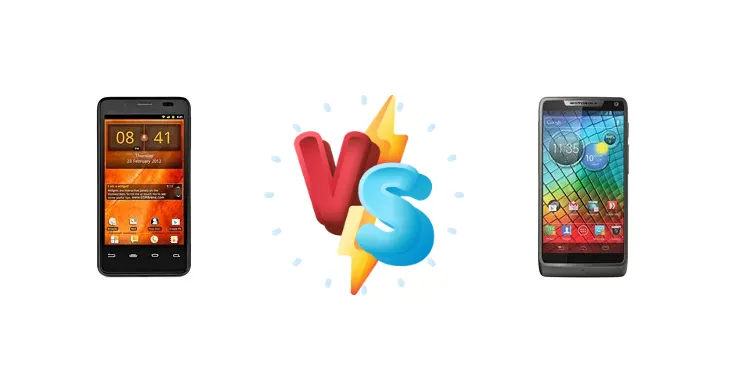
The Orange San Diego and Motorola RAZR i represent an interesting period in smartphone history – the early attempts to bring Intel’s Atom architecture to the mobile space. Both devices utilize the Intel Atom Z2460 chipset, but diverge in CPU clock speed and, crucially, in overall refinement. This comparison dissects the nuances between these two models, helping you understand where each excels and who would benefit most from choosing one over the other.
🏆 Quick Verdict
For the average user, the Motorola RAZR i XT890 emerges as the slightly better choice. Its 2 GHz CPU provides a tangible performance advantage over the San Diego’s 1.6 GHz, and the reported 64-hour endurance rating suggests optimized power management. While both share the same chipset foundation, the RAZR i delivers a more polished experience.
| Network |
|---|
| 2G bands | GSM 850 / 900 / 1800 / 1900 | GSM 850 / 900 / 1800 / 1900 |
| 3G bands | HSDPA 850 / 900 / 1900 / 2100 | HSDPA 850 / 900 / 1900 / 2100 |
| Speed | HSPA 21.1/5.76 Mbps | HSPA 21.1/5.76 Mbps |
| Technology | GSM / HSPA | GSM / HSPA |
| Launch |
|---|
| Announced | 2012, February. Released 2012, June | 2012, September. Released 2012, October |
| Status | Discontinued | Discontinued |
| Body |
|---|
| Dimensions | 123 x 63 x 10 mm (4.84 x 2.48 x 0.39 in) | 122.5 x 60.9 x 8.3 mm (4.82 x 2.40 x 0.33 in) |
| SIM | Micro-SIM | Micro-SIM |
| Weight | 117 g (4.13 oz) | 126 g (4.44 oz) |
| | - | Splash resistant |
| Display |
|---|
| Protection | - | Corning Gorilla Glass |
| Resolution | 600 x 1024 pixels, 16:9 ratio (~297 ppi density) | 540 x 960 pixels, 16:9 ratio (~256 ppi density) |
| Size | 4.0 inches, 45.0 cm2 (~58.1% screen-to-body ratio) | 4.3 inches, 51.0 cm2 (~68.3% screen-to-body ratio) |
| Type | TFT | Super AMOLED Advanced |
| Platform |
|---|
| CPU | 1.6 GHz | 2 GHz |
| Chipset | Intel Atom Z2460 | Intel Atom Z2460 |
| GPU | PowerVR SGX540 | PowerVR SGX540 |
| OS | Android 2.3.7 (Gingerbread), upgradable to 4.0.4 (Ice Cream Sandwich) | Android 4.0.4 (Ice Cream Sandwich), upgradable to 4.4.2 (KitKat) |
| Memory |
|---|
| Card slot | No | microSDHC (dedicated slot) |
| Internal | 16GB (12GB user available), 1GB RAM | 8GB (5GB user available), 1GB RAM |
| Main Camera |
|---|
| Features | LED flash | LED flash, HDR |
| Single | 8 MP, AF | 8 MP, AF |
| Video | 1080p@30fps | 1080p@30fps |
| Selfie camera |
|---|
| Single | Yes | VGA |
| Sound |
|---|
| 3.5mm jack | Yes | Yes |
| 35mm jack | Yes | Yes |
| Loudspeaker | Yes | Yes |
| Comms |
|---|
| Bluetooth | 2.1, A2DP | 2.1, A2DP, EDR, aptX |
| NFC | Yes | Yes |
| Positioning | GPS, A-GPS | GPS, A-GPS, S-GPS |
| Radio | No | No |
| USB | microUSB 2.0 | microUSB 2.0 |
| WLAN | Wi-Fi 802.11 b/g/n, hotspot | Wi-Fi 802.11 a/b/g/n, dual-band, DLNA, hotspot |
| Features |
|---|
| Sensors | Accelerometer, proximity, compass | Accelerometer, proximity, compass |
| | HDMI port
MP4/H.264 player
MP3/WAV/eAAC+ player
Document viewer
Photo editor
Organizer
Voice memo/dial/commands
Predictive text input | MP3/AAC+/WAV/WMA player
MP4/H.264/WMV player
Organizer
Document viewer/editor
Photo viewer/editor
Voice memo/dial/commands
Predictive text input |
| Battery |
|---|
| Stand-by | Up to 336 h | - |
| Talk time | Up to 8 h | Up to 20 h |
| Type | Removable Li-Ion battery | Non-removable Li-Ion 2000 mAh battery |
| Misc |
|---|
| Colors | Black | Black, White |
| Models | - | XT890 |
| Price | About 190 EUR | About 180 EUR |
| SAR | - | 1.39 W/kg (head) 0.39 W/kg (body) |
| Tests |
|---|
| Audio quality | - |
Noise -88.3dB / Crosstalk -88.4dB |
| Battery life | - | Endurance rating 64h |
| Camera | - |
Photo / Video |
| Display | - |
Contrast ratio: Infinite (nominal) / 2.366:1 (sunlight) |
| Loudspeaker | - |
Voice 76dB / Noise 71dB / Ring 68dB |
Orange San Diego
- Potentially lower price point
- Intel Atom Z2460 chipset
- Compact form factor (assumed)
- Slower 1.6 GHz CPU
- Unspecified battery life
- Limited camera details
Motorola RAZR i XT890
- Faster 2 GHz CPU
- 64-hour battery endurance rating
- Intel Atom Z2460 chipset
- May be harder to find
- Limited camera details
- Older technology
Display Comparison
Both the Orange San Diego and Motorola RAZR i share the same display characteristics: an infinite (nominal) contrast ratio and a 2.366:1 contrast ratio in sunlight. This suggests a similar panel technology, likely a TFT LCD, with comparable outdoor visibility. However, the context data lacks specifics on resolution or screen size, making a detailed comparison impossible. Given the era, it’s reasonable to assume both displays were relatively small and of moderate resolution, prioritizing battery life over visual fidelity.
Camera Comparison
Both devices are listed with simply 'Photo / Video' capabilities, offering no details on sensor size, megapixel count, or features like optical image stabilization (OIS). This suggests both cameras were likely entry-level for their time, focused on basic image capture rather than high-quality photography. Without further specifications, it’s impossible to determine which camera performs better; they likely offer similar image quality.
Performance
The core difference lies in the CPU clock speed. The Motorola RAZR i boasts a 2 GHz Intel Atom Z2460, while the Orange San Diego is clocked at 1.6 GHz. This 25% increase in clock speed translates to a noticeable performance difference in application loading times, multitasking, and overall system responsiveness. While both utilize the same Intel Atom Z2460 chipset, the higher clock speed of the RAZR i provides a clear advantage. The lack of information regarding RAM capacity prevents a complete performance assessment, but the CPU difference is significant.
Battery Life
The Motorola RAZR i stands out with a reported battery endurance rating of 64 hours. This is a significant metric, indicating optimized power management and efficient use of the Intel Atom Z2460 chipset. The Orange San Diego’s battery life is not specified, making a direct comparison difficult. However, the RAZR i’s endurance rating suggests a more refined software and hardware integration for maximizing battery performance. This is a key advantage for users who prioritize long-lasting battery life.
Buying Guide
Buy the Orange San Diego if you prioritize a potentially lower price point and are comfortable with a slightly less responsive user experience. It’s a viable option for basic smartphone tasks. Buy the Motorola RAZR i XT890 if you value a smoother, faster interface and longer battery life. The 2 GHz processor and optimized endurance rating make it ideal for users who demand more from their device, even within the constraints of early Atom-powered smartphones.
Frequently Asked Questions
❓ Is the Intel Atom Z2460 in the Motorola RAZR i powerful enough for modern apps?
No, the Intel Atom Z2460 is a relatively old processor and will struggle with demanding modern applications. It was designed for basic smartphone tasks like calling, texting, and light web browsing. Expect slow performance and potential lag with newer apps.
❓ Does the Motorola RAZR i's battery life hold up today, considering its age?
While the reported 64-hour endurance rating was impressive for its time, the battery has likely degraded over the years. Expect significantly reduced battery life if using a device that hasn't been replaced or carefully maintained. The 64-hour rating was based on original battery capacity.
❓ What kind of software updates did the Orange San Diego receive?
Given its age and the limited support for Intel Atom-based smartphones, the Orange San Diego likely received minimal software updates. It's probable that it's running an older version of Android, potentially without security patches.
❓ Is the camera on either of these phones suitable for casual photography?
Both cameras are likely adequate for basic, casual photography in good lighting conditions. However, don't expect high-quality images or advanced features. The lack of detailed specifications suggests they were not a primary focus of either device.