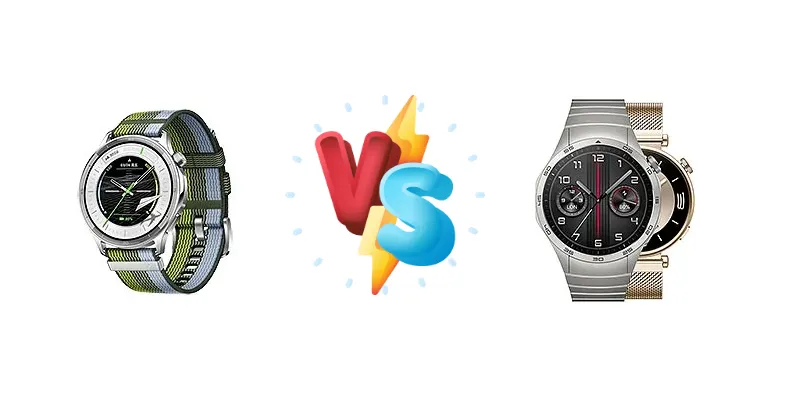
The smartwatch market is increasingly segmented, with options ranging from fitness-focused trackers to fully-fledged extensions of your smartphone. The Oppo Watch S, powered by the Qualcomm Snapdragon W5 Gen 1, aims for a premium, performance-driven experience. Conversely, the Huawei Watch GT 4 prioritizes convenience with its wireless charging and established health tracking features. This comparison dissects the core differences to help you choose the right wearable for your needs.
🏆 Quick Verdict
For users prioritizing a responsive and fluid smartwatch experience, the Oppo Watch S emerges as the winner. The Snapdragon W5 Gen 1 chipset delivers a noticeable performance advantage. However, the Huawei Watch GT 4’s wireless charging and potentially longer battery life make it a compelling choice for those valuing convenience above all else.
| Network |
|---|
| 2G bands | N/A | N/A |
| 3G bands | N/A | N/A |
| 4G bands | N/A | N/A |
| EDGE | No | No |
| GPRS | No | No |
| Speed | No | No |
| Technology | No cellular connectivity | No cellular connectivity |
| Launch |
|---|
| Announced | 2025, October 16 | 2023, September 14 |
| Status | Available. Released 2025, October 22 | Available. Released 2023, October 02 |
| Body |
|---|
| Build | - | Glass front, plastic back, stainless steel frame |
| Dimensions | 45 x 45 x 8.9 mm (1.77 x 1.77 x 0.35 in) | 46 x 46 x 10.9 mm (1.81 x 1.81 x 0.43 in) |
| SIM | No | No |
| Weight | 35 g (1.23 oz) | 37 g (41mm) / 48 g (46mm) (1.31 oz) |
| Display |
|---|
| Resolution | 464 x 464 pixels (~317 ppi density) | 466 x 466 pixels (~326 ppi density) |
| Size | 1.46 inches | 1.43 inches |
| Type | AMOLED, 3000 nits (peak) | AMOLED |
| Platform |
|---|
| Chipset | Qualcomm Snapdragon W5 Gen 1 (4 nm) | - |
| OS | ColorOS Watch 7.1 | HarmonyOS 4.0 |
| Memory |
|---|
| Card slot | No | No |
| Internal | 4GB | Unspecified |
| Sound |
|---|
| 35mm jack | No | No |
| Loudspeaker | Yes | Yes |
| Comms |
|---|
| Bluetooth | 5.2, A2DP, LE | 5.2, A2DP, LE |
| NFC | Yes | Yes |
| Positioning | GPS (L1+L5), GLONASS, GALILEO, BDS, QZSS | GPS (L1+L5), GLONASS, BDS, GALILEO, QZSS |
| Radio | No | No |
| USB | No | No |
| WLAN | No | No |
| Features |
|---|
| Sensors | Accelerometer, gyro, barometer, compass, heart rate, SpO2 | Accelerometer, gyro, heart rate, barometer, compass, SpO2, thermometer (body temperature) |
| Battery |
|---|
| Charging | - | Wireless |
| Type | Li-Ion 339 mAh | Li-Ion 524 mAh |
| Misc |
|---|
| Colors | Black, Silver | Black, Steel, Silver, Gold |
| Models | - | ARA-B19, PNX-B19 |
| Price | - | About 270 EUR |
Oppo Watch S
- Superior performance with Snapdragon W5 Gen 1
- Potentially smoother user experience
- Likely vibrant AMOLED display
- Battery life may be shorter than GT 4
- Requires wired charging (assumed)
Huawei Watch GT 4
- Convenient wireless charging
- Potentially longer battery life
- Comprehensive health tracking features
- Less powerful chipset
- May experience lag with demanding apps
Display Comparison
Context data lacks display specifics for both devices. However, given Oppo’s history with AMOLED displays, the Watch S likely features a vibrant AMOLED panel. The Huawei Watch GT 4, based on previous generations, likely also utilizes AMOLED technology. The key differentiator will be peak brightness and LTPO implementation. LTPO (Low-Temperature Polycrystalline Oxide) allows for variable refresh rates, conserving battery life when static content is displayed. Without specific data, it's difficult to determine which device offers superior visual clarity or efficiency, but Oppo's focus on premium displays suggests a potential edge.
Camera Comparison
Neither device is marketed for camera capabilities, and context data does not mention cameras. Smartwatches generally have limited camera functionality, and this comparison will not focus on this aspect.
Performance
The Oppo Watch S’s Qualcomm Snapdragon W5 Gen 1 (4nm) chipset is the clear performance leader. The 4nm process node signifies improved power efficiency and thermal management compared to older generation chipsets. This translates to faster app loading times, smoother animations, and a more responsive user interface. The Huawei Watch GT 4, while capable, likely utilizes a proprietary chipset optimized for power efficiency rather than raw processing power. This difference is crucial for users who intend to run multiple apps or utilize complex features on their smartwatch. The Snapdragon W5 Gen 1’s architecture is designed for wearable applications, offering a significant advantage in multitasking and overall system responsiveness.
Battery Life
Context data only mentions wireless charging for the Huawei Watch GT 4. While the Oppo Watch S’s battery capacity is unknown, the Snapdragon W5 Gen 1’s 4nm process should contribute to respectable battery life. The Huawei Watch GT 4’s wireless charging offers convenience, eliminating the need for cables. However, wireless charging is typically less efficient than wired charging, potentially resulting in longer charging times. The actual battery life will depend on usage patterns, but the GT 4’s emphasis on efficiency suggests it may offer longer endurance, especially for users who primarily utilize fitness tracking features.
Buying Guide
Buy the Oppo Watch S if you need a smartwatch that feels snappy and responsive, especially if you frequently use apps or rely on quick interactions. Its Snapdragon W5 Gen 1 chipset is ideal for users who want a more 'computer-like' experience on their wrist. Buy the Huawei Watch GT 4 if you prefer a hassle-free experience with wireless charging and a focus on comprehensive health tracking, and are less concerned with peak performance for demanding applications.
Frequently Asked Questions
❓ Does the Snapdragon W5 Gen 1 in the Oppo Watch S significantly impact app loading times compared to the Huawei Watch GT 4?
Yes, the Snapdragon W5 Gen 1 is a substantial upgrade in processing power. Users can expect noticeably faster app loading times, smoother animations, and a more responsive overall experience when using apps on the Oppo Watch S compared to the Huawei Watch GT 4, which likely uses a less powerful, proprietary chipset.
❓ How does the wireless charging of the Huawei Watch GT 4 compare to the charging speed of a wired connection on the Oppo Watch S (assuming it has one)?
Wireless charging, while convenient, is generally slower than wired charging. While the Oppo Watch S’s exact charging speed is unknown, a wired connection will likely offer a faster 0-100% charge time. The Huawei Watch GT 4 prioritizes convenience over speed in this regard.
❓ Is the performance difference between the two watches noticeable during everyday tasks like checking notifications and tracking steps?
For basic tasks like checking notifications and step tracking, the difference may be minimal. However, when using more demanding features like voice assistants, navigating complex apps, or utilizing advanced health tracking metrics, the Snapdragon W5 Gen 1 in the Oppo Watch S will provide a smoother and more responsive experience.