
Oppo Reno9 Pro+ vs Samsung Galaxy S23+: A Deep Dive into Flagship Performance and Value
| Phones Images | |||||
|---|---|---|---|---|---|
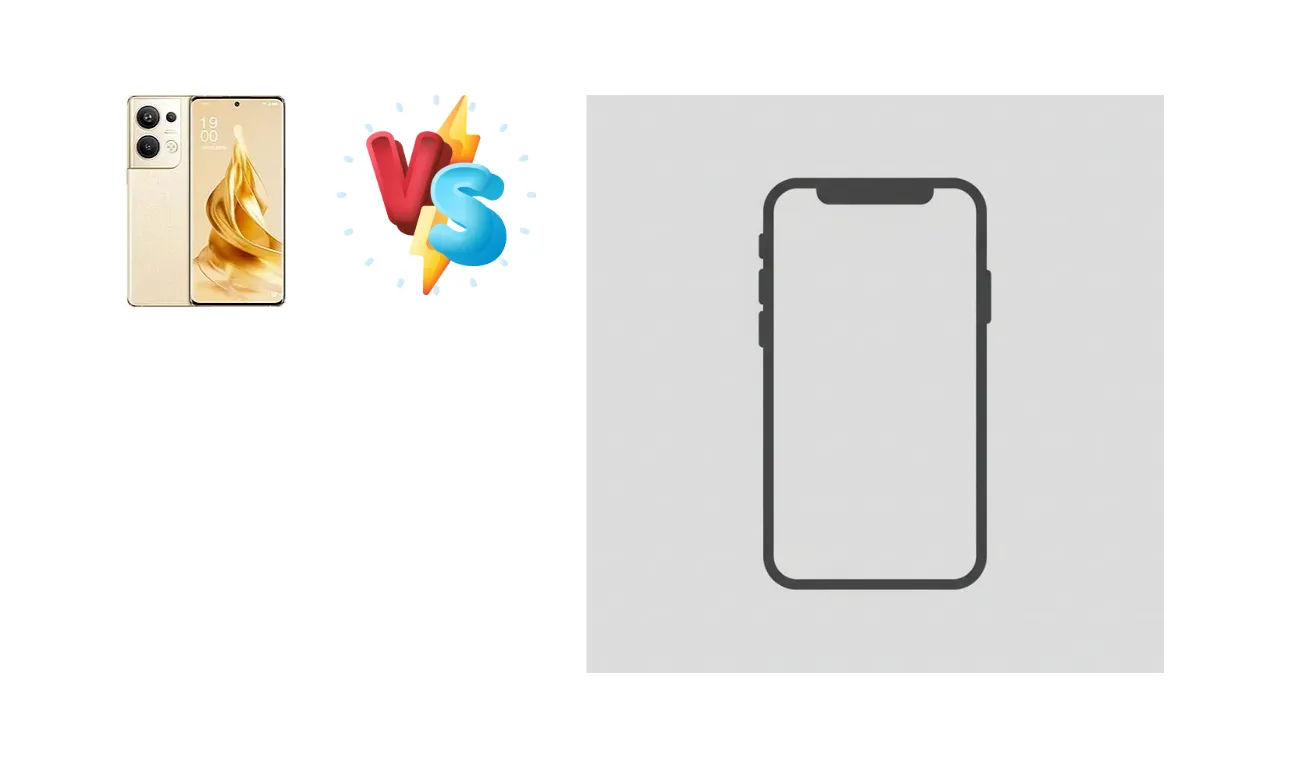
|
🏆 Quick Verdict
For the average user prioritizing sustained performance, battery life, and a refined software experience, the Samsung Galaxy S23+ emerges as the winner. While the Oppo Reno9 Pro+ boasts incredibly fast 80W charging, the S23+'s Snapdragon 8 Gen 2 and 111-hour endurance rating provide a more consistently premium experience.
| PHONES | ||
|---|---|---|
| Phone Names | Oppo Reno9 Pro+ | Samsung Galaxy S23+ |
| Network | ||
|---|---|---|
| 2G bands | GSM 850 / 900 / 1800 / 1900 | GSM 850 / 900 / 1800 / 1900 - SIM 1 & SIM 2 (Dual SIM model only) |
| 3G bands | HSDPA 850 / 900 / 1700(AWS) / 2100 | HSDPA 850 / 900 / 1700(AWS) / 1900 / 2100 |
| 4G bands | 1, 3, 4, 5, 7, 8, 18, 19, 26, 28, 34, 38, 39, 40, 41 | 1, 2, 3, 4, 5, 7, 8, 12, 13, 17, 18, 19, 20, 25, 26, 28, 32, 38, 39, 40, 41, 66 - International |
| 5G bands | 1, 5, 8, 28, 41, 77, 78 SA/NSA | 1, 2, 3, 5, 7, 8, 12, 20, 25, 28, 38, 40, 41, 66, 75, 77, 78 SA/NSA/Sub6 - International |
| Speed | HSPA, LTE, 5G | HSPA, LTE-A (up to 7CA), 5G |
| Technology | GSM / CDMA / HSPA / CDMA2000 / LTE / 5G | GSM / CDMA / HSPA / EVDO / LTE / 5G |
| - | 1, 7, 28, 41, 66, 71, 78, 258, 260, 261 SA/NSA/Sub6/mmWave - USA | |
| Launch | ||
|---|---|---|
| Announced | 2022, November 24 | 2023, February 01 |
| Status | Available. Released 2022, December 02 | Available. Released 2023, February 17 |
| Body | ||
|---|---|---|
| Build | Glass front (Asahi Glass), aluminum frame | Glass front (Gorilla Glass Victus 2), glass back (Gorilla Glass Victus 2), aluminum frame |
| Dimensions | 161.5 x 73.6 x 8 mm (6.36 x 2.90 x 0.31 in) | 157.8 x 76.2 x 7.6 mm (6.21 x 3.00 x 0.30 in) |
| SIM | Nano-SIM + Nano-SIM | Nano-SIM and eSIM or Dual SIM (2 Nano-SIMs and eSIM, dual stand-by) |
| Weight | 192 g (6.77 oz) | 196 g (6.91 oz) |
| - | IP68 dust/water resistant (up to 1.5m for 30 min) Armor aluminum frame with tougher drop and scratch resistance (advertised) | |
| Display | ||
|---|---|---|
| Protection | Asahi Glass AGC DT-Star2 | Corning Gorilla Glass Victus 2 |
| Resolution | 1080 x 2412 pixels, 20:9 ratio (~394 ppi density) | 1080 x 2340 pixels, 19.5:9 ratio (~393 ppi density) |
| Size | 6.7 inches, 108.0 cm2 (~90.9% screen-to-body ratio) | 6.6 inches, 105.3 cm2 (~87.6% screen-to-body ratio) |
| Type | AMOLED, 1B colors, 120Hz, HDR10+, 500 nits (typ), 800 nits (HBM), 950 nits (peak) | Dynamic AMOLED 2X, 120Hz, HDR10+, 1200 nits (HBM), 1750 nits (peak) |
| - | Always-on display | |
| Platform | ||
|---|---|---|
| CPU | Octa-core (1x3.0 GHz Cortex-X2 & 3x2.75 GHz Cortex-A710 & 4x2.0 GHz Cortex-A510) | Octa-core (1x3.36 GHz Cortex-X3 & 2x2.8 GHz Cortex-A715 & 2x2.8 GHz Cortex-A710 & 3x2.0 GHz Cortex-A510) |
| Chipset | Qualcomm SM8475 Snapdragon 8+ Gen 1 (4 nm) | Qualcomm SM8550-AC Snapdragon 8 Gen 2 (4 nm) |
| GPU | Adreno 730 | Adreno 740 |
| OS | Android 13, ColorOS 13 | Android 13, One UI 5.1 |
| Memory | ||
|---|---|---|
| Card slot | No | No |
| Internal | 256GB 16GB RAM, 512GB 16GB RAM | 256GB 8GB RAM, 512GB 8GB RAM |
| - | UFS 4.0 | |
| Main Camera | ||
|---|---|---|
| Features | Color spectrum sensor, LED flash, HDR, panorama | LED flash, auto-HDR, panorama |
| Triple | 50 MP, f/1.8, 24mm (wide), 1/1.56", 1.0µm, multi-directional PDAF, OIS 8 MP, f/2.2, 120˚ (ultrawide), 1/4.0", 1.12µm Auxiliary lens | 50 MP, f/1.8, 24mm (wide), 1/1.56", 1.0µm, Dual Pixel PDAF, OIS 10 MP, f/2.4, 70mm (telephoto), 1/3.94", 1.0µm, PDAF, OIS, 3x optical zoom 12 MP, f/2.2, 13mm, 120˚ (ultrawide), 1/2.55" 1.4µm, Super Steady video |
| Video | 4K@30/60fps, 1080p@30/60/120/240fps, gyro-EIS, OIS, HDR | 8K@24/30fps, 4K@30/60fps, 1080p@30/60/240fps, 1080p@960fps, HDR10+, stereo sound rec., gyro-EIS |
| Selfie camera | ||
|---|---|---|
| Features | Panorama, HDR | Dual video call, Auto-HDR, HDR10+ |
| Single | 32 MP, f/2.4, 22mm (wide), 1/2.74", 0.8µm, AF | 12 MP, f/2.2, 26mm (wide), Dual Pixel PDAF |
| Video | 1080p@30fps, gyro-EIS | 4K@30/60fps, 1080p@30fps |
| Sound | ||
|---|---|---|
| 3.5mm jack | - | No |
| 35mm jack | No | - |
| Loudspeaker | Yes, with stereo speakers | Yes, with stereo speakers |
| - | 32-bit/384kHz audio Tuned by AKG | |
| Comms | ||
|---|---|---|
| Bluetooth | 5.2, A2DP, LE, aptX HD | 5.3, A2DP, LE |
| Infrared port | Yes | - |
| NFC | Yes | Yes |
| Positioning | GPS (L1+L5), GLONASS (L1), BDS (B1I+B2a+Bc), GALILEO (E1+E5a), QZSS (L1+L5) | GPS, GLONASS, BDS, GALILEO |
| Radio | No | No |
| USB | USB Type-C 2.0, OTG | USB Type-C 3.2, OTG |
| WLAN | Wi-Fi 802.11 a/b/g/n/ac/6, dual-band, Wi-Fi Direct | Wi-Fi 802.11 a/b/g/n/ac/6e, tri-band, Wi-Fi Direct |
| Features | ||
|---|---|---|
| Sensors | Fingerprint (under display, optical), accelerometer, gyro, proximity, compass | Fingerprint (under display, ultrasonic), accelerometer, gyro, proximity, compass, barometer |
| - | Samsung DeX, Samsung Wireless DeX (desktop experience support) Bixby natural language commands and dictation Samsung Pay (Visa, MasterCard certified) Ultra Wideband (UWB) support | |
| Battery | ||
|---|---|---|
| Charging | 80W wired, PD, QC3, 45% in 10 min, 100% in 31 min Reverse wired | 45W wired, PD3.0, 65% in 30 min (advertised) 15W wireless (Qi/PMA) 4.5W reverse wireless |
| Type | Li-Po 4700 mAh | Li-Ion 4700 mAh, non-removable |
| Misc | ||
|---|---|---|
| Colors | Black, Gold, Mint | Phantom Black, Cream, Green, Lavender, Graphite, Lime |
| Models | PGW110 | SM-S916B, SM-S916B/DS, SM-S916U, SM-S916U1, SM-S916W, SM-S916N, SM-S9160, SM-S916E, SM-S916E/DS |
| Price | About 740 EUR | $ 780.00 / C$ 1,399.99 / £ 919.08 / € 1,185.89 / ₹ 94,999 |
| SAR | - | 0.95 W/kg (head) 1.04 W/kg (body) |
| SAR EU | - | 0.77 W/kg (head) 1.45 W/kg (body) |
| Tests | ||
|---|---|---|
| Battery life | - | Endurance rating 111h |
| Camera | - | Photo / Video |
| Display | - | Contrast ratio: Infinite (nominal) |
| Loudspeaker | - | -26.5 LUFS (Good) |
| Performance | - | AnTuTu: 1234077 (v9) GeekBench: 5073 (v5.1) GFXBench: 110fps (ES 3.1 onscreen) |
Oppo Reno9 Pro+
- Incredibly fast 80W wired charging
- Potentially more affordable price point
- Likely vibrant and color-accurate display
- Older Snapdragon 8+ Gen 1 chipset
- Missing display specifications (refresh rate, peak brightness)
- Less refined software experience (potentially)
Samsung Galaxy S23+
- Latest Snapdragon 8 Gen 2 chipset for superior performance
- Exceptional 111-hour battery endurance
- Wireless and reverse wireless charging capabilities
- Slower 45W wired charging compared to Oppo
- Higher price tag
- Samsung's One UI can be polarizing
Display Comparison
While both devices likely feature high-quality AMOLED panels, the context data only provides contrast ratio information for the S23+ (Infinite). The Reno9 Pro+’s display specs are absent, but Oppo typically employs vibrant, color-accurate displays. The S23+'s 'Infinite' contrast ratio suggests a superior viewing experience with deeper blacks. The absence of refresh rate data for the Reno9 Pro+ is a key omission; the S23+ is expected to have an adaptive 120Hz panel, offering smoother scrolling and animations. Without knowing the Reno9 Pro+'s panel technology, it's difficult to assess its overall display quality relative to Samsung's flagship.
Camera Comparison
The provided data lacks detailed camera specifications for both devices. However, given Samsung’s history, the S23+ likely features a more sophisticated camera system with larger sensors and advanced image processing algorithms. The Reno9 Pro+ may excel in specific scenarios, but the S23+ is expected to offer greater consistency across various lighting conditions. The absence of sensor size information is critical; larger sensors generally capture more light, resulting in better low-light performance. The S23+'s image processing is known for its vibrant colors and detail, while Oppo often leans towards a more natural look. Without detailed specs, a definitive camera comparison is impossible, but Samsung’s track record suggests an advantage.
Performance
The core difference lies in the chipsets. The Galaxy S23+’s Snapdragon 8 Gen 2 (4nm) represents a significant leap over the Reno9 Pro+'s Snapdragon 8+ Gen 1 (4nm). The Gen 2 features a newer Cortex-X3 prime core clocked at 3.36 GHz versus the Reno9 Pro+'s X2 core at 3.0 GHz, promising faster single-core performance. Furthermore, the Gen 2 utilizes improved Cortex-A715 and A710 cores, enhancing multi-core capabilities. The 4nm process node on both chips contributes to efficiency, but the architectural improvements in the Gen 2 translate to better sustained performance and reduced thermal throttling. The S23+’s LPDDR5x RAM further enhances memory bandwidth, contributing to a snappier overall experience.
Battery Life
The Galaxy S23+ boasts an impressive endurance rating of 111 hours, indicating exceptional battery life. While the Reno9 Pro+ doesn’t have an endurance rating, its 80W wired charging is a significant advantage, achieving 100% charge in just 31 minutes. The S23+’s 45W charging, while still fast, is slower. However, the S23+ also offers 15W wireless charging and 4.5W reverse wireless charging, features absent in the Reno9 Pro+. The Reno9 Pro+'s faster charging is ideal for quick top-ups, but the S23+'s superior battery life minimizes the need for frequent charging, making it more convenient for users who prioritize longevity.
Buying Guide
Buy the Oppo Reno9 Pro+ if you prioritize incredibly fast charging speeds and are comfortable with potentially less optimized software. It’s ideal for users who frequently top up their phones and appreciate a more aggressive price. Buy the Samsung Galaxy S23+ if you value long-term performance, exceptional battery life, a more polished software experience, and are willing to pay a premium for the latest Snapdragon technology.