
Oppo Reno3 Youth vs. Google Pixel 4a 5G: A Deep Dive into the Snapdragon 765G Experience
| Phones Images | |||||
|---|---|---|---|---|---|
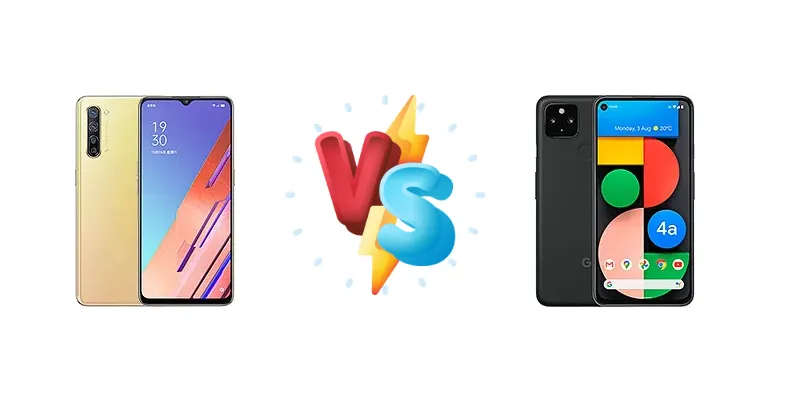
|
🏆 Quick Verdict
For the average user prioritizing fast charging and a more customizable Android experience, the Oppo Reno3 Youth emerges as the winner. While the Pixel 4a 5G boasts Google’s superior camera processing and software support, the Reno3 Youth’s 30W charging significantly reduces downtime, a crucial advantage in daily use.
| PHONES | ||
|---|---|---|
| Phone Names | Oppo Reno3 Youth | Google Pixel 4a 5G |
| Network | ||
|---|---|---|
| 2G bands | GSM 850 / 900 / 1800 / 1900 | GSM 850 / 900 / 1800 / 1900 |
| 3G bands | HSDPA 800 / 850 / 900 / 1700(AWS) / 1900 / 2100 | HSDPA 850 / 900 / 1700(AWS) / 1900 / 2100 |
| 4G bands | 1, 2, 3, 4, 5, 7, 8, 12, 17, 18, 19, 20, 26, 34, 38, 39, 40, 41 | 1, 2, 3, 4, 5, 7, 8, 12, 13, 14, 17, 18, 19, 20, 25, 26, 28, 29, 30, 32, 38, 39, 40, 41, 42, 46, 48, 66, 71 |
| 5G bands | 1, 41, 78, 79 SA/NSA | 1, 2, 3, 5, 7, 8, 12, 28, 41, 66, 71, 77, 78 Sub6, mmWave (market dependant) |
| Speed | HSPA, LTE, 5G (1.9 Gbps DL) | HSPA, LTE, 5G |
| Technology | GSM / CDMA / HSPA / EVDO / LTE / 5G | GSM / HSPA / LTE / 5G |
| CDMA2000 1xEV-DO | - | |
| Launch | ||
|---|---|---|
| Announced | 2020, February 08. Released 2020, February 14 | 2020, September 30 |
| Status | Discontinued | Available. Released 2020, November 05 |
| Body | ||
|---|---|---|
| Build | Glass front (Gorilla Glass 5), glass back (Gorilla Glass 5), aluminum frame | Glass front (Gorilla Glass 3), plastic back, plastic frame |
| Dimensions | 160.3 x 74.3 x 8 mm (6.31 x 2.93 x 0.31 in) | 153.9 x 74 x 8.2 mm (Sub-6) or 8.5 mm (Sub-6 and mmWave) |
| SIM | Nano-SIM + Nano-SIM | Nano-SIM + eSIM |
| Weight | 180 g (6.35 oz) | 168 g (5G Sub-6); 171 g ( 5G Sub-6 and mmWave) (5.93 oz) |
| Display | ||
|---|---|---|
| Protection | Corning Gorilla Glass 5 | Corning Gorilla Glass 3 |
| Resolution | 1080 x 2400 pixels, 20:9 ratio (~411 ppi density) | 1080 x 2340 pixels, 19.5:9 ratio (~413 ppi density) |
| Size | 6.4 inches, 98.9 cm2 (~83.0% screen-to-body ratio) | 6.2 inches, 95.7 cm2 (~84.1% screen-to-body ratio) |
| Type | AMOLED, 430 nits (typ) | OLED, HDR |
| - | Always-on display | |
| Platform | ||
|---|---|---|
| CPU | Octa-core (1x2.4 GHz Kryo 475 Prime & 1x2.2 GHz Kryo 475 Gold & 6x1.8 GHz Kryo 475 Silver) | Octa-core (1x2.4 GHz Kryo 475 Prime & 1x2.2 GHz Kryo 475 Gold & 6x1.8 GHz Kryo 475 Silver) |
| Chipset | Qualcomm SM7250 Snapdragon 765G 5G (7 nm) | Qualcomm SM7250 Snapdragon 765G 5G (7 nm) |
| GPU | Adreno 620 | Adreno 620 |
| OS | Android 10, ColorOS 7 | Android 11, upgradable to Android 14 |
| Memory | ||
|---|---|---|
| Card slot | No | No |
| Internal | 128GB 8GB RAM | 128GB 6GB RAM |
| UFS 2.1 | UFS 2.1 | |
| Main Camera | ||
|---|---|---|
| Dual | - | 12.2 MP, f/1.7, 27mm (wide), 1/2.55", 1.4µm, dual pixel PDAF, OIS 16 MP, f/2.2, 107˚ (ultrawide), 1.0µm |
| Features | LED flash, HDR, panorama | LED flash, Pixel Shift, Auto-HDR, panorama |
| Quad | 48 MP, f/1.7, 26mm (wide), 1/2.0", 0.8µm, PDAF, OIS 8 MP, f/2.2, 13mm (ultrawide), 1/3.2", 1.4µm 2 MP B/W, f/2.4, 1/5.0", 1.75µm Auxiliary lens | - |
| Video | 4K@30fps, 1080p@30/60/120fps; gyro-EIS, OIS | 4K@30/60fps, 1080p@30/60/120/240fps; gyro-EIS |
| Selfie camera | ||
|---|---|---|
| Features | HDR | HDR |
| Single | 32 MP, f/2.0, 26mm (wide), 1/2.8", 0.8µm | 8 MP, f/2.0, 24mm (wide), 1/4.0", 1.12µm |
| Video | 1080p@30fps | 1080p@30fps |
| Sound | ||
|---|---|---|
| 3.5mm jack | Yes | Yes |
| 35mm jack | Yes | Yes |
| Loudspeaker | Yes | Yes, with stereo speakers |
| Comms | ||
|---|---|---|
| Bluetooth | 5.1, A2DP, LE, aptX HD | 5.0, A2DP, LE, aptX HD |
| NFC | Yes | Yes |
| Positioning | GPS (L1+L5), GLONASS, BDS (B1I+B2a), GALILEO, QZSS | GPS, GLONASS, GALILEO, QZSS, BDS |
| Radio | Unspecified | No |
| USB | USB Type-C 3.1, OTG | USB Type-C 3.1 |
| WLAN | Wi-Fi 802.11 a/b/g/n/ac, dual-band, Wi-Fi Direct | Wi-Fi 802.11 a/b/g/n/ac, dual-band, Wi-Fi Direct |
| Features | ||
|---|---|---|
| Sensors | Fingerprint (under display, optical), accelerometer, gyro, proximity, compass | Fingerprint (rear-mounted), accelerometer, gyro, proximity, compass, barometer |
| Battery | ||
|---|---|---|
| Charging | 30W wired, 50% in 20 min | 18W wired, PD2.0 |
| Type | Li-Po 4025 mAh | Li-Po 3885 mAh |
| Misc | ||
|---|---|---|
| Colors | White, Black, Gold | Just Black, Clearly White |
| Models | PCLM50 | GD1YQ, G025I, G025E, G025H, G6QU3 |
| Price | About 400 EUR | About 140 EUR |
Oppo Reno3 Youth
- Significantly faster 30W charging
- More customizable Android skin (ColorOS)
- Potentially more versatile camera system
- Software updates may be less frequent
- Image processing likely inferior to Pixel
Google Pixel 4a 5G
- Clean and streamlined Android experience
- Guaranteed software updates from Google
- Exceptional computational photography
- Slower 18W charging
- Less customizable Android skin
Display Comparison
Both devices likely feature LCD panels, a common choice in this price bracket. While specific display specs like resolution and refresh rate aren't provided, the focus here is on charging. The Reno3 Youth's faster charging is more impactful than minor display differences. We anticipate similar color accuracy given the shared target market, but the Pixel 4a 5G may benefit from Google’s image processing algorithms for slightly more vibrant colors.
Camera Comparison
While both phones likely feature multi-camera setups, the Pixel 4a 5G is expected to excel in image processing. Google’s computational photography algorithms are renowned for their ability to produce stunning images, particularly in challenging lighting conditions. The Reno3 Youth will likely offer a more versatile camera system with potentially more lenses, but image quality will likely fall behind the Pixel’s consistently excellent results. The absence of specific sensor details makes a direct comparison difficult, but Google’s software advantage is a significant differentiator.
Performance
Both the Oppo Reno3 Youth and Google Pixel 4a 5G are powered by the Qualcomm Snapdragon 765G (7 nm) chipset, featuring an octa-core CPU configuration (1x2.4 GHz Kryo 475 Prime, 1x2.2 GHz Kryo 475 Gold, and 6x1.8 GHz Kryo 475 Silver). This means raw processing power will be nearly identical for most tasks. Performance differences will likely stem from RAM management and software optimization. The Pixel’s streamlined Android build may offer a slightly smoother experience, but the Reno3 Youth’s ColorOS provides more customization options. Thermal throttling, while not a major concern with the 765G, could be slightly better managed by the Pixel due to its simpler software.
Battery Life
The Reno3 Youth’s 30W wired charging is a clear advantage over the Pixel 4a 5G’s 18W wired charging with PD2.0. This translates to a significantly faster recharge time – Oppo claims 50% charge in 20 minutes. While battery capacity isn’t specified, the faster charging speed mitigates the impact of a potentially smaller battery on the Reno3 Youth. The Pixel 4a 5G will offer longer sustained usage, but requires more time to replenish its power.
Buying Guide
Buy the Oppo Reno3 Youth if you need rapid charging capabilities and prefer a more feature-rich, customizable Android skin. This phone is ideal for users who frequently top up their battery throughout the day and enjoy tweaking their device's settings. Buy the Google Pixel 4a 5G if you prioritize a clean, streamlined Android experience with guaranteed software updates and exceptional computational photography, even if it means slower charging and a potentially less flexible user interface.