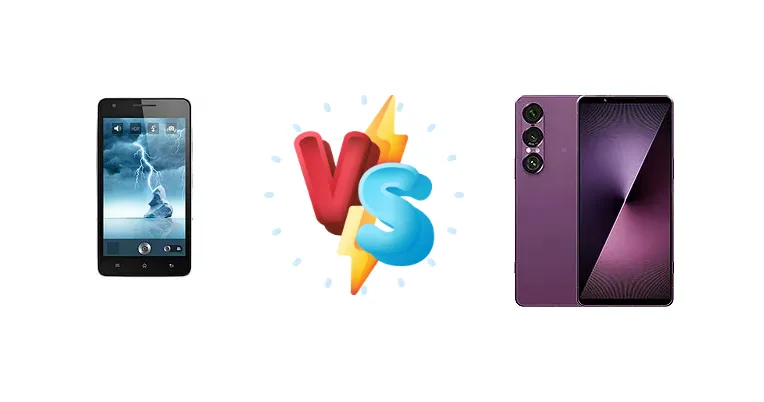
The Oppo Find represents a bygone era of mobile processing, while the Sony Xperia 1 VII arrives as a modern flagship powered by Qualcomm's latest silicon. This comparison isn't about a close contest; it's about understanding the dramatic advancements in mobile technology and who benefits from them. We'll dissect the Xperia 1 VII's cutting-edge features against the Find's more dated architecture.
🏆 Quick Verdict
For the vast majority of users, the Sony Xperia 1 VII is the clear winner. Its Snapdragon 8 Elite chipset delivers unparalleled performance and efficiency, complemented by a stunning display and exceptional battery endurance. The Oppo Find, while potentially affordable, simply cannot compete with modern demands.
| Network |
|---|
| 2G bands | GSM 850 / 900 / 1800 / 1900 | GSM 850 / 900 / 1800 / 1900 |
| 3G bands | HSDPA 850 / 1900 / 2100 | HSDPA 800 / 850 / 900 / 1700(AWS) / 1900 / 2100 |
| 4G bands | - | 1, 2, 3, 4, 5, 7, 8, 12, 13, 17, 19, 20, 25, 26, 28, 32, 34, 38, 39, 40, 41, 66 - Europe |
| 5G bands | - | 1, 3, 5, 7, 8, 20, 28, 38, 40, 41, 75, 77, 78 SA/NSA/Sub6 - Europe |
| Speed | HSPA | HSPA, LTE, 5G |
| Technology | GSM / HSPA | GSM / HSPA / LTE / 5G |
| Launch |
|---|
| Announced | 2012, June. Released 2012, July | 2025, May 13 |
| Status | Discontinued | Available. Released 2025, June 04 |
| Body |
|---|
| Build | - | Glass front (Gorilla Glass Victus 2), glass back (Gorilla Glass Victus), aluminum frame |
| Dimensions | 125 x 66 x 6.7 mm (4.92 x 2.60 x 0.26 in) | 162 x 74 x 8.2 mm (6.38 x 2.91 x 0.32 in) |
| SIM | Micro-SIM | · Nano-SIM + eSIM· Nano-SIM + Nano-SIM |
| Weight | 125 g (4.41 oz) | 197 g (6.95 oz) |
| Display |
|---|
| Protection | - | Corning Gorilla Glass Victus 2, Mohs level 5 |
| Resolution | 480 x 800 pixels, 5:3 ratio (~217 ppi density) | 1080 x 2340 pixels, 19.5:9 ratio (~396 ppi density) |
| Size | 4.3 inches, 52.6 cm2 (~63.8% screen-to-body ratio) | 6.5 inches, 103.7 cm2 (~86.5% screen-to-body ratio) |
| Type | Super AMOLED Plus | LTPO OLED, 1B colors, 120Hz, HDR BT.2020 |
| Platform |
|---|
| CPU | Dual-core 1.5 GHz Krait | Octa-core (2x4.32 GHz Oryon V2 Phoenix L + 6x3.53 GHz Oryon V2 Phoenix M) |
| Chipset | - | Qualcomm SM8750-AB Snapdragon 8 Elite (3 nm) |
| GPU | - | Adreno 830 |
| OS | Android 4.0.4 (Ice Cream Sandwich) | Android 15, up to 4 major Android upgrades |
| Memory |
|---|
| Card slot | No | microSDXC (uses shared SIM slot) |
| Internal | 16GB 1GB RAM | 256GB 12GB RAM, 512GB 12GB RAM |
| Main Camera |
|---|
| Features | Dual-LED flash, panorama, HDR | Zeiss optics, Zeiss T* lens coating, color spectrum sensor, LED flash, panorama, HDR, eye tracking |
| Single | 8 MP, AF | - |
| Triple | - | 48 MP, f/1.9, 24mm (wide), 1/1.35", 1.12µm, dual pixel PDAF, OIS
12 MP, f/2.3, 85mm (telephoto), f/3.5, 170mm (telephoto), 1/3.5", 1.0µm, dual pixel PDAF, 3.5x-7.1x continuous optical zoom, OIS, 4cm macro @ 120mm, no AF
48 MP, f/2.0, 16mm (ultrawide), 1/1.56", 1.0µm, PDAF |
| Video | Yes | 4K@24/30/60/120fps HDR, 1080p@30/60/120fps; 5-axis gyro-EIS, OIS |
| Selfie camera |
|---|
| Features | - | HDR |
| Single | 1.3 MP | 12 MP, f/2.0, 24mm (wide), 1/2.9", 1.22µm |
| Video | - | 4K@30/60fps, 1080p@30/60fps, 5-axis gyro-EIS |
| Sound |
|---|
| 35mm jack | Yes | Yes |
| Loudspeaker | Yes | Yes, with stereo speakers |
| Comms |
|---|
| Bluetooth | 2.0, A2DP | 6.0, A2DP, LE Audio, aptX HD, aptX Adaptive, aptX Lossless |
| NFC | No | Yes |
| Positioning | GPS | GPS, GLONASS, BDS, GALILEO, QZSS |
| Radio | - | No |
| USB | microUSB 2.0 | USB Type-C 3.2, OTG, video output |
| WLAN | Wi-Fi 802.11 b/g/n, hotspot | Wi-Fi 802.11 a/b/g/n/ac/6e/7, tri-band, Wi-Fi Direct, DLNA |
| Features |
|---|
| Sensors | Accelerometer, gyro, proximity, compass | Fingerprint (side-mounted), accelerometer, gyro, proximity, barometer, compass |
| Battery |
|---|
| Charging | - | 30W wired, PD3.0, PPS, 50% in 30 min
15W wireless
Reverse wireless |
| Stand-by | Up to 400 h (2G) / Up to 350 h (3G) | - |
| Talk time | Up to 9 h 20 min (2G) / Up to 7 h 30 min (3G) | - |
| Type | Li-Ion 1500 mAh, non-removable | 5000 mAh |
| Misc |
|---|
| Colors | White, Black | Moss Green, Orchid Purple, Slate Black |
| Models | - | XQ-FS54, XQFS54EUKCG.GC, XQFS54EUKCV.GC, XQFS54EUKCB.GC, PDX256 |
| Price | About 100 EUR | € 1,338.99 / $ 1,394.99 / £ 1,149.94 |
| EU LABEL |
|---|
| Battery | - | 43:30h endurance, 1400 cycles |
| Energy | - | Class B |
| Free fall | - | Class B (181 falls) |
| Repairability | - | Class D |
Oppo Find
- Potentially very affordable
- Compact size (likely)
- Simple user experience (likely)
- Outdated processor
- Poor performance in modern apps
- Inferior display technology
- Limited battery life
Sony Xperia 1 VII
- Exceptional performance with Snapdragon 8 Elite
- Bright and efficient display
- Long-lasting battery life
- Fast charging capabilities
- Advanced camera features
- Higher price point
- May be larger and heavier than the Find
- Potential for software bloat (Sony's history)
Display Comparison
The Sony Xperia 1 VII boasts a significantly brighter display, peaking at 1475 nits, ensuring excellent visibility even in direct sunlight. While the Oppo Find's display specifications are unavailable, it's highly unlikely to reach this level of brightness. The Xperia 1 VII likely incorporates LTPO technology for adaptive refresh rates, further enhancing power efficiency and smoothness. The Find's display, given its age, likely lacks these modern refinements, resulting in a less vibrant and responsive experience.
Camera Comparison
Without specific camera details for the Oppo Find, a direct comparison is limited. However, the Xperia 1 VII benefits from Qualcomm's advanced image signal processor (ISP) integrated within the Snapdragon 8 Elite. This ISP enables features like improved noise reduction, dynamic range, and faster image processing. While the Find may have a functional camera, it won't match the Xperia 1 VII's image quality or advanced capabilities. The Xperia 1 VII's camera system is likely optimized for low-light performance and video recording, areas where the Find would be severely limited.
Performance
The performance gap is immense. The Oppo Find's dual-core 1.5 GHz Krait processor is dwarfed by the Sony Xperia 1 VII's octa-core Snapdragon 8 Elite (3nm). The Snapdragon 8 Elite, with its Oryon V2 Phoenix cores (2x4.32 GHz + 6x3.53 GHz), offers a multi-generational leap in CPU and GPU performance. The 3nm manufacturing process translates to superior thermal efficiency, minimizing throttling during sustained workloads. The Find will struggle with demanding applications and modern games, while the Xperia 1 VII will handle them with ease.
Battery Life
The Sony Xperia 1 VII excels in battery life, offering 43:30h endurance and 15:32h of active use. This is a testament to the efficiency of the Snapdragon 8 Elite chipset and likely a well-optimized battery management system. The Oppo Find's battery capacity is unknown, but given its older processor, it's unlikely to match the Xperia 1 VII's longevity. The Xperia 1 VII also supports 30W wired charging with PD3.0 and PPS, achieving 50% charge in 30 minutes, alongside 15W wireless and reverse wireless charging – features absent in the Find.
Buying Guide
Buy the Oppo Find if you need a basic smartphone for essential tasks and prioritize affordability above all else. Its older processor will suffice for calls, texts, and light browsing. Buy the Sony Xperia 1 VII if you demand top-tier performance for gaming, content creation, or multitasking, and value a premium display and long-lasting battery life. The Xperia 1 VII is for power users who refuse to compromise.
Frequently Asked Questions
❓ Will the Snapdragon 8 Elite in the Xperia 1 VII overheat during extended gaming sessions?
The Snapdragon 8 Elite's 3nm process and advanced thermal management features are designed to minimize throttling. While some heat generation is inevitable, the Xperia 1 VII is expected to maintain high performance for extended periods, significantly better than older chipsets like the one in the Oppo Find.
❓ How does the 30W charging on the Xperia 1 VII compare to slower charging standards?
30W charging with PD3.0 and PPS is considerably faster than older standards. The Xperia 1 VII can reach 50% charge in just 30 minutes, providing a substantial boost in a short amount of time. The Oppo Find likely uses a much slower charging standard, requiring significantly longer to fully charge.
❓ Is the performance difference between the two phones noticeable in everyday tasks like browsing and social media?
While both phones can handle basic tasks, the Xperia 1 VII will feel significantly smoother and more responsive. App launch times will be faster, scrolling will be more fluid, and multitasking will be more efficient due to the Snapdragon 8 Elite's superior processing power.
❓ Does the Sony Xperia 1 VII support 5G connectivity, and will the Oppo Find?
The Sony Xperia 1 VII, being a modern flagship, fully supports 5G connectivity. The Oppo Find, given its age, likely lacks 5G support and is limited to 4G LTE. This means significantly slower download and upload speeds on the Oppo Find in areas with 5G coverage.