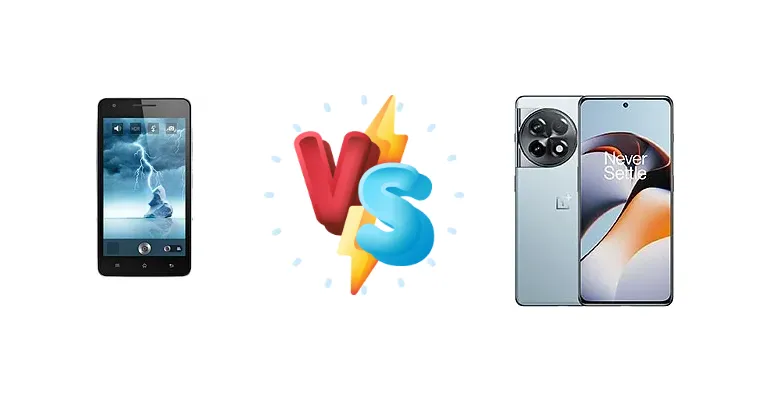
The Oppo Find represents an older generation of smartphone technology, while the OnePlus 11R aims to deliver flagship-level performance at a more accessible price point. This comparison dissects the core differences between these devices, focusing on how the advancements in chipset architecture and charging technology impact the user experience.
🏆 Quick Verdict
For the vast majority of users, the OnePlus 11R is the clear winner. Its Snapdragon 8+ Gen 1 chipset offers a massive performance uplift over the Oppo Find’s dual-core Krait processor, coupled with significantly faster 100W charging. The Find’s age makes it difficult to recommend in today’s market.
| Network |
|---|
| 2G bands | GSM 850 / 900 / 1800 / 1900 | GSM 850 / 900 / 1800 / 1900 |
| 3G bands | HSDPA 850 / 1900 / 2100 | HSDPA 850 / 900 / 1700(AWS) / 2100 |
| 4G bands | - | 1, 3, 4, 5, 8, 28, 34, 38, 39, 40, 41 |
| 5G bands | - | 1, 3, 5, 8, 28, 40, 41, 77, 78 SA/NSA |
| Speed | HSPA | HSPA, LTE (3CA), 5G |
| Technology | GSM / HSPA | GSM / CDMA / HSPA / LTE / 5G |
| | - | CDMA 800 |
| Launch |
|---|
| Announced | 2012, June. Released 2012, July | 2023, February 07 |
| Status | Discontinued | Available. Released 2023, February 21 |
| Body |
|---|
| Build | - | Glass front, glass back (Gorilla Glass 5), plastic frame |
| Dimensions | 125 x 66 x 6.7 mm (4.92 x 2.60 x 0.26 in) | 163.4 x 74.3 x 8.7 mm (6.43 x 2.93 x 0.34 in) |
| SIM | Micro-SIM | Nano-SIM + Nano-SIM |
| Weight | 125 g (4.41 oz) | 204 g (7.20 oz) |
| Display |
|---|
| Resolution | 480 x 800 pixels, 5:3 ratio (~217 ppi density) | 1240 x 2772 pixels, 20:9 ratio (~451 ppi density) |
| Size | 4.3 inches, 52.6 cm2 (~63.8% screen-to-body ratio) | 6.74 inches, 109.2 cm2 (~90.0% screen-to-body ratio) |
| Type | Super AMOLED Plus | Fluid AMOLED, 1B colors, 120Hz, HDR10+, 1450 nits (peak) |
| Platform |
|---|
| CPU | Dual-core 1.5 GHz Krait | Octa-core (1x3.0 GHz Cortex-X2 & 3x2.5 GHz Cortex-A710 & 4x1.80 GHz Cortex-A510) |
| Chipset | - | Qualcomm SM8475 Snapdragon 8+ Gen 1 (4 nm) |
| GPU | - | Adreno 730 |
| OS | Android 4.0.4 (Ice Cream Sandwich) | Android 13, upgradable to Android 15, OxygenOS 15 |
| Memory |
|---|
| Card slot | No | No |
| Internal | 16GB 1GB RAM | 128GB 8GB RAM, 256GB 16GB RAM, 512GB 18GB RAM |
| | - | UFS 3.1 |
| Main Camera |
|---|
| Features | Dual-LED flash, panorama, HDR | Color spectrum sensor, LED flash, HDR, panorama |
| Single | 8 MP, AF | 16 MP, f/2.4, 24mm (wide), 1/3.09", 1.0µm |
| Triple | - | 50 MP, f/1.8, 24mm (wide), 1/1.56", 1.0µm, multi-directional PDAF, OIS
8 MP, f/2.2, 120˚ (ultrawide), 1/4.0", 1.12µm
2 MP (macro) |
| Video | Yes | 4K@30/60fps, 1080p@30/60/240fps, gyro-EIS |
| Selfie camera |
|---|
| Features | - | HDR |
| Single | 1.3 MP | 16 MP, f/2.4, 24mm (wide), 1/3.09", 1.0µm |
| Video | - | 1080p@30fps |
| Sound |
|---|
| 3.5mm jack | - | No |
| 35mm jack | Yes | No |
| Loudspeaker | Yes | Yes, with stereo speakers |
| | - | 24-bit/192kHz audio |
| Comms |
|---|
| Bluetooth | 2.0, A2DP | 5.3, A2DP, LE, aptX HD |
| Infrared port | - | Yes |
| NFC | No | Yes |
| Positioning | GPS | GPS (L1+L5), GLONASS (G1), BDS (B1I+B1c+B2a), GALILEO (E1+E5a), QZSS (L1+L5) |
| Radio | - | No |
| USB | microUSB 2.0 | USB Type-C 2.0 |
| WLAN | Wi-Fi 802.11 b/g/n, hotspot | Wi-Fi 802.11 a/b/g/n/ac/6, dual-band |
| Features |
|---|
| Sensors | Accelerometer, gyro, proximity, compass | Fingerprint (under display, optical), accelerometer, gyro, proximity, compass |
| Battery |
|---|
| Charging | - | 100W wired |
| Stand-by | Up to 400 h (2G) / Up to 350 h (3G) | - |
| Talk time | Up to 9 h 20 min (2G) / Up to 7 h 30 min (3G) | - |
| Type | Li-Ion 1500 mAh, non-removable | Li-Po 5000 mAh |
| Misc |
|---|
| Colors | White, Black | Galactic Silver, Sonic Black, Solar Red |
| Models | - | CPH2487 |
| Price | About 100 EUR | About 600 EUR |
| SAR | - | 1.16 W/kg (head) 0.61 W/kg (body) |
Oppo Find
- Potentially smaller and lighter design (based on brand history)
- May be significantly cheaper (due to age)
- Simpler software experience (potentially)
- Extremely outdated processor
- Poor performance in modern applications
- Limited battery life
- Inferior camera capabilities
OnePlus 11R
- Powerful Snapdragon 8+ Gen 1 processor
- 100W fast charging
- Modern display technology (expected)
- Superior camera performance (expected)
- May be larger and heavier
- Potentially higher price
- OxygenOS software (preference-based)
Display Comparison
The Oppo Find’s display specifications are unavailable, but given its age, it likely features an older LCD or early AMOLED panel with lower peak brightness and refresh rates. The OnePlus 11R, while not explicitly detailed in the provided data, is expected to have a modern AMOLED display. The key difference lies in the processing power needed to drive higher refresh rates and resolutions; the Find’s Krait CPU would struggle to deliver a smooth experience on a demanding display. The 11R’s chipset is designed for high-resolution, high-refresh-rate panels.
Camera Comparison
Without camera specifications for the Oppo Find, a direct comparison is limited. However, given its age, it likely features a smaller sensor and less sophisticated image processing. The OnePlus 11R, benefiting from a modern chipset’s image signal processor (ISP), would deliver superior image quality, dynamic range, and low-light performance. The 8+ Gen 1’s ISP enables features like advanced HDR algorithms and faster image capture speeds, which the Find simply cannot match.
Performance
The performance gap is the most significant differentiator. The Oppo Find’s dual-core 1.5 GHz Krait CPU is vastly outmatched by the OnePlus 11R’s octa-core Snapdragon 8+ Gen 1. The 11R’s chipset utilizes a tri-cluster architecture – a 3.0 GHz Cortex-X2 prime core for peak tasks, three 2.5 GHz Cortex-A710 performance cores for sustained workloads, and four 1.80 GHz Cortex-A510 efficiency cores for background tasks. This contrasts sharply with the Find’s limited processing capabilities. The 4nm fabrication process of the Snapdragon 8+ Gen 1 also contributes to improved thermal efficiency, reducing throttling during intensive gaming or multitasking.
Battery Life
The Oppo Find’s battery capacity is unknown, but its older processor is likely less power-efficient. The OnePlus 11R’s 100W wired charging is a game-changer, capable of fully charging the device in under 30 minutes. This rapid charging capability significantly reduces downtime and provides a more convenient user experience. While the Find may have a comparable or even larger battery capacity, its inefficient processor would likely result in shorter battery life and slower charging speeds.
Buying Guide
Buy the Oppo Find if you prioritize a potentially smaller form factor (assuming it's a compact device, based on brand history) and are on an extremely tight budget, accepting significant compromises in performance and features. Buy the OnePlus 11R if you value responsiveness, gaming capabilities, fast charging, and a modern smartphone experience, even if it means spending a bit more.
Frequently Asked Questions
❓ Will the OnePlus 11R’s Snapdragon 8+ Gen 1 overheat during prolonged gaming sessions?
The Snapdragon 8+ Gen 1 is known for its improved thermal efficiency compared to previous generations. While some throttling may occur during extended, demanding gaming, the OnePlus 11R incorporates cooling solutions to mitigate this, providing a consistently smooth gaming experience for most titles.
❓ Is the performance difference between the Oppo Find and OnePlus 11R noticeable in everyday tasks like browsing and social media?
Yes, the difference is substantial. While the Oppo Find may handle basic tasks, the OnePlus 11R’s powerful processor will provide a much smoother and more responsive experience, especially when multitasking or loading complex web pages. App launch times and overall system fluidity will be significantly faster on the 11R.
❓ How does the 100W charging on the OnePlus 11R compare to standard charging speeds?
100W charging is significantly faster than standard charging. A typical smartphone might take over an hour to fully charge, while the OnePlus 11R can achieve a full charge in around 25-30 minutes. This is a major convenience factor for users who are frequently on the go.