
Pixel 7 Pro vs. Oppo Find: A Generational Leap in Smartphone Technology
| Phones Images | |||||
|---|---|---|---|---|---|
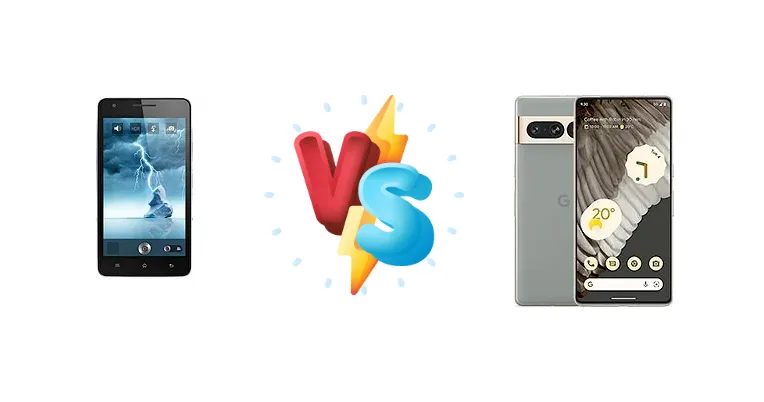
|
🏆 Quick Verdict
For the vast majority of users, the Google Pixel 7 Pro is the clear winner. Its Tensor G2 chipset delivers vastly superior performance, its display boasts a significantly higher peak brightness, and its overall feature set is far more comprehensive. The Oppo Find remains a viable option only for those on an extremely tight budget.
| PHONES | ||
|---|---|---|
| Phone Names | Oppo Find | Google Pixel 7 Pro |
| Network | ||
|---|---|---|
| 2G bands | GSM 850 / 900 / 1800 / 1900 | GSM 850 / 900 / 1800 / 1900 |
| 3G bands | HSDPA 850 / 1900 / 2100 | HSDPA 800 / 850 / 900 / 1700(AWS) / 1900 / 2100 |
| 4G bands | - | 1, 2, 3, 4, 5, 7, 8, 12, 13, 14, 17, 18, 19, 20, 25, 26, 28, 29, 30, 38, 39, 40, 41, 42, 46, 48, 66, 71 - GE2AE |
| 5G bands | - | 1, 2, 3, 5, 7, 8, 12, 14, 20, 25, 28, 30, 38, 40, 41, 48, 66, 71, 77, 78, 257, 258, 260, 261 SA/NSA/Sub6/mmWave - GE2AE |
| Speed | HSPA | HSPA, LTE, 5G |
| Technology | GSM / HSPA | GSM / CDMA / HSPA / EVDO / LTE / 5G |
| - | 1, 2, 3, 5, 7, 8, 12, 14, 20, 25, 28, 30, 38, 40, 41, 48, 66, 71, 75, 76, 77, 78 SA/NSA/Sub6 - GP4BC | |
| Launch | ||
|---|---|---|
| Announced | 2012, June. Released 2012, July | 2022, October 06 |
| Status | Discontinued | Available. Released 2022, October 13 |
| Body | ||
|---|---|---|
| Build | - | Glass front (Gorilla Glass Victus), glass back (Gorilla Glass Victus), aluminum frame |
| Dimensions | 125 x 66 x 6.7 mm (4.92 x 2.60 x 0.26 in) | 162.9 x 76.6 x 8.9 mm (6.41 x 3.02 x 0.35 in) |
| SIM | Micro-SIM | Nano-SIM + eSIM |
| Weight | 125 g (4.41 oz) | 212 g (7.48 oz) |
| - | IP68 dust/water resistant (up to 1.5m for 30 min) | |
| Display | ||
|---|---|---|
| Protection | - | Corning Gorilla Glass Victus |
| Resolution | 480 x 800 pixels, 5:3 ratio (~217 ppi density) | 1440 x 3120 pixels, 19.5:9 ratio (~512 ppi density) |
| Size | 4.3 inches, 52.6 cm2 (~63.8% screen-to-body ratio) | 6.7 inches, 110.6 cm2 (~88.7% screen-to-body ratio) |
| Type | Super AMOLED Plus | LTPO AMOLED, 120Hz, HDR10+, 1000 nits (HBM), 1500 nits (peak) |
| - | Always-on display | |
| Platform | ||
|---|---|---|
| CPU | Dual-core 1.5 GHz Krait | Octa-core (2x2.85 GHz Cortex-X1 & 2x2.35 GHz Cortex-A78 & 4x1.80 GHz Cortex-A55) |
| Chipset | - | Google Tensor G2 (5 nm) |
| GPU | - | Mali-G710 MP7 |
| OS | Android 4.0.4 (Ice Cream Sandwich) | Android 13, upgradable to Android 15, up to 5 major Android upgrades |
| Memory | ||
|---|---|---|
| Card slot | No | No |
| Internal | 16GB 1GB RAM | 128GB 8GB RAM, 256GB 8GB RAM, 128GB 12GB RAM, 256GB 12GB RAM, 512GB 12GB RAM |
| - | UFS 3.1 | |
| Main Camera | ||
|---|---|---|
| Features | Dual-LED flash, panorama, HDR | Laser AF, Dual-LED flash, Pixel Shift, Auto-HDR, panorama |
| Single | 8 MP, AF | 10.8 MP, f/2.2, 21mm (ultrawide), 1/3.1", 1.22µm |
| Triple | - | 50 MP, f/1.9, 25mm (wide), 1/1.31", 1.2µm, dual pixel PDAF, OIS 48 MP, f/3.5, 120mm (periscope telephoto), 1/2.55", 0.7µm, dual pixel PDAF, OIS, 5x optical zoom 12 MP, f/2.2, 126˚ (ultrawide), 1/2.9", 1.25µm, AF |
| Video | Yes | 4K@30/60fps, 1080p@30/60/120/240fps; gyro-EIS, OIS, 10-bit HDR |
| Selfie camera | ||
|---|---|---|
| Features | - | HDR, panorama |
| Single | 1.3 MP | 10.8 MP, f/2.2, 21mm (ultrawide), 1/3.1", 1.22µm |
| Video | - | 4K@30/60fps, 1080p@30/60fps |
| Sound | ||
|---|---|---|
| 3.5mm jack | - | No |
| 35mm jack | Yes | No |
| Loudspeaker | Yes | Yes, with stereo speakers |
| Comms | ||
|---|---|---|
| Bluetooth | 2.0, A2DP | 5.2, A2DP, LE, aptX HD |
| NFC | No | Yes |
| Positioning | GPS | GPS (L1+L5), GLONASS (G1), BDS (B1I+B1c+B2a), GALILEO (E1+E5a), QZSS (L1+L5) |
| Radio | - | No |
| USB | microUSB 2.0 | USB Type-C 3.2 |
| WLAN | Wi-Fi 802.11 b/g/n, hotspot | Wi-Fi 802.11 a/b/g/n/ac/6e, tri-band, Wi-Fi Direct |
| Features | ||
|---|---|---|
| Sensors | Accelerometer, gyro, proximity, compass | Fingerprint (under display, optical), accelerometer, gyro, proximity, compass, barometer |
| - | Ultra Wideband (UWB) support | |
| Battery | ||
|---|---|---|
| Charging | - | 23W wired, PD3.0, 50% in 30 min 23W wireless Reverse wireless |
| Stand-by | Up to 400 h (2G) / Up to 350 h (3G) | - |
| Talk time | Up to 9 h 20 min (2G) / Up to 7 h 30 min (3G) | - |
| Type | Li-Ion 1500 mAh, non-removable | Li-Ion 5000 mAh |
| Misc | ||
|---|---|---|
| Colors | White, Black | Obsidian, Snow, Hazel |
| Models | - | GP4BC, GE2AE, GFE4J |
| Price | About 100 EUR | € 248.84 / $ 204.00 / £ 259.99 / ₹ 36,999 |
| Tests | ||
|---|---|---|
| Battery life | - | Endurance rating 83h |
| Camera | - | Photo / Video |
| Display | - | Contrast ratio: Infinite (nominal) |
| Loudspeaker | - | -24.8 LUFS (Very good) |
| Performance | - | AnTuTu: 796369 (v9) GeekBench: 3187 (v5.1) GFXBench: 34fps (ES 3.1 onscreen) |
Oppo Find
- Potentially very affordable
- Compact size (likely, given age)
- Basic smartphone functionality
- Outdated processor
- Inferior display technology
- Limited camera capabilities
- Lack of software updates
Google Pixel 7 Pro
- Powerful Google Tensor G2 chipset
- Bright and vibrant display
- Advanced camera system with computational photography
- Long battery life and fast charging
- Guaranteed software updates
- Higher price point
- Larger size and weight
- May not appeal to budget-conscious users
Display Comparison
The Google Pixel 7 Pro’s display is a substantial upgrade. With a measured peak brightness of 1090 nits, it significantly outperforms any expected brightness from the Oppo Find, offering superior visibility in direct sunlight. The Pixel 7 Pro’s infinite (nominal) contrast ratio ensures deep blacks and vibrant colors. While the Oppo Find’s display specs are unavailable, it’s reasonable to assume it lacks the advanced features like LTPO technology found in the Pixel 7 Pro, resulting in a less dynamic refresh rate and potentially lower energy efficiency.
Camera Comparison
Both devices offer photo and video capabilities, but the Pixel 7 Pro’s camera system benefits from the Tensor G2’s advanced image signal processing (ISP). While specific sensor details for the Oppo Find are missing, the Pixel 7 Pro’s camera leverages computational photography techniques like Super Res Zoom and Magic Eraser, providing superior image quality and editing options. The Pixel 7 Pro’s OIS (Optical Image Stabilization) is likely more advanced, resulting in sharper images and smoother videos, especially in low-light conditions. The Oppo Find’s camera will likely be limited by its older processor’s processing power.
Performance
The performance gap is immense. The Oppo Find’s dual-core 1.5 GHz Krait processor is dwarfed by the Google Pixel 7 Pro’s octa-core configuration (2x2.85 GHz Cortex-X1, 2x2.35 GHz Cortex-A78, 4x1.80 GHz Cortex-A55) built on a 5nm Google Tensor G2 chipset. The Tensor G2’s architecture allows for dedicated AI and machine learning tasks, enhancing camera processing and on-device features. The Krait processor, while adequate for its time, will struggle with modern demanding applications and multitasking. The 5nm process node of the Tensor G2 also contributes to better thermal efficiency, minimizing throttling during sustained workloads.
Battery Life
The Google Pixel 7 Pro boasts an endurance rating of 83 hours, indicating excellent battery life. While the Oppo Find’s battery capacity is unknown, the Pixel 7 Pro’s 23W wired charging (with PD3.0 and 50% charge in 30 minutes) and 23W wireless charging provide convenient and relatively fast charging options. The addition of reverse wireless charging on the Pixel 7 Pro adds further versatility. The Oppo Find likely lacks these advanced charging features and may offer slower charging speeds.
Buying Guide
Buy the Oppo Find if you prioritize extreme affordability and basic smartphone functionality, understanding you'll be sacrificing performance and features. Buy the Google Pixel 7 Pro if you demand a smooth, responsive experience, a stunning display, a versatile camera system, and long-term software support. The Pixel 7 Pro is for users who want a premium experience without compromise.