
Asus ROG Phone 7 Ultimate vs. Oppo Find: A Generational Leap in Mobile Performance
| Phones Images | |||||
|---|---|---|---|---|---|
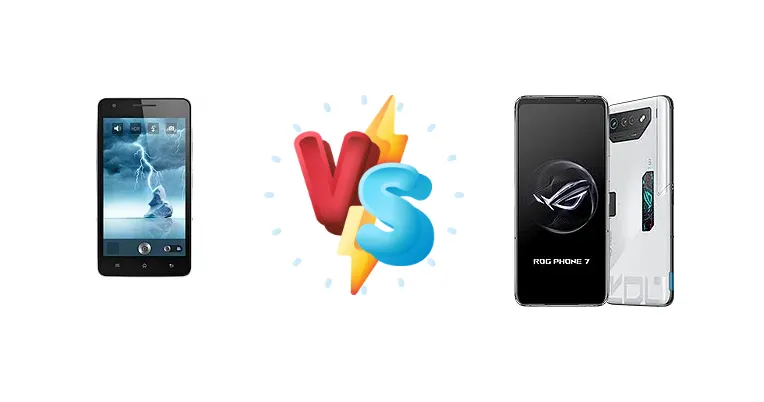
|
🏆 Quick Verdict
For the vast majority of users, the Asus ROG Phone 7 Ultimate is the clear winner. Its Snapdragon 8 Gen 2 chipset delivers exponentially higher performance, coupled with a brighter display and faster charging. The Oppo Find's dated hardware limits its usability in modern applications.
| PHONES | ||
|---|---|---|
| Phone Names | Oppo Find | Asus ROG Phone 7 Ultimate |
| Network | ||
|---|---|---|
| 2G bands | GSM 850 / 900 / 1800 / 1900 | GSM 850 / 900 / 1800 / 1900 |
| 3G bands | HSDPA 850 / 1900 / 2100 | HSDPA 800 / 850 / 900 / 1700(AWS) / 1900 / 2100 |
| 4G bands | - | 1, 2, 3, 4, 5, 7, 8, 12, 17, 18, 19, 20, 25, 26, 28, 32, 34, 38, 39, 40, 41, 42, 43, 48, 66 - International |
| 5G bands | - | 1, 2, 3, 5, 7, 8, 12, 18, 20, 25, 26, 28, 38, 40, 41, 48, 66, 77, 78, 79 SA/NSA/Sub6 - International |
| Speed | HSPA | HSPA, LTE (Up to 7CA), 5G |
| Technology | GSM / HSPA | GSM / CDMA / HSPA / LTE / 5G |
| - | 1, 3, 5, 8, 28, 41, 77, 78, 79 SA/NSA/Sub6 - China | |
| Launch | ||
|---|---|---|
| Announced | 2012, June. Released 2012, July | 2023, April 13 |
| Status | Discontinued | Available. Released 2023, May |
| Body | ||
|---|---|---|
| Build | - | Glass front (Gorilla Glass Victus), glass back (Gorilla Glass 3), aluminum frame |
| Dimensions | 125 x 66 x 6.7 mm (4.92 x 2.60 x 0.26 in) | 173 x 77 x 10.3 mm (6.81 x 3.03 x 0.41 in) |
| SIM | Micro-SIM | Nano-SIM + Nano-SIM |
| Weight | 125 g (4.41 oz) | 239 g (8.43 oz) |
| - | Built-in motorized cooling air vent (AeroActive Portal) IP54 water resistant 2" OLED display (on the back) Pressure sensitive zones (Gaming triggers) | |
| Display | ||
|---|---|---|
| Protection | - | Corning Gorilla Glass Victus |
| Resolution | 480 x 800 pixels, 5:3 ratio (~217 ppi density) | 1080 x 2448 pixels (~395 ppi density) |
| Size | 4.3 inches, 52.6 cm2 (~63.8% screen-to-body ratio) | 6.78 inches, 109.5 cm2 (~82.2% screen-to-body ratio) |
| Type | Super AMOLED Plus | AMOLED, 1B colors, 165Hz, HDR10+, 1000 nits (HBM), 1500 nits (peak) |
| Platform | ||
|---|---|---|
| CPU | Dual-core 1.5 GHz Krait | Octa-core (1x3.2 GHz Cortex-X3 & 2x2.8 GHz Cortex-A715 & 2x2.8 GHz Cortex-A710 & 3x2.0 GHz Cortex-A510) |
| Chipset | - | Qualcomm SM8550-AB Snapdragon 8 Gen 2 (4 nm) |
| GPU | - | Adreno 740 |
| OS | Android 4.0.4 (Ice Cream Sandwich) | Android 13, up to 2 major Android upgrades |
| Memory | ||
|---|---|---|
| Card slot | No | No |
| Internal | 16GB 1GB RAM | 512GB 16GB RAM |
| - | UFS 4.0 NTFS support for external storage | |
| Main Camera | ||
|---|---|---|
| Features | Dual-LED flash, panorama, HDR | LED flash, HDR, panorama |
| Single | 8 MP, AF | - |
| Triple | - | 50 MP, f/1.9, 24mm (wide), 1/1.56", 1.0µm, PDAF 13 MP, f/2.2, 13mm, 120˚ (ultrawide) 5 MP (macro) |
| Video | Yes | 8K@24fps, 4K@30/60fps, 1080p@30/60/120/240fps, 720p@480fps; gyro-EIS, HDR10+ |
| Selfie camera | ||
|---|---|---|
| Features | - | Panorama, HDR |
| Single | 1.3 MP | 32 MP, f/2.5, 29mm (wide), 1/3.2", 0.7µm |
| Video | - | 1080p@30fps |
| Sound | ||
|---|---|---|
| 3.5mm jack | - | Yes |
| 35mm jack | Yes | Yes |
| Loudspeaker | Yes | Yes, with stereo speakers (2 amplifiers) |
| - | 32-bit/384kHz audio | |
| Comms | ||
|---|---|---|
| Bluetooth | 2.0, A2DP | 5.3, A2DP, LE, aptX HD, aptX Adaptive, aptX Lossless |
| NFC | No | Yes |
| Positioning | GPS | GPS (L1+L5), GLONASS (L1), BDS (B1I+B1c+B2a), GALILEO (E1+E5a), QZSS (L1+L5), NavIC (L5) |
| Radio | - | No |
| USB | microUSB 2.0 | USB Type-C 3.1 (side), DisplayPort 1.4; USB Type-C 2.0 (bottom), OTG, accessory connector |
| WLAN | Wi-Fi 802.11 b/g/n, hotspot | Wi-Fi 802.11 a/b/g/n/ac/6e/7, tri-band, Wi-Fi Direct |
| Features | ||
|---|---|---|
| Sensors | Accelerometer, gyro, proximity, compass | Fingerprint (under display, optical), accelerometer, gyro, proximity, compass |
| Battery | ||
|---|---|---|
| Charging | - | 65W wired, PD3.0, QC5, 100% in 42 min 10W reverse wired |
| Stand-by | Up to 400 h (2G) / Up to 350 h (3G) | - |
| Talk time | Up to 9 h 20 min (2G) / Up to 7 h 30 min (3G) | - |
| Type | Li-Ion 1500 mAh, non-removable | Li-Po 6000 mAh |
| Misc | ||
|---|---|---|
| Colors | White, Black | Storm White |
| Price | About 100 EUR | About 780 EUR |
| Tests | ||
|---|---|---|
| Battery life | - | Endurance rating 131h |
| Camera | - | Photo / Video |
| Display | - | Contrast ratio: Infinite (nominal) |
| Loudspeaker | - | -25.5 LUFS (Very good) |
| Performance | - | AnTuTu: 1325105 (v9) GeekBench: 5139 (v5.5), 5567 (v6) GFXBench: 107fps (ES 3.1 onscreen) |
Oppo Find
- Potentially very low price point
- Compact size (likely)
- Simple user experience
- Extremely outdated processor
- Poor performance in modern apps
- Limited camera capabilities
- Slow charging (assumed)
Asus ROG Phone 7 Ultimate
- Exceptional performance with Snapdragon 8 Gen 2
- Bright and vibrant display
- Fast 65W charging
- Long battery life
- Advanced gaming features
- High price
- Bulky design
- Gaming aesthetic may not appeal to everyone
Display Comparison
The Asus ROG Phone 7 Ultimate boasts a significantly more advanced display, achieving a measured peak brightness of 1095 nits. This is a substantial improvement over what the Oppo Find likely offered, given its age. The ROG Phone's infinite (nominal) contrast ratio suggests a superior panel technology, likely AMOLED, providing deeper blacks and more vivid colors. While the Oppo Find's display specs are unavailable, it almost certainly lacks features like high refresh rates and HDR support found in modern flagships like the ROG Phone 7 Ultimate.
Camera Comparison
Both devices feature photo and video capabilities, but the ROG Phone 7 Ultimate likely benefits from significantly more advanced image processing and sensor technology. Without specific sensor details for either phone, it's difficult to make a precise comparison. However, the ROG Phone 7 Ultimate, being a flagship device, likely incorporates larger sensors, optical image stabilization (OIS), and advanced computational photography features. The Oppo Find's camera system is likely more basic, offering acceptable results in good lighting conditions but struggling in low light.
Performance
The performance disparity is immense. The Oppo Find's dual-core 1.5 GHz Krait processor is dwarfed by the Asus ROG Phone 7 Ultimate's Qualcomm SM8550-AB Snapdragon 8 Gen 2. The Snapdragon 8 Gen 2 is an octa-core processor built on a 4nm process, offering a massive increase in processing power and efficiency. The ROG Phone's CPU configuration – (1x3.2 GHz Cortex-X3 & 2x2.8 GHz Cortex-A715 & 2x2.8 GHz Cortex-A710 & 3x2.0 GHz Cortex-A510) – allows for superior multitasking and sustained performance under heavy loads. The older Krait architecture will struggle with modern games and applications, while the ROG Phone 7 Ultimate is designed to handle them effortlessly.
Battery Life
Both phones share an endurance rating of 131 hours, suggesting comparable battery life *relative to their usage*. However, the ROG Phone 7 Ultimate's 65W wired charging with PD3.0 and QC5 support is a game-changer, achieving a 100% charge in just 42 minutes. The Oppo Find's charging speed is unknown but almost certainly slower. Furthermore, the ROG Phone 7 Ultimate offers 10W reverse wired charging, a convenient feature for topping up accessories.
Buying Guide
Buy the Oppo Find if you need a basic, extremely affordable smartphone for essential tasks like calls and texts, and are willing to accept significant performance limitations. Buy the Asus ROG Phone 7 Ultimate if you prioritize mobile gaming, demanding applications, a vibrant display, and long-lasting battery life with incredibly fast charging – and are prepared to pay a premium for these features.