
Oppo Find X8s vs OnePlus 12R: A Deep Dive into Performance and Value
| Phones Images | |||||
|---|---|---|---|---|---|
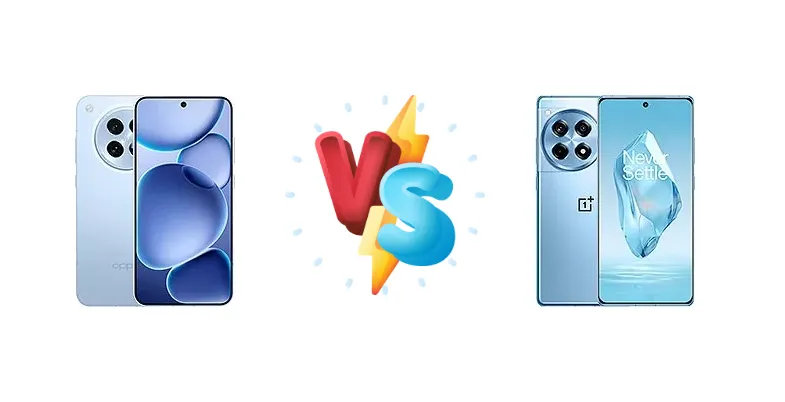
|
🏆 Quick Verdict
For most users, the OnePlus 12R offers a compelling balance of performance and value. Its 100W charging and proven Snapdragon 8 Gen 2 provide a smooth experience without the premium price tag of the Find X8s. However, power users prioritizing the absolute latest CPU architecture will find the Find X8s intriguing.
| PHONES | ||
|---|---|---|
| Phone Names | Oppo Find X8s | OnePlus 12R |
| Network | ||
|---|---|---|
| 2G bands | GSM 850 / 900 / 1800 / 1900 | GSM 850 / 900 / 1800 / 1900 |
| 3G bands | HSDPA 800 / 850 / 900 / 1700(AWS) / 1900 / 2100 | HSDPA 850 / 900 / 1700(AWS) / 1900 / 2100 |
| 4G bands | 1, 3, 4, 5, 8, 18, 19, 26, 28, 34, 38, 39, 40, 41, 42, 48, 66 | 1, 2, 3, 4, 5, 7, 8, 12, 17, 18, 19, 20, 26, 28, 32, 38, 39, 40, 41, 66 |
| 5G bands | 1, 3, 5, 8, 26, 28, 38, 40, 41, 48, 66, 77, 78 SA/NSA | 1, 2, 3, 5, 7, 8, 12, 20, 28, 38, 40, 41, 66, 77, 78 SA/NSA |
| Speed | HSPA, LTE, 5G | HSPA, LTE, 5G |
| Technology | GSM / HSPA / LTE / 5G | GSM / CDMA / HSPA / LTE / 5G |
| Launch | ||
|---|---|---|
| Announced | 2025, April 10 | 2024, January 23 |
| Status | Available. Released 2025, April 16 | Available. Released 2024, February 06 |
| Body | ||
|---|---|---|
| Build | Glass front, glass back, aluminum frame | Glass front (Gorilla Glass Victus 2), aluminum frame, glass back |
| Dimensions | 150.6 x 71.8 x 7.7 mm (5.93 x 2.83 x 0.30 in) | 163.3 x 75.3 x 8.8 mm (6.43 x 2.96 x 0.35 in) |
| SIM | Nano-SIM + Nano-SIM | · Nano-SIM + Nano-SIM + eSIM (max 2 at a time)· Nano-SIM + Nano-SIM |
| Weight | 179 g (6.31 oz) | 207 g (7.30 oz) |
| Display | ||
|---|---|---|
| Protection | - | Corning Gorilla Glass Victus 2 |
| Resolution | 1216 x 2640 pixels, 19.5:9 ratio (~460 ppi density) | 1264 x 2780 pixels (~450 ppi density) |
| Size | 6.32 inches, 97.9 cm2 (~90.6% screen-to-body ratio) | 6.78 inches, 111.7 cm2 (~90.9% screen-to-body ratio) |
| Type | AMOLED, 1B colors, 120Hz, 2160Hz PWM, Dolby Vision, HDR Vivid, HDR10+, 800 nits (typ), 1600 nits (HBM) | LTPO4 AMOLED, 1B colors, 120Hz, HDR10+, Dolby Vision, 1600 nits (HBM), 4500 nits (peak) |
| Platform | ||
|---|---|---|
| CPU | Octa-core (1x3.73 GHz Cortex-X925 & 3x3.3 GHz Cortex-X4 & 4x2.4 GHz Cortex-A720) | Octa-core (1x3.2 GHz Cortex-X3 & 2x2.8 GHz Cortex-A715 & 2x2.8 GHz Cortex-A710 & 3x2.0 GHz Cortex-A510) |
| Chipset | Mediatek Dimensity 9400+ (3 nm) | Qualcomm SM8550-AB Snapdragon 8 Gen 2 (4 nm) |
| GPU | Immortalis-G925 MC12 | Adreno 740 |
| OS | Android 15, ColorOS 15 | Android 14, up to 3 major Android upgrades, OxygenOS 15 |
| Memory | ||
|---|---|---|
| Card slot | No | No |
| Internal | 256GB 12GB RAM, 256GB 16GB RAM, 512GB 12GB RAM, 512GB 16GB RAM, 1TB 16GB RAM | 128GB 8GB RAM, 256GB 8GB RAM, 256GB 12GB RAM, 256GB 16GB RAM |
| Main Camera | ||
|---|---|---|
| Features | Color spectrum sensor, Hasselblad Color Calibration, LED flash, HDR, panorama | Laser AF, color spectrum sensor, LED flash, HDR, panorama |
| Triple | 50 MP, f/1.8, 24mm (wide), 1/1.56", 1.0µm, multi-directional PDAF, OIS 50 MP, f/2.8, 85mm (telephoto), 3.5x optical zoom, multi-directional PDAF, OIS 50 MP, f/2.0, 15mm, 120˚ (ultrawide), 1/2.75", 0.64µm, multi-directional PDAF | 50 MP, f/1.8, 24mm (wide), 1/1.56", 1.0µm, multi-directional PDAF, OIS 8 MP, f/2.2, 16mm, 112˚ (ultrawide), 1/4.0", 1.12µm 2 MP (macro) |
| Video | 4K@30/60fps, 1080p@30/60/240fps; gyro-EIS; HDR, 10‑bit video, Dolby Vision | 4K@30/60fps, 1080p@30/60/120/240fps, gyro-EIS, OIS |
| Selfie camera | ||
|---|---|---|
| Features | Panorama, HDR | HDR, panorama |
| Single | 32 MP, f/2.4, 21mm (wide), 1/2.74", 0.8µm, AF | 16 MP, f/2.4, 26mm (wide), 1/3", 1.0µm |
| Video | 4K@30/60fps, 1080p@30/60fps, gyro-EIS | 1080p@30fps, gyro-EIS |
| Sound | ||
|---|---|---|
| 35mm jack | No | No |
| Loudspeaker | Yes, with stereo speakers | Yes, with stereo speakers |
| Comms | ||
|---|---|---|
| Bluetooth | 5.4, A2DP, LE, aptX HD, LHDC 5 | 5.3, A2DP, LE, aptX HD |
| Infrared port | Yes | Yes |
| NFC | Yes | Yes |
| Positioning | GPS (L1+L5), BDS (B1I+B1c+B2a+B2b), GALILEO (E1+E5a+E5b), QZSS (L1+L5), GLONASS, NavIC (L5) | GPS, GALILEO, GLONASS, BDS, QZSS |
| Radio | No | No |
| USB | USB Type-C 2.0, OTG | USB Type-C 2.0 |
| WLAN | Wi-Fi 802.11 a/b/g/n/ac/6/7, dual-band, Wi-Fi Direct | Wi-Fi 802.11 a/b/g/n/ac/6/7, dual-band |
| Features | ||
|---|---|---|
| Sensors | Fingerprint (under display, optical), accelerometer, gyro, proximity, compass | Fingerprint (under display, optical), accelerometer, gyro, proximity, compass |
| Battery | ||
|---|---|---|
| Charging | 80W wired, 12W PD, 33W PPS 50W wireless | 100W wired, 100% in 26 min |
| Type | Si/C Li-Ion 5700 mAh | Li-Ion 5500 mAh |
| Misc | ||
|---|---|---|
| Colors | Black, Blue, White, Pink | Iron Gray, Cool Blue, Electric Violet, Sunset Dune |
| Models | PKT110 | CPH2609, CPH2585, CPH2611 |
| Price | - | € 410.84 / $ 399.95 / £ 649.00 |
| SAR | - | 1.19 W/kg (head) 0.82 W/kg (body) |
Oppo Find X8s
- Cutting-edge Dimensity 9400+ chipset for potentially superior performance
- Versatile charging options (80W wired, 50W wireless)
- Potential for advanced camera features (based on Oppo's history)
- Higher price point expected
- Limited information available at launch
OnePlus 12R
- Proven Snapdragon 8 Gen 2 performance
- Incredibly fast 100W charging (26 minutes to full)
- Excellent battery life (14:32h active use)
- Older chipset compared to Dimensity 9400+
- Camera system not a primary strength
Display Comparison
While both phones are expected to feature high-quality displays, the OnePlus 12R’s measured peak brightness of 1181 nits provides a concrete advantage in outdoor visibility. The Find X8s’ display specifications are currently unknown, but Oppo typically employs LTPO panels for adaptive refresh rates, potentially offering power savings. Without further details on the X8s’ panel technology, the 12R currently holds the edge in quantifiable display performance.
Camera Comparison
Camera details for the Oppo Find X8s are currently unavailable. The OnePlus 12R’s camera system, while capable, is not its primary selling point. Without knowing the sensor sizes, apertures, and image processing algorithms of the Find X8s, a direct comparison is impossible. However, Oppo typically focuses heavily on camera technology, suggesting the X8s may offer a more advanced photographic experience. We anticipate the X8s will feature a larger main sensor and more sophisticated image stabilization.
Performance
The core difference lies in the chipsets. The Oppo Find X8s’ Mediatek Dimensity 9400+ (3nm) boasts a Cortex-X925 prime core clocked at 3.73 GHz, a significant step up from the OnePlus 12R’s Snapdragon 8 Gen 2 (4nm) and its Cortex-X3 core at 3.2 GHz. This suggests a potential lead in single-core performance for the X8s. However, the Snapdragon 8 Gen 2’s 4nm process offers excellent thermal efficiency, potentially mitigating throttling during sustained workloads. The Dimensity 9400+'s architecture, with its three Cortex-X4 cores, also promises improved multi-core performance, but real-world gains will depend on software optimization. The 12R’s LPDDR5x RAM complements the Snapdragon 8 Gen 2, ensuring swift data access.
Battery Life
The OnePlus 12R excels in charging speed with its 100W wired charging, achieving a full charge in just 26 minutes. The Oppo Find X8s offers 80W wired charging, 50W wireless, and 12W PD/33W PPS, providing more versatility but slower wired speeds. The 12R also boasts a strong battery life, achieving 14:32h of active use. While the Find X8s’ battery capacity is unknown, the Dimensity 9400+'s 3nm process *could* offset a potentially smaller battery size through improved power efficiency. However, the 12R’s combination of fast charging and proven endurance gives it a clear advantage.
Buying Guide
Buy the Oppo Find X8s if you demand the most advanced mobile processor available and are willing to pay a premium for the Dimensity 9400+'s Cortex-X925 core and potential future-proofing. Buy the OnePlus 12R if you prioritize excellent all-around performance, incredibly fast 100W charging, and a more accessible price point, making it ideal for gamers and everyday users.