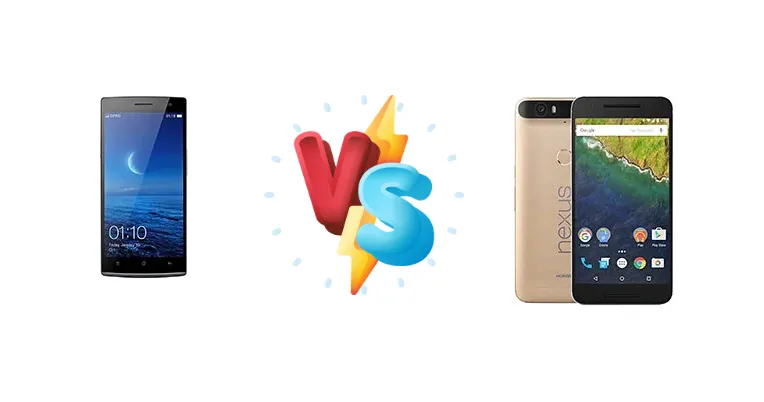
The Oppo Find 7a and Huawei Nexus 6P represent a fascinating point in Android history – the transition from Qualcomm’s 28nm to 20nm process nodes. Both were flagship contenders, but arrived with different priorities. The Find 7a prioritized fast charging and high display contrast, while the Nexus 6P aimed for a pure Android experience and sustained performance. This comparison revisits these devices to determine which holds up better today.
🏆 Quick Verdict
For the average user seeking a functional, older flagship, the Huawei Nexus 6P is the better choice. Its Snapdragon 810 offers a more modern architecture and slightly better battery endurance (74h vs 60h), offsetting the Find 7a’s faster 20W charging. The Nexus 6P’s software support, even post-official updates, is also a significant advantage.
| Network |
|---|
| 2G bands | GSM 850 / 900 / 1800 / 1900 - all models | GSM 850 / 900 / 1800 / 1900 - all models |
| 3G bands | HSDPA 850 / 900 / 1900 / 2100 - international model | HSDPA 800 / 850 / 900 / 1700 / 1800 / 1900 / 2100 - Global model |
| 4G bands | 1, 3, 7, 20 - International model | 1, 2, 3, 4, 5, 7, 8, 9, 17, 19, 20, 28, 38, 39, 40, 41 - Global model |
| Speed | HSPA, LTE | HSPA 42.2/5.76 Mbps, LTE (2CA) Cat6 300/50 Mbps |
| Technology | GSM / HSPA / LTE | GSM / CDMA / HSPA / LTE |
| | - | 2, 3, 4, 5, 7, 12, 13, 17, 25, 26, 29, 30, 41 - American model |
| Launch |
|---|
| Announced | 2014, March. Released 2014, March | 2015, September. Released 2015, September |
| Status | Discontinued | Discontinued |
| Body |
|---|
| Build | - | Glass front (Gorilla Glass 4), aluminum back, aluminum frame |
| Dimensions | 152.6 x 75 x 9.2 mm (6.01 x 2.95 x 0.36 in) | 159.3 x 77.8 x 7.3 mm (6.27 x 3.06 x 0.29 in) |
| SIM | Micro-SIM | Nano-SIM |
| Weight | 170 g (6.00 oz) | 178 g (6.28 oz) |
| Display |
|---|
| Protection | Corning Gorilla Glass 3 | Corning Gorilla Glass 4, oleophobic coating |
| Resolution | 1080 x 1920 pixels, 16:9 ratio (~401 ppi density) | 1440 x 2560 pixels, 16:9 ratio (~518 ppi density) |
| Size | 5.5 inches, 83.4 cm2 (~72.9% screen-to-body ratio) | 5.7 inches, 88.5 cm2 (~71.4% screen-to-body ratio) |
| Type | IPS LCD | OLED |
| Platform |
|---|
| CPU | Quad-core 2.3 GHz Krait 400 | Octa-core (4x1.55 GHz Cortex-A53 & 4x2.0 GHz Cortex-A57) |
| Chipset | Qualcomm MSM8974AB Snapdragon 801 (28 nm) | Qualcomm MSM8994 Snapdragon 810 (20 nm) |
| GPU | Adreno 330 | Adreno 430 |
| OS | Android 4.3 (Jelly Bean), ColorOS | Android 6.0 (Marshmallow), upgradable to Android 8.0 (Oreo) |
| Memory |
|---|
| Card slot | microSDXC (dedicated slot) | No |
| Internal | 16GB 2GB RAM | 32GB 3GB RAM, 64GB 3GB RAM, 128GB 3GB RAM |
| | - | eMMC 5.0 |
| Main Camera |
|---|
| Features | Dual-LED flash, panorama, HDR | Laser AF, Dual-LED dual-tone flash, HDR, panorama |
| Single | 13 MP, f/2.0, 1/3.0", AF | 12.3 MP, f/2.0, 1/2.3", 1.55µm |
| Video | 4K@30fps, 1080p@60fps, 720p@120fps | 4K@30fps, 720p@240fps |
| Selfie camera |
|---|
| Single | 5 MP, f/2.0 | 8 MP, f/2.4 |
| Video | 1080p@30fps | 1080p@30fps |
| Sound |
|---|
| 3.5mm jack | - | Yes |
| 35mm jack | Yes | Yes |
| Loudspeaker | Yes | Yes, with front stereo speakers |
| | - | 24-bit/96kHz
|
| Comms |
|---|
| Bluetooth | 4.0, A2DP | 4.2, A2DP, LE |
| NFC | Yes | Yes |
| Positioning | GPS | GPS, GLONASS |
| Radio | No | No |
| USB | microUSB 2.0, OTG | USB Type-C 2.0 |
| WLAN | Wi-Fi 802.11 a/b/g/n/ac, dual-band, Wi-Fi Direct, hotspot | Wi-Fi 802.11 a/b/g/n/ac, dual-band, Wi-Fi Direct, DLNA |
| Features |
|---|
| Sensors | Accelerometer, gyro, proximity, compass | Fingerprint (rear-mounted), accelerometer, gyro, proximity, compass, barometer |
| Battery |
|---|
| Charging | 20W wired, 75% in 30 min | 15W wired |
| Music play | - | Up to 100 h |
| Stand-by | - | Up to 440 h (3G) |
| Talk time | - | Up to 23 h (3G) |
| Type | Li-Po 2800 mAh, removable | Li-Po 3450 mAh, non-removable |
| Misc |
|---|
| Colors | White, Black | Aluminium, Graphite, Frost |
| Models | X9006 | H1511, H1512 |
| Price | About 370 EUR | About 300 EUR |
| SAR | - | 1.49 W/kg (head) 0.81 W/kg (body) |
| SAR EU | - | 1.17 W/kg (head) 0.54 W/kg (body) |
| Tests |
|---|
| Battery life | - |
Endurance rating 74h
|
| Camera | - |
Photo / Video |
| Performance | - |
Basemark OS II 2.0: 1374Basemark X: 22825 |
Oppo Find 7a (2014)
- Faster 20W charging significantly reduces downtime.
- Superior display contrast for better outdoor visibility.
- Potentially more affordable on the used market.
- Older Snapdragon 801 is less efficient and powerful.
- Shorter battery endurance compared to the Nexus 6P.
- Likely limited software support.
Huawei Nexus 6P
- More efficient Snapdragon 810 processor.
- Longer battery life for all-day use.
- Cleaner Android experience with faster updates (initially).
- Slower 15W charging.
- Snapdragon 810 prone to thermal throttling.
- May be more expensive to acquire.
Display Comparison
The Oppo Find 7a boasts a contrast ratio of 852 (nominal) and a significantly higher 2.279 under sunlight, suggesting superior outdoor visibility. While both devices likely utilized LCD panels (common for the era), the Find 7a’s contrast advantage is a tangible benefit for users frequently exposed to bright environments. The Nexus 6P’s display specs are not provided, but given its later release, it likely benefited from panel improvements, though not necessarily in contrast. The Find 7a’s higher contrast ratio would be particularly noticeable when viewing photos and videos.
Camera Comparison
Both devices feature photo and video capabilities, but detailed camera specifications are lacking. Given the Nexus line’s historical focus on computational photography, the Nexus 6P likely offered more sophisticated image processing. Sensor size and lens aperture are critical factors not provided, but the Nexus 6P’s later release suggests a potential advantage in low-light performance. The Find 7a’s camera likely prioritized speed and simplicity, while the Nexus 6P aimed for a more balanced and refined image quality.
Performance
The Huawei Nexus 6P’s Snapdragon 810, built on a 20nm process, represents a generational leap over the Oppo Find 7a’s Snapdragon 801 (28nm). The 810’s octa-core configuration (4x1.55 GHz Cortex-A53 & 4x2.0 GHz Cortex-A57) offers more cores and a more efficient architecture than the Find 7a’s quad-core 2.3 GHz Krait 400. While the Krait 400 was a strong performer for its time, the 810’s architecture allows for better multitasking and sustained performance under load. The 20nm process also contributes to improved thermal efficiency, potentially reducing throttling during extended gaming sessions. However, the Snapdragon 810 was known for thermal throttling issues, a concern the 801 largely avoided.
Battery Life
The Huawei Nexus 6P edges out the Oppo Find 7a in battery endurance with a rating of 74 hours compared to the Find 7a’s 60 hours. While the Find 7a boasts faster 20W wired charging (75% in 30 minutes), the Nexus 6P’s more efficient Snapdragon 810 and potentially larger battery capacity (spec not provided) contribute to its longer runtime. The 15W charging on the Nexus 6P is slower, but the improved efficiency means users may not notice a significant difference in daily usage.
Buying Guide
Buy the Oppo Find 7a (2014) if you prioritize extremely fast charging speeds and a display with exceptional contrast, particularly in direct sunlight. Buy the Huawei Nexus 6P if you prefer a cleaner software experience, a more efficient processor, and slightly longer battery life, making it a better all-rounder for daily use.
Frequently Asked Questions
❓ Is the Snapdragon 810 in the Nexus 6P known to overheat during demanding tasks?
Yes, the Snapdragon 810 was notorious for thermal throttling under sustained load. While the Nexus 6P’s design mitigated this somewhat, users may experience performance drops during extended gaming or video recording sessions. The Oppo Find 7a’s Snapdragon 801, while less powerful, was generally more stable in terms of thermal management.
❓ Given their age, how reliable are the batteries in these phones today?
Both batteries are quite old at this point (2014/2015). Expect significantly reduced capacity and potentially shorter lifespans. Battery replacement may be necessary to restore optimal performance. The Nexus 6P’s slightly better endurance rating when new suggests it *might* have held up marginally better, but both will likely require attention.
❓ Which phone is more likely to receive unofficial software updates from the Android developer community?
The Huawei Nexus 6P is significantly more likely to receive continued support from the Android developer community. As a Nexus device, it was designed with custom ROM development in mind, and a large community continues to maintain and update the software. The Oppo Find 7a, while popular, lacks the same level of developer support.