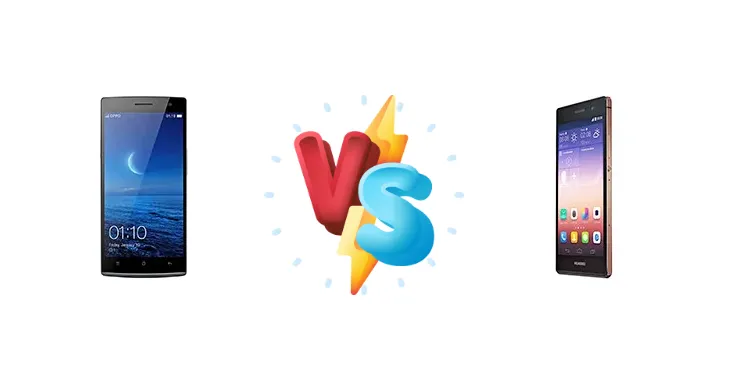
In 2014, the Oppo Find 7a and Huawei Ascend P7 Sapphire Edition represented ambitious attempts to deliver premium smartphone experiences. While both devices aimed for the top tier, they took distinctly different approaches to achieving it. This comparison revisits these phones, analyzing their strengths and weaknesses through a modern lens, considering their original market positioning and the technological landscape of the time.
🏆 Quick Verdict
For the average user seeking a functional and relatively powerful device from this era, the Oppo Find 7a emerges as the stronger choice. Its Snapdragon 801 chipset provides a significant performance advantage over the Kirin 910T, translating to smoother multitasking and a more responsive user experience, despite the P7's premium Sapphire glass.
| Network |
|---|
| 2G bands | GSM 850 / 900 / 1800 / 1900 - all models | GSM 850 / 900 / 1800 / 1900 |
| 3G bands | HSDPA 850 / 900 / 1900 / 2100 - international model | HSDPA |
| 4G bands | 1, 3, 7, 20 - International model | LTE |
| EDGE | - | Yes |
| GPRS | - | Yes |
| Speed | HSPA, LTE | HSPA 42.2/5.76 Mbps, LTE Cat4 150/50 Mbps |
| Technology | GSM / HSPA / LTE | GSM / HSPA / LTE |
| Launch |
|---|
| Announced | 2014, March. Released 2014, March | 2014, August. Released 2014, September |
| Status | Discontinued | Discontinued |
| Body |
|---|
| Dimensions | 152.6 x 75 x 9.2 mm (6.01 x 2.95 x 0.36 in) | 139.8 x 68.8 x 6.5 mm (5.50 x 2.71 x 0.26 in) |
| SIM | Micro-SIM | Micro-SIM |
| Weight | 170 g (6.00 oz) | 124 g (4.37 oz) |
| Display |
|---|
| Protection | Corning Gorilla Glass 3 | Sapphire crystal glass |
| Resolution | 1080 x 1920 pixels, 16:9 ratio (~401 ppi density) | 1080 x 1920 pixels, 16:9 ratio (~441 ppi density) |
| Size | 5.5 inches, 83.4 cm2 (~72.9% screen-to-body ratio) | 5.0 inches, 68.9 cm2 (~71.7% screen-to-body ratio) |
| Type | IPS LCD | IPS LCD |
| Platform |
|---|
| CPU | Quad-core 2.3 GHz Krait 400 | Quad-core 1.8 GHz Cortex-A9 |
| Chipset | Qualcomm MSM8974AB Snapdragon 801 (28 nm) | Kirin 910T (28 nm) |
| GPU | Adreno 330 | Mali-450MP4 |
| OS | Android 4.3 (Jelly Bean), ColorOS | Android 4.4.2 (KitKat), EMUI 2.3 |
| Memory |
|---|
| Card slot | microSDXC (dedicated slot) | microSDXC (dedicated slot) |
| Internal | 16GB 2GB RAM | 16GB 2GB RAM |
| Main Camera |
|---|
| Features | Dual-LED flash, panorama, HDR | LED flash, panorama, HDR |
| Single | 13 MP, f/2.0, 1/3.0", AF | 13 MP, AF |
| Video | 4K@30fps, 1080p@60fps, 720p@120fps | 1080p@30fps |
| Selfie camera |
|---|
| Single | 5 MP, f/2.0 | 8 MP |
| Video | 1080p@30fps | - |
| Sound |
|---|
| 3.5mm jack | - | Yes |
| 35mm jack | Yes | Yes |
| Loudspeaker | Yes | Yes |
| Comms |
|---|
| Bluetooth | 4.0, A2DP | 4.0, A2DP, LE |
| NFC | Yes | Yes |
| Positioning | GPS | GPS, GLONASS |
| Radio | No | FM radio |
| USB | microUSB 2.0, OTG | microUSB 2.0, OTG |
| WLAN | Wi-Fi 802.11 a/b/g/n/ac, dual-band, Wi-Fi Direct, hotspot | Wi-Fi 802.11 a/b/g/n, dual-band, Wi-Fi Direct, DLNA |
| Features |
|---|
| Sensors | Accelerometer, gyro, proximity, compass | Accelerometer, proximity, compass |
| Battery |
|---|
| Charging | 20W wired, 75% in 30 min | - |
| Type | Li-Po 2800 mAh, removable | Li-Po 2500 mAh, non-removable |
| Misc |
|---|
| Colors | White, Black | Black, white, pink |
| Models | X9006 | - |
| Price | About 370 EUR | - |
Oppo Find 7a (2014)
- Superior processing power with the Snapdragon 801.
- Faster charging with 20W wired support.
- Better display contrast for improved visibility.
- Limited camera specification details.
- Potentially larger form factor compared to the P7.
Huawei Ascend P7 Sapphire Edition
- Premium build quality with Sapphire glass.
- More compact design for easier handling.
- Potentially refined software experience (Huawei's Emotion UI).
- Inferior processing power with the Kirin 910T.
- Slower charging speed (likely).
- Limited performance for demanding applications.
Display Comparison
The Oppo Find 7a boasts a contrast ratio of 852 (nominal) and a significantly improved 2.279 under sunlight, suggesting superior outdoor visibility compared to the Ascend P7. While specific nit brightness figures for the P7 are unavailable, the Find 7a’s higher contrast ratio indicates a more vibrant and readable display in various lighting conditions. Both devices likely utilized LCD panels common in 2014, lacking the advanced features like OLED or high refresh rates found in modern smartphones. The P7’s Sapphire glass, however, offers a durability advantage over the Find 7a’s standard glass.
Camera Comparison
Both devices featured capable cameras for their time, but detailed specifications beyond 'Photo / Video' for the Find 7a are lacking. The Ascend P7 likely focused on image processing algorithms to enhance photo quality. Without sensor size or aperture information for either device, a direct comparison is difficult. However, given Huawei’s later emphasis on camera technology, the P7 likely benefited from more sophisticated software optimization. The absence of detailed camera specs for the Find 7a suggests it may not have been a primary selling point.
Performance
The core difference lies in the chipsets: the Oppo Find 7a utilizes the Qualcomm MSM8974AB Snapdragon 801 with a quad-core 2.3 GHz Krait 400 CPU, while the Huawei Ascend P7 Sapphire Edition is powered by the Kirin 910T with a quad-core 1.8 GHz Cortex-A9 CPU. The Snapdragon 801, built on a 28nm process, represents a more advanced architecture than the Kirin 910T, also on 28nm. The Krait 400 cores offer superior single-core and multi-core performance, resulting in a snappier user experience and better handling of demanding applications. The Ascend P7’s Cortex-A9, while capable, falls behind in computational power, impacting app loading times and overall system responsiveness.
Battery Life
The Oppo Find 7a claims an endurance rating of 60 hours, while specific battery capacity for either device is unavailable. The Find 7a’s 20W wired charging, capable of reaching 75% charge in 30 minutes, is a significant advantage. This rapid charging capability would have been a standout feature in 2014. The Ascend P7’s charging speed is unknown, but likely slower. The endurance rating suggests the Find 7a may have had a larger battery capacity, or more efficient power management, to achieve its claimed runtime.
Buying Guide
Buy the Oppo Find 7a (2014) if you prioritize performance and responsiveness for basic tasks and light gaming. Its Snapdragon 801 offers a noticeable edge in processing power. Buy the Huawei Ascend P7 Sapphire Edition if you value a more compact design and a potentially more refined aesthetic, accepting a trade-off in raw processing capability. The Sapphire glass also offers superior scratch resistance, a benefit for users prone to drops.
Frequently Asked Questions
❓ Is the Snapdragon 801 in the Oppo Find 7a still capable of running modern apps?
While the Snapdragon 801 was a flagship processor in 2014, it will struggle with demanding modern applications and games. It can handle basic tasks like web browsing, social media, and messaging, but expect significant slowdowns and limitations with resource-intensive software.
❓ Does the Sapphire glass on the Huawei Ascend P7 truly offer significant scratch protection?
Yes, Sapphire glass is significantly harder than standard smartphone glass, offering excellent scratch resistance. However, it is more brittle and can crack or shatter upon impact. The P7’s Sapphire glass provides a notable advantage against everyday scratches, but doesn’t guarantee complete protection against drops.
❓ Which phone would be better for someone looking for a retro gaming experience?
The Oppo Find 7a is the better choice for retro gaming. The Snapdragon 801’s superior processing power will provide a smoother experience when emulating older consoles and running retro games compared to the Kirin 910T.