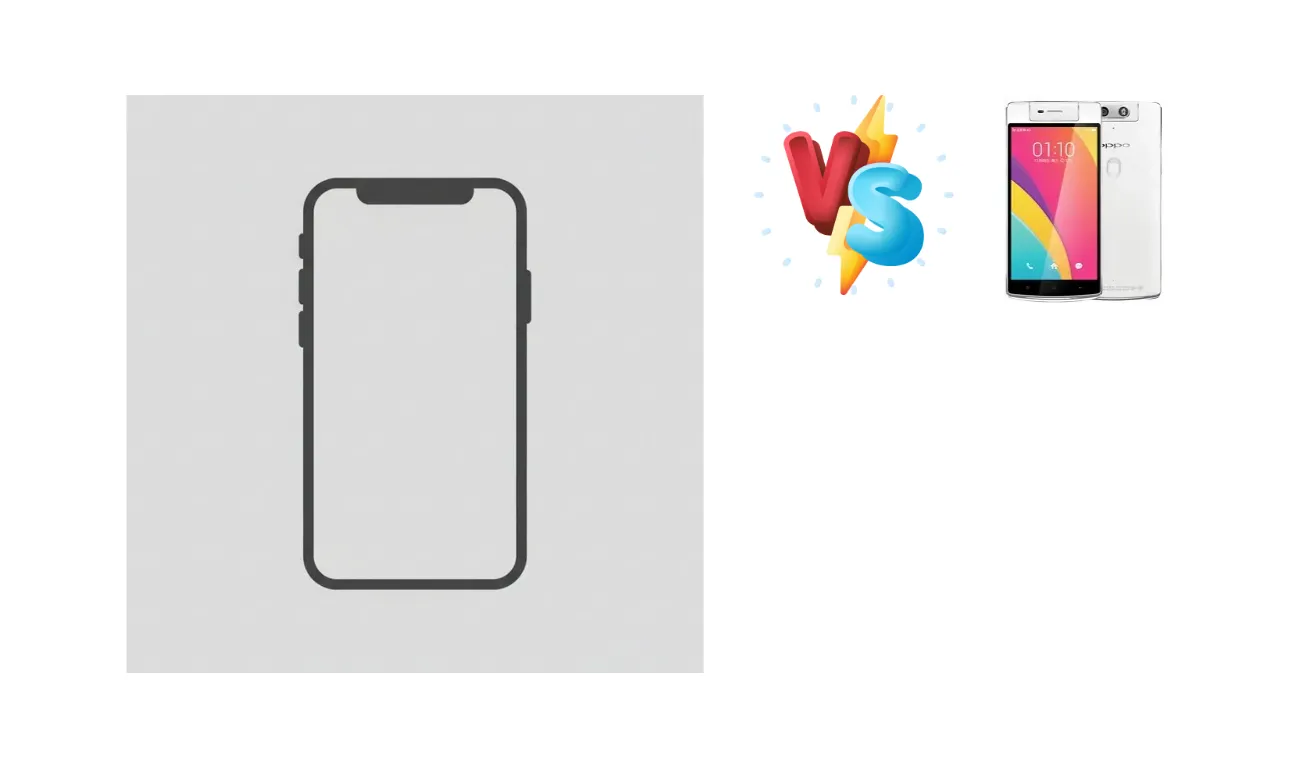
The Oppo Find 7 and N3 were both ambitious flagships from Oppo, released in a competitive era. Both offered unique features and impressive specs for their time. But which one holds up better today? Let's break down their strengths and weaknesses in this comprehensive comparison.
🏆 Quick Verdict
The Oppo N3 edges out the Find 7 primarily due to its significantly longer battery life and unique rotating camera. While the Find 7 boasts a slightly faster processor and impressive contrast ratio, the N3's endurance and innovative design give it the overall advantage for those seeking a vintage powerhouse.
| Network |
|---|
| 2G bands | GSM 850 / 900 / 1800 / 1900 - all models | GSM 850 / 900 / 1800 / 1900 - SIM 1 & SIM 2 |
| 3G bands | HSDPA 850 / 900 / 1900 / 2100 - international model | HSDPA 850 / 900 / 1700 / 1900 / 2100 |
| 4G bands | 1, 3, 7, 20 - International model | 1, 3, 4, 7, 8, 17, 20, 28, 40 |
| Speed | HSPA, LTE | HSPA, LTE |
| Technology | GSM / HSPA / LTE | GSM / HSPA / LTE |
| | LTE 700 / 1700 / 2100 - Mexico & US model | - |
| Launch |
|---|
| Announced | 2014, March. Released 2014, May | 2014, October. Released 2015, January |
| Status | Discontinued | Discontinued |
| Body |
|---|
| Dimensions | 152.6 x 75 x 9.2 mm (6.01 x 2.95 x 0.36 in) | 161.2 x 77 x 9.9 mm (6.35 x 3.03 x 0.39 in) |
| SIM | Micro-SIM | Nano-SIM + Micro-SIM |
| Weight | 171 g (6.03 oz) | 192 g (6.77 oz) |
| Display |
|---|
| Protection | Corning Gorilla Glass 3 | Corning Gorilla Glass 3 |
| Resolution | 1440 x 2560 pixels, 16:9 ratio (~534 ppi density) | 1080 x 1920 pixels, 16:9 ratio (~403 ppi density) |
| Size | 5.5 inches, 83.4 cm2 (~72.9% screen-to-body ratio) | 5.5 inches, 82.6 cm2 (~66.5% screen-to-body ratio) |
| Type | IPS LCD | IPS LCD |
| Platform |
|---|
| CPU | Quad-core 2.5 GHz Krait 400 | Quad-core 2.3 GHz Krait 400 |
| Chipset | Qualcomm MSM8974AC Snapdragon 801 (28 nm) | Qualcomm MSM8974AA Snapdragon 801 (28 nm) |
| GPU | Adreno 330 | Adreno 330 |
| OS | Android 4.3 (Jelly Bean), ColorOS | Android 4.4.4 (KitKat), ColorOS 2 |
| Memory |
|---|
| Card slot | microSDXC (dedicated slot) | microSDXC (uses shared SIM slot) |
| Internal | 32GB 3GB RAM | 32GB 2GB RAM |
| | eMMC 5.0 | eMMC 5.0 |
| Main Camera |
|---|
| Features | Dual-LED flash, panorama, HDR | Dual-LED flash, HDR, Schneider Kreuznach certified optics, auto panorama (motorized rotation) |
| Single | 13 MP, f/2.0, 1/3", AF | 16 MP, f/2.2, 1/2.3", 1.34µm, AF |
| Video | 4K@30fps, 1080p@60fps, 720p@120fps | 1080p@60fps, 720p@120fps |
| Selfie camera |
|---|
| Features | - | Dual-LED flash, HDR, Schneider Kreuznach certified optics, auto panorama (motorized rotation) |
| Single | 5 MP, f/2.0 | Motorized rotating pop-up main camera module |
| Video | - | 1080p@60fps, 720p@120fps |
| Sound |
|---|
| 3.5mm jack | Yes | Yes |
| 35mm jack | - | Yes |
| Loudspeaker | Yes, with stereo speakers | Yes |
| Comms |
|---|
| Bluetooth | 4.0, A2DP | 4.0, A2DP |
| NFC | Yes | Yes |
| Positioning | GPS | GPS, GLONASS |
| Radio | No | No |
| USB | microUSB 2.0, OTG | microUSB 2.0, OTG |
| WLAN | Wi-Fi 802.11 a/b/g/n/ac, dual-band, DLNA, Wi-Fi Direct, hotspot | Wi-Fi 802.11 a/b/g/n/ac, Wi-Fi Direct, DLNA, hotspot |
| Features |
|---|
| Sensors | Accelerometer, gyro, proximity, compass | Fingerprint (rear-mounted), accelerometer, gyro, proximity, compass |
| | - | O-Click 2.0 bluetooth remote control |
| Battery |
|---|
| Charging | 20W wired, 75% in 30 min (advertised) | 20W wired, 75% in 30 min |
| Type | Li-Po 3000 mAh, removable | Li-Po 3000 mAh, non-removable |
| Misc |
|---|
| Colors | White, Black, Astro Black | White |
| Models | X9076, X9007 | N5206, N5207 |
| Price | About 440 EUR | About 550 EUR |
| Tests |
|---|
| Audio quality |
Noise -93.8dB / Crosstalk -94.4dB | - |
| Battery life |
Endurance rating 44h
| Endurance rating 64h |
| Camera |
Photo / Video |
Photo / Video |
| Display |
Contrast ratio: 1123:1 (nominal), 1.691 (sunlight) | - |
| Loudspeaker |
Voice 69dB / Noise 70dB / Ring 75dB
| - |
| Performance |
Basemark X: 14968 |
Basemark OS II 2.0: 1241Basemark X: 10095 |
Oppo Find 7
- Higher resolution display
- Slightly faster processor
- Excellent contrast ratio
- Shorter battery life
- Standard camera setup
- Older software
Oppo N3
- Exceptional battery life
- Unique rotating camera
- Stylish design
- Lower resolution display
- Slightly slower processor
- Older software
Display Comparison
The Oppo Find 7 features a stunning 5.5-inch Quad HD (2560 x 1440) display with an impressive contrast ratio, particularly in sunlight. The N3 also has a 5.5-inch Full HD (1920 x 1080) display. While the Find 7's resolution is higher, the N3's display is still perfectly adequate. The Find 7's higher resolution provides a sharper image, but the difference isn't massive.
Camera Comparison
The Oppo N3's standout feature is its rotating 13MP camera, allowing for both front and rear selfies and unique perspectives. The Find 7's camera is a standard setup, likely offering good image quality for its time, but lacks the N3's versatility. Both phones offer photo and video capabilities, but image processing and low-light performance will be dated by today's standards.
Performance
Both phones are powered by the Snapdragon 801 chipset, but the Find 7 has a slightly faster CPU clock speed (2.5 GHz vs 2.3 GHz). In real-world usage, the difference is minimal, and both phones can handle everyday tasks and moderate gaming without issue. However, modern apps and games may struggle on both devices.
Battery Life
This is where the N3 truly shines. It boasts a significantly larger battery (3000mAh) compared to the Find 7 (3000mAh, but with less efficient usage due to the higher resolution screen), resulting in a much longer endurance rating (64h vs 44h). This makes the N3 a clear winner for all-day battery life.
Buying Guide
The Oppo Find 7 is a good choice for those prioritizing a vibrant display and slightly faster performance. The Oppo N3 is ideal for users who value exceptional battery life and a unique, rotating camera system, even if it's a bit dated now.
Frequently Asked Questions
❓ Are these phones still worth buying?
They can be interesting for collectors or those seeking a nostalgic Android experience. However, be aware that software updates are long gone, and performance will be limited compared to modern devices.
❓ What operating system do these phones run?
Both phones originally shipped with ColorOS based on Android. Finding updated ROMs might be possible, but support is limited.