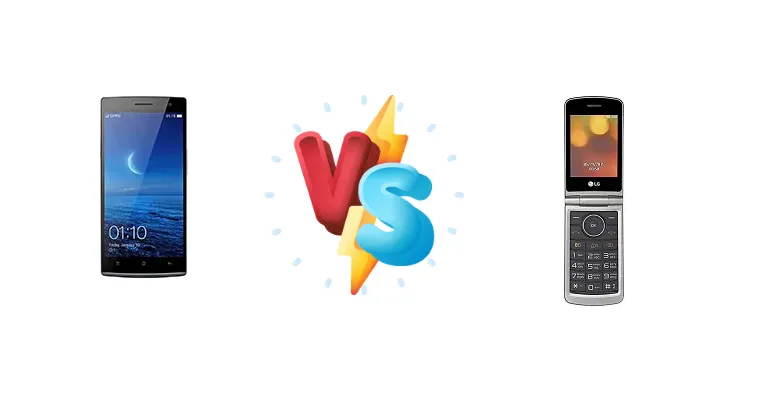
The Oppo Find 7, released in 2014, represented a peak in Qualcomm Snapdragon 801 performance. We're revisiting it now, not as a current contender, but to understand its capabilities in the context of the largely unknown LG G360. This comparison is less about a head-to-head battle and more about assessing what the Find 7 offered at the time, given the limited information available on its counterpart.
🏆 Quick Verdict
For the average user seeking a functional, albeit aged, smartphone experience, the Oppo Find 7 is the clear winner. Its documented Snapdragon 801 chipset and 44-hour endurance rating provide a tangible baseline of performance and usability that the LG G360, lacking any published specifications, simply cannot match.
| Network |
|---|
| 2G bands | GSM 850 / 900 / 1800 / 1900 - all models | GSM 850 / 900 / 1800 / 1900 - SIM 1 & SIM 2 |
| 3G bands | HSDPA 850 / 900 / 1900 / 2100 - international model | - |
| 4G bands | 1, 3, 7, 20 - International model | - |
| EDGE | - | Yes |
| GPRS | - | Yes |
| Speed | HSPA, LTE | - |
| Technology | GSM / HSPA / LTE | GSM |
| Launch |
|---|
| Announced | 2014, March. Released 2014, May | 2015, June. Released 2015, July |
| Status | Discontinued | Discontinued |
| Body |
|---|
| Dimensions | 152.6 x 75 x 9.2 mm (6.01 x 2.95 x 0.36 in) | 108 x 58 x 19.5 mm (4.25 x 2.28 x 0.77 in) |
| SIM | Micro-SIM | Dual SIM |
| Weight | 171 g (6.03 oz) | 125 g (4.41 oz) |
| Display |
|---|
| Protection | Corning Gorilla Glass 3 | - |
| Resolution | 1440 x 2560 pixels, 16:9 ratio (~534 ppi density) | 240 x 320 pixels, 4:3 ratio (~133 ppi density) |
| Size | 5.5 inches, 83.4 cm2 (~72.9% screen-to-body ratio) | 3.0 inches, 27.9 cm2 (~44.5% screen-to-body ratio) |
| Type | IPS LCD | TFT |
| Platform |
|---|
| CPU | Quad-core 2.5 GHz Krait 400 | - |
| Chipset | Qualcomm MSM8974AC Snapdragon 801 (28 nm) | - |
| GPU | Adreno 330 | - |
| OS | Android 4.3 (Jelly Bean), ColorOS | - |
| Memory |
|---|
| Call records | - | Yes |
| Card slot | microSDXC (dedicated slot) | microSDHC (dedicated slot) |
| Internal | 32GB 3GB RAM | 32MB 8MB RAM |
| Phonebook | - | Yes |
| Main Camera |
|---|
| Features | Dual-LED flash, panorama, HDR | - |
| Single | 13 MP, f/2.0, 1/3.0", AF | 1.3 MP |
| Video | 4K@30fps, 1080p@60fps, 720p@120fps | Yes |
| Selfie camera |
|---|
| Single | 5 MP, f/2.0 | - |
| | - | No |
| Sound |
|---|
| 3.5mm jack | - | Yes |
| 35mm jack | Yes | Yes |
| Loudspeaker | Yes, with stereo speakers | Yes |
| Comms |
|---|
| Bluetooth | 4.0, A2DP | 2.1, EDR |
| NFC | Yes | No |
| Positioning | GPS | No |
| Radio | No | FM radio |
| USB | microUSB 2.0, OTG | microUSB 1.1 |
| WLAN | Wi-Fi 802.11 a/b/g/n/ac, dual-band, DLNA, Wi-Fi Direct, hotspot | No |
| Features |
|---|
| Games | - | Yes |
| Java | - | Yes, MIDP 2.1 |
| Messaging | - | SMS, MMS, Email |
| Sensors | Accelerometer, gyro, proximity, compass | - |
| | - | MP3/MP4/AAC/H.263 player
Oraganizer
Photo viewer
Predictive text input |
| Battery |
|---|
| Charging | 20W wired, 75% in 30 min | - |
| Stand-by | - | Up to 470 h |
| Talk time | - | Up to 20 h |
| Type | Li-Po 3000 mAh, removable | Li-Ion 950 mAh, removable |
| Misc |
|---|
| Colors | White, Black, Astro Black | Wine Red |
| Models | X9076, X9007, X9077 | - |
| Price | About 440 EUR | About 110 EUR |
Oppo Find 7 (2014)
- Known Snapdragon 801 performance
- Respectable 44-hour battery endurance
- Fast 20W charging
- Good sunlight display contrast
- Aged hardware
- Software support likely ended
LG G360
- Potential rarity/collectibility
- Unknown features (could be surprisingly good)
- Mystery factor
- Completely unknown specifications
- Uncertain functionality
- Potential for significant hardware limitations
Display Comparison
The Oppo Find 7 boasts a contrast ratio of 1123:1 (nominal) and a significantly improved 1.691:1 under sunlight, suggesting a display engineered for outdoor visibility. Without any display specifications for the LG G360, it's impossible to compare panel technology or brightness. However, given the 2014 timeframe, it's likely the G360 utilized a similar LCD technology, but potentially with lower peak brightness and contrast. The Find 7’s sunlight contrast ratio is a key advantage for users frequently outdoors.
Camera Comparison
The Oppo Find 7 is equipped with a photo/video camera, but specific details regarding sensor size, aperture, or image stabilization are missing. The LG G360’s camera is entirely undocumented. Without concrete specifications, a meaningful comparison is impossible. It’s reasonable to assume both devices featured cameras typical of 2014 flagships, but the Find 7’s at least has a documented presence.
Performance
The Oppo Find 7 is powered by the Qualcomm MSM8974AC Snapdragon 801, a 28nm chipset featuring a quad-core 2.5 GHz Krait 400 CPU. This was a high-end processor for its time, capable of handling demanding applications and games. The LG G360’s chipset remains unknown. The Snapdragon 801’s architecture, while dated, still provides a usable experience for basic tasks, while the G360’s performance is entirely speculative. The 28nm process node of the Snapdragon 801, while not as efficient as modern nodes, was a significant step forward in power management for its era.
Battery Life
The Oppo Find 7 achieves an endurance rating of 44 hours, indicating respectable battery life for its time. It also supports 20W wired charging, capable of reaching 75% charge in just 30 minutes. The LG G360’s battery capacity and charging capabilities are unknown. The Find 7’s fast charging is a significant benefit for users who prioritize quick top-ups, a feature that may or may not be present in the G360.
Buying Guide
Buy the Oppo Find 7 (2014) if you need a functional, historically significant Android device for light tasks, retro gaming, or as a collector's item. Its Snapdragon 801 offers a level of performance still usable today. Buy the LG G360 if you are specifically seeking a rare or obscure device and are comfortable with a complete lack of information regarding its capabilities – essentially a gamble.
Frequently Asked Questions
❓ Is the Snapdragon 801 in the Oppo Find 7 still capable of running modern apps?
While the Snapdragon 801 is dated, it can handle basic Android apps and light multitasking. However, demanding games and resource-intensive applications may experience performance issues or be incompatible. Expect a slower, less fluid experience compared to modern smartphones.
❓ Given the LG G360's lack of specifications, what's the biggest risk in purchasing one?
The primary risk is purchasing a device that is functionally unusable or severely limited. Without knowing the chipset, RAM, storage, or display quality, you're essentially buying a mystery box. It may not even boot or support basic cellular connectivity.
❓ How does the Oppo Find 7's 20W charging compare to modern fast charging standards?
20W charging was considered fast in 2014, but it's significantly slower than the 65W, 80W, or even 120W charging found in many modern smartphones. Expect a longer charging time to reach 100%, but the 30-minute 75% charge is still reasonably quick for basic use.