
Oppo A98 vs Oppo A96: A Head-to-Head Comparison
| Phones Images | |||||
|---|---|---|---|---|---|
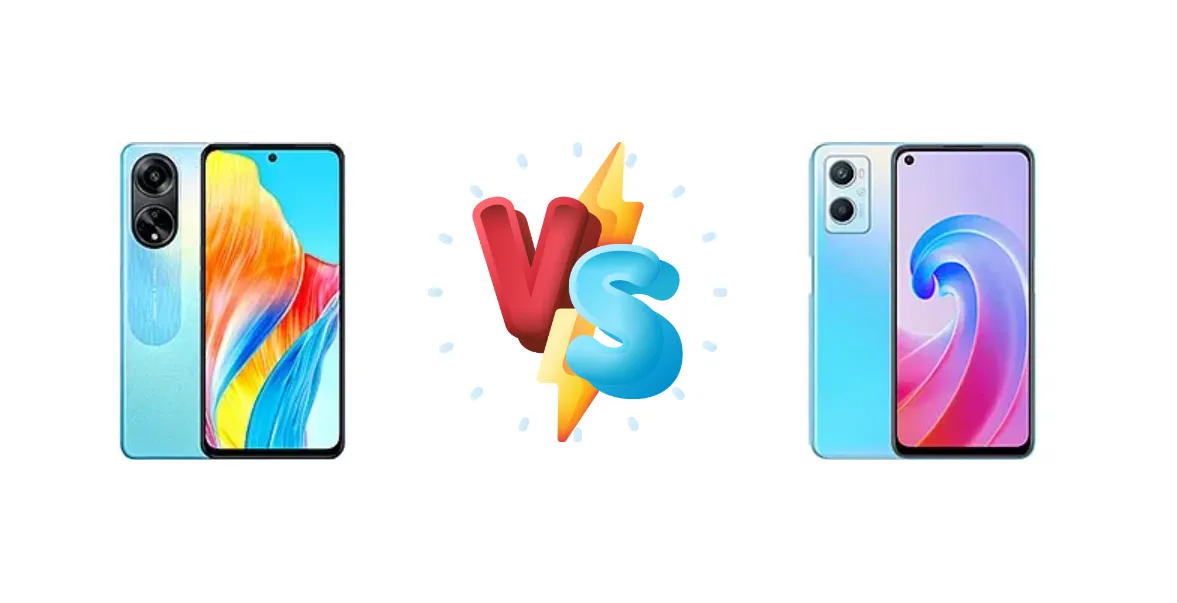
|
🏆 Quick Verdict
The Oppo A98 emerges as the clear winner thanks to its significantly faster 5G chipset, quicker charging, and generally improved performance. While the A96 offers a sleek design and decent battery life, the A98's upgrades make it the superior choice for most users seeking a budget-friendly 5G experience.
| PHONES | ||
|---|---|---|
| Phone Names | Oppo A98 | Oppo A96 |
| Network | ||
|---|---|---|
| 2G bands | GSM 850 / 900 / 1800 / 1900 | GSM 850 / 900 / 1800 / 1900 |
| 3G bands | HSDPA 800 / 850 / 900 / 1700(AWS) / 1900 / 2100 | HSDPA 850 / 900 / 2100 |
| 4G bands | 1, 2, 3, 4, 5, 7, 8, 12, 13, 17, 18, 19, 20, 26, 28, 32, 38, 39, 40, 41, 66 | 1, 3, 5, 7, 8, 20, 28, 34, 38, 40, 41 |
| 5G bands | 1, 3, 5, 7, 8, 20, 28, 38, 40, 41, 66, 77, 78 SA/NSA | - |
| Speed | HSPA, LTE, 5G | HSPA, LTE |
| Technology | GSM / HSPA / LTE / 5G | GSM / HSPA / LTE |
| - | IP5X (dust), IPX4 (water) resistance | |
| Launch | ||
|---|---|---|
| Announced | 2023, May 09 | 2022, March 16 |
| Status | Available. Released 2023, May 19 | Available. Released 2022, March 16 |
| Body | ||
|---|---|---|
| Build | - | Glass front, plastic frame, plastic back |
| Dimensions | 165.6 x 76.1 x 8.2 mm (6.52 x 3.00 x 0.32 in) | 164.4 x 75.7 x 8.4 mm (6.47 x 2.98 x 0.33 in) |
| SIM | Nano-SIM + Nano-SIM | Nano-SIM + Nano-SIM |
| Weight | 192 g (6.77 oz) | 191 g (6.74 oz) |
| Display | ||
|---|---|---|
| Resolution | 1080 x 2400 pixels, 20:9 ratio (~392 ppi density) | 1080 x 2412 pixels, 20:9 ratio (~401 ppi density) |
| Size | 6.72 inches, 109.0 cm2 (~86.5% screen-to-body ratio) | 6.59 inches, 104.5 cm2 (~84.0% screen-to-body ratio) |
| Type | IPS LCD, 120Hz, 550 nits (typ), 680 nits (HBM) | IPS LCD, 90Hz, 480 nits (typ), 600 nits (HBM) |
| Platform | ||
|---|---|---|
| CPU | Octa-core (2x2.2 GHz Kryo 660 Gold & 6x1.7 GHz Kryo 660 Silver) | Octa-core (4x2.4 GHz Kryo 265 Gold & 4x1.9 GHz Kryo 265 Silver) |
| Chipset | Qualcomm SM6375 Snapdragon 695 5G (6 nm) | Qualcomm SM6225 Snapdragon 680 4G (6 nm) |
| GPU | Adreno 619 | Adreno 610 |
| OS | Android 13, upgradable to Android 14, ColorOS 14 | Android 11, ColorOS 11.1 |
| Memory | ||
|---|---|---|
| Card slot | microSDXC | microSDXC (dedicated slot) |
| Internal | 256GB 8GB RAM | 128GB 6GB RAM, 128GB 8GB RAM, 256GB 8GB RAM |
| UFS 2.2 | UFS 2.2 | |
| Main Camera | ||
|---|---|---|
| Dual | 64 MP, f/1.7, 26mm (wide), PDAF 2 MP, f/3.3, 34mm (microscope) Auxiliary lens | 50 MP, f/1.8, 27mm (wide), PDAF Auxiliary lens |
| Features | LED flash, HDR, panorama | LED flash, HDR, panorama |
| Single | - | 16 MP, f/2.0, 26mm (wide) |
| Video | 1080p@30fps | 1080p@30fps |
| Selfie camera | ||
|---|---|---|
| Features | Panorama | - |
| Single | 32 MP, f/2.4, 22mm (wide) | 16 MP, f/2.0, 26mm (wide) |
| Video | 1080p@30fps | 1080p@30fps |
| Sound | ||
|---|---|---|
| 3.5mm jack | Yes | Yes |
| 35mm jack | Yes | Yes |
| Loudspeaker | Yes, with stereo speakers | Yes |
| Comms | ||
|---|---|---|
| Bluetooth | 5.1, A2DP, LE, aptX HD | 5.0, A2DP, LE, aptX HD |
| Infrared port | Yes | - |
| NFC | Yes | Yes (market/region dependent) |
| Positioning | GPS (L1), GLONASS (G1), BDS (B1I), GALILEO (E1), QZSS (L1) | GPS, GLONASS, BDS, GALILEO, QZSS |
| Radio | No | No |
| USB | USB Type-C 2.0, OTG | USB Type-C 2.0, OTG |
| WLAN | Wi-Fi 802.11 a/b/g/n/ac, dual-band | Wi-Fi 802.11 a/b/g/n/ac, dual-band, Wi-Fi Direct |
| Features | ||
|---|---|---|
| Sensors | Fingerprint (side-mounted), accelerometer, gyro, proximity, compass | Fingerprint (side-mounted), accelerometer, proximity, compass |
| Battery | ||
|---|---|---|
| Charging | 67W wired, PD, 50% in 18 min | 33W wired, PD, 50% in 26 min Reverse wired |
| Type | Li-Po 5000 mAh | Li-Po 5000 mAh |
| Misc | ||
|---|---|---|
| Colors | Cool Black, Dreamy Blue | Starry Black, Sunset Blue |
| Models | CPH2529 | CPH2333 |
| Price | About 290 EUR | About 560 EUR |
Oppo A98
- Faster 5G Performance
- 67W Fast Charging
- Improved Camera
- Potentially Higher Refresh Rate Display
- More Efficient Chipset
- Potentially slightly less battery life than A96
- Design might be less premium than A96
Oppo A96
- Sleek Design
- Decent Battery Life
- Reverse Wired Charging
- Slower 4G Performance
- 33W Charging is Slower
- Less Powerful Chipset
- Lower Refresh Rate Display (likely)
Display Comparison
Both phones feature a 6.56-inch display, likely with an FHD+ resolution. However, the A98 might have a slightly higher refresh rate (potentially 120Hz) compared to the A96 (likely 60Hz), resulting in smoother scrolling and animations. Color accuracy and brightness are likely comparable, though specific panel types would need further testing.
Camera Comparison
The A98 is expected to have a 64MP main camera, potentially with improved image processing capabilities compared to the A96's 48MP main camera. Both likely feature ultrawide and macro lenses. Low-light performance and video recording quality are areas where the A98 should demonstrate an advantage.
Performance
The A98's Snapdragon 695 5G chipset is a substantial upgrade over the A96's Snapdragon 680 4G. The 695 offers significantly better CPU and GPU performance, leading to smoother app loading, faster multitasking, and improved gaming capabilities. The A98's 6nm process also contributes to better power efficiency.
Battery Life
The A96 likely has a slightly larger battery capacity (around 5000mAh), but the A98's 67W fast charging significantly offsets this. The A98 can charge 50% in just 18 minutes, while the A96 takes around 26 minutes with its 33W charging. Real-world battery life will depend on usage patterns, but the A98's charging speed provides a considerable convenience advantage.
Buying Guide
The Oppo A98 is ideal for users who prioritize performance, 5G connectivity, and fast charging. It's a great option for those who enjoy gaming or multitasking. The Oppo A96 is better suited for users who value a stylish design, longer battery life (though charging is slower), and don't necessarily need 5G capabilities. It's a solid choice for everyday tasks and media consumption.