
Oppo A6 Pro vs ZTE nubia Z60 Ultra: A Deep Dive into Performance and Value
| Phones Images | |||||
|---|---|---|---|---|---|
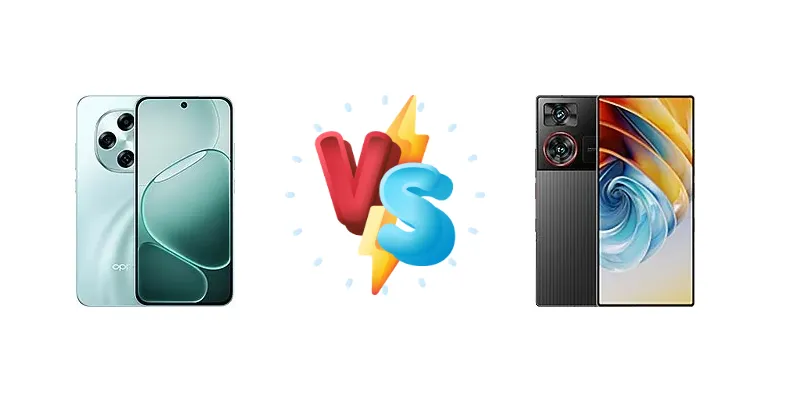
|
🏆 Quick Verdict
For the average user prioritizing raw performance and long-term software support, the ZTE nubia Z60 Ultra Leading is the clear winner. Its Snapdragon 8 Gen 3 chipset delivers significantly faster processing and graphics capabilities. However, the Oppo A6 Pro offers a compelling value proposition for those seeking a capable daily driver without the flagship price tag.
| PHONES | ||
|---|---|---|
| Phone Names | Oppo A6 Pro (China) | ZTE nubia Z60 Ultra Leading |
| Network | ||
|---|---|---|
| 2G bands | GSM 850 / 900 / 1800 / 1900 | GSM 850 / 900 / 1800 / 1900 |
| 3G bands | HSDPA 850 / 900 / 2100 | HSDPA 850 / 900 / 1700(AWS) / 1900 / 2100 |
| 4G bands | 1, 3, 5, 8, 28, 34, 38, 39, 40, 41, 42, 48 | 1, 2, 3, 4, 5, 7, 8, 12, 17, 18, 19, 20, 26, 28, 34, 38, 39, 40, 41, 66 - International |
| 5G bands | 1, 3, 5, 8, 28, 38, 40, 41, 77, 78 SA/NSA | 1, 2, 3, 5, 7, 8, 28, 38, 40, 41, 66, 77, 78 SA/NSA - International |
| Speed | HSPA, LTE, 5G | HSPA, LTE, 5G |
| Technology | GSM / HSPA / LTE / 5G | GSM / CDMA / HSPA / CDMA2000 / LTE / 5G |
| Launch | ||
|---|---|---|
| Announced | 2025, September 09 | 2024, July 23 |
| Status | Available. Released 2025, September 12 | Available. Released 2024, August 12 |
| Body | ||
|---|---|---|
| Build | - | Glass front, aluminum frame, glass back |
| Dimensions | 158.2 x 75 x 8 mm (6.23 x 2.95 x 0.31 in) | 164 x 76.4 x 8.8 mm (6.46 x 3.01 x 0.35 in) |
| SIM | Nano-SIM + Nano-SIM | Nano-SIM + Nano-SIM |
| Weight | 190 g (6.70 oz) | 246 g (8.68 oz) |
| Display | ||
|---|---|---|
| Protection | Crystal Shield Glass | - |
| Resolution | 1080 x 2372 pixels (~397 ppi density) | 1116 x 2480 pixels, 20:9 ratio (~400 ppi density) |
| Size | 6.57 inches, 105.0 cm2 (~88.5% screen-to-body ratio) | 6.8 inches, 111.6 cm2 (~89.1% screen-to-body ratio) |
| Type | AMOLED, 1B colors, 120Hz, 600 nits (typ), 1400 nits (HBM) | AMOLED, 1B colors, 120Hz, HDR10, 1500 nits (peak) |
| Platform | ||
|---|---|---|
| CPU | Octa-core (4x2.5 GHz Cortex-A78 & 4x2.0 GHz Cortex-A55) | Octa-core (1x3.4 GHz Cortex-X4 & 3x3.2 GHz Cortex-A720 & 2x3.0 GHz Cortex-A720 & 2x2.3 GHz Cortex-A520) |
| Chipset | Mediatek Dimensity 7300 (4 nm) | Qualcomm SM8650-AC Snapdragon 8 Gen 3 (4 nm) |
| GPU | Mali-G615 MC2 | Adreno 750 (1 GHz) |
| OS | Android 15, ColorOS 15 | Android 14, MyOS 14 (International), MyOS 14.5 (China) |
| Memory | ||
|---|---|---|
| Card slot | No | No |
| Internal | 256GB 8GB RAM, 256GB 12GB RAM, 256GB 16GB RAM, 512GB 16GB RAM | 256GB 8GB RAM, 256GB 12GB RAM, 512GB 16GB RAM, 1TB 16GB RAM, 1TB 24GB RAM |
| Main Camera | ||
|---|---|---|
| Dual | 50 MP, f/1.8, 27mm (wide), PDAF, OIS Auxiliary lens | - |
| Features | Color spectrum sensor, LED flash, HDR, panorama | Laser AF, color spectrum sensor, Ring-LED, dual-tone flash, panorama, HDR |
| Triple | - | 50 MP, f/1.6, 35mm (standard), 1/1.56", 1.0µm, PDAF, OIS 64 MP, f/3.3, 85mm (periscope telephoto), 1/2.0", PDAF, OIS, 3.3x optical zoom (vs. 26mm cam) 50 MP, f/1.8, 18mm, 100˚ (ultrawide), 1/1.55", 1.0µm, PDAF, OIS |
| Video | 4K@30fps, 1080p@30/60/120fps, gyro-EIS | 8K@30fps, 4K@30/60/120fps, 1080p@30/60fps, gyro-EIS, HDR10, 10‑bit video |
| Selfie camera | ||
|---|---|---|
| Features | Panorama | HDR |
| Single | 16 MP, f/2.4, 23mm (wide) | 12 MP, under display |
| Video | 1080p@30fps, gyro-EIS | 1080p@30fps |
| Sound | ||
|---|---|---|
| 35mm jack | No | No |
| Loudspeaker | Yes, with stereo speakers | Yes, with stereo speakers |
| Comms | ||
|---|---|---|
| Bluetooth | 5.4, A2DP, LE, aptX HD | 5.4, A2DP, LE, aptX HD, aptX Adaptive, aptX Lossless |
| Infrared port | - | Yes |
| NFC | Yes | Yes (market/region dependent) |
| Positioning | GPS, GALILEO, GLONASS, BDS, QZSS | GPS (L1+L2+L5), GLONASS (G1+G5), BDS (B1I+B1C+B2a+B2b), GALILEO (E1+E5a), QZSS (L1+L5) |
| Radio | No | No |
| USB | USB Type-C 2.0, OTG | USB Type-C 3.1, OTG |
| WLAN | Wi-Fi 802.11 a/b/g/n/ac/6, dual-band | Wi-Fi 802.11 a/b/g/n/ac/6e/7, dual-band, Wi-Fi Direct |
| Features | ||
|---|---|---|
| Sensors | Fingerprint (under display, optical), accelerometer, gyro, proximity, compass | Fingerprint (under display, optical), accelerometer, gyro, proximity, compass |
| Battery | ||
|---|---|---|
| Charging | 80W wired, 33W PPS, 13.5W PD, 13.5W QC, UFCS 10W reverse wired | 80W wired, PD3.0, QC4 |
| Type | Si/C Li-Ion 7000 mAh | Li-Po 6000 mAh |
| Misc | ||
|---|---|---|
| Colors | Black, Blue, Gold | Black, Silver |
| Models | PLN110 | - |
| Price | About 220 EUR | About 730 EUR |
Oppo A6 Pro (China)
- More affordable price point
- Efficient Mediatek Dimensity 7300 chipset
- Versatile charging support (80W wired, PPS, PD, QC, UFCS)
- Less powerful processor compared to Snapdragon 8 Gen 3
- Limited information on display quality and camera capabilities
ZTE nubia Z60 Ultra Leading
- Flagship-level performance with Snapdragon 8 Gen 3
- Excellent battery life (14:04h active use)
- Fast charging with multiple protocols (80W, PD3.0, QC4)
- Higher price tag
- Potential for thermal throttling under sustained heavy load (though Snapdragon 8 Gen 3 is improved)
Display Comparison
While display specifications are missing for the Oppo A6 Pro, the nubia Z60 Ultra Leading’s focus on a premium experience suggests a high-quality panel. The core difference lies in the processing power driving the visuals. The Snapdragon 8 Gen 3’s Adreno 750 GPU will render games and videos with greater fidelity and smoothness compared to the Dimensity 7300’s Imortalis-G720 MP11. The nubia Z60 Ultra’s active use battery score of 14:04h suggests efficient power management, potentially aided by a variable refresh rate display (LTPO is likely, though unconfirmed).
Camera Comparison
Without detailed camera specs for the Oppo A6 Pro, a direct comparison is limited. However, the nubia Z60 Ultra Leading likely features a more advanced camera system befitting its flagship status. The Snapdragon 8 Gen 3’s ISP (Image Signal Processor) is renowned for its superior image processing capabilities, enabling better dynamic range, noise reduction, and overall image quality. The nubia Z60 Ultra’s focus on photography suggests features like advanced computational photography algorithms and potentially larger sensor sizes, contributing to better low-light performance.
Performance
The Qualcomm Snapdragon 8 Gen 3 in the ZTE nubia Z60 Ultra Leading is the dominant force here. Its octa-core configuration, featuring a prime Cortex-X4 core clocked at 3.4 GHz, significantly outperforms the Oppo A6 Pro’s Dimensity 7300. The Snapdragon’s architecture – 1x3.4 GHz Cortex-X4, 3x3.2 GHz Cortex-A720, 2x3.0 GHz Cortex-A720, and 2x2.3 GHz Cortex-A520 – is designed for sustained peak performance, crucial for demanding applications. The Dimensity 7300’s 4nm process is efficient, but its Cortex-A78 cores, while capable, are a generation behind the A720 in the Snapdragon. This translates to faster app loading, smoother multitasking, and superior gaming performance on the nubia Z60 Ultra.
Battery Life
The ZTE nubia Z60 Ultra Leading boasts an impressive 14:04h active use battery score, indicating excellent real-world endurance. Both devices support 80W wired charging, but the nubia Z60 Ultra Leading also includes PD3.0 and QC4 support, offering broader compatibility with various chargers. While the Oppo A6 Pro offers PPS, PD, and QC alongside UFCS, the nubia’s longer battery life offsets any potential charging speed differences. The Snapdragon 8 Gen 3’s improved power efficiency further contributes to the nubia’s superior battery performance.
Buying Guide
Buy the Oppo A6 Pro (China) if you need a reliable smartphone for everyday tasks, social media, and casual gaming, and value a balanced feature set at a more accessible price point. Buy the ZTE nubia Z60 Ultra Leading if you prioritize uncompromising performance for demanding games, content creation, and require the latest flagship features, and are willing to pay a premium.