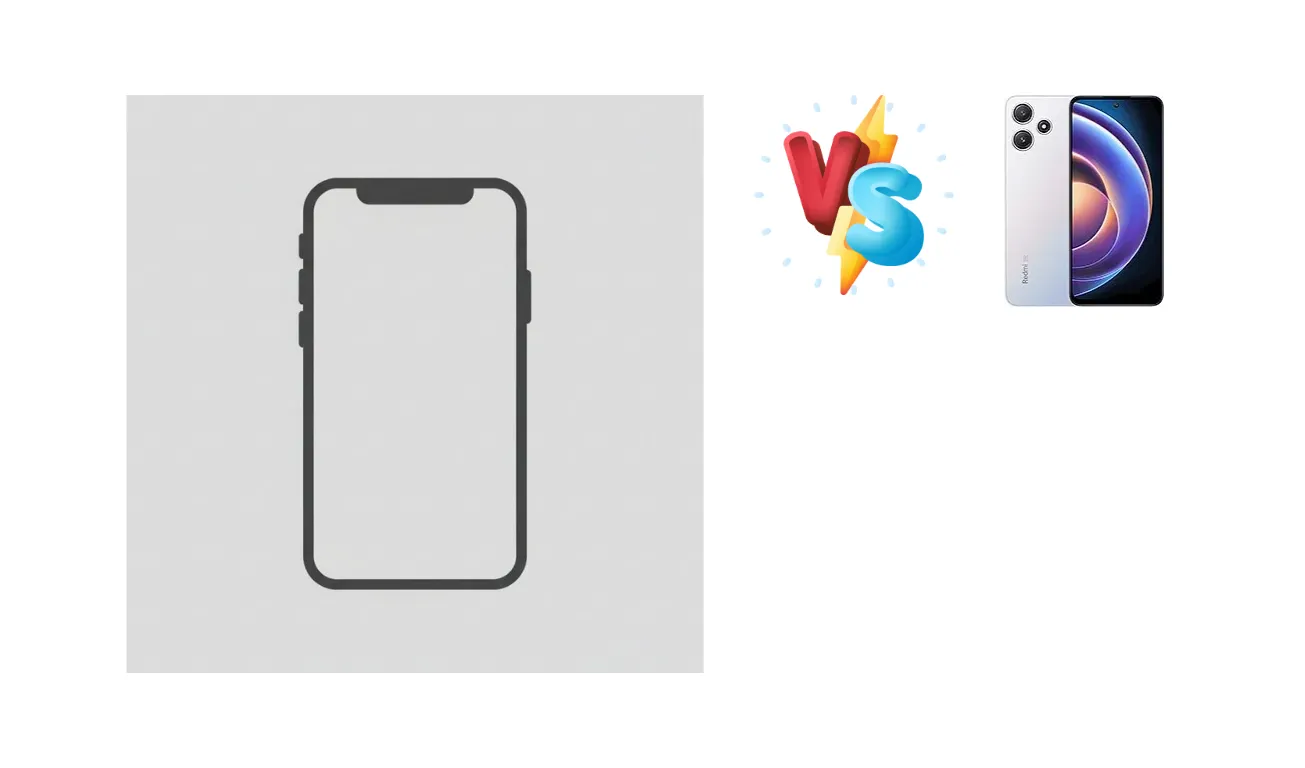
The sub-$200 smartphone market is fiercely competitive. The Oppo A58, powered by the Mediatek Dimensity 700, and the Xiaomi Redmi Note 12R, featuring the Qualcomm Snapdragon 4 Gen 2, represent compelling options. This comparison dissects their key differences, focusing on performance, charging, and overall value to help you choose the right device.
🏆 Quick Verdict
For most users, the Xiaomi Redmi Note 12R emerges as the better choice. Its newer 4nm Snapdragon 4 Gen 2 chipset offers improved efficiency and potentially better sustained performance compared to the Oppo A58’s 7nm Dimensity 700, despite similar peak CPU clock speeds. While the A58 boasts faster 33W charging, the 12R’s PD support adds versatility.
| Network |
|---|
| 2G bands | GSM 850 / 900 / 1800 / 1900 - SIM 1 & SIM 2 | GSM 850 / 900 / 1800 / 1900 |
| 3G bands | HSDPA 850 / 900 / 2100 | HSDPA 850 / 900 / 2100 |
| 4G bands | 1, 3, 5, 8, 28, 34, 38, 39, 40, 41 | 1, 3, 5, 8, 34, 38, 39, 40, 41 |
| 5G bands | 1, 5, 8, 28, 41, 77, 78 SA/NSA | 1, 5, 8, 28, 41, 78 SA/NSA |
| Speed | HSPA, LTE-A, 5G | HSPA, LTE, 5G |
| Technology | GSM / CDMA / HSPA / CDMA2000 / LTE / 5G | GSM / CDMA / HSPA / EVDO / LTE / 5G |
| | CDMA2000 1x | - |
| Launch |
|---|
| Announced | 2022, November 08 | 2023, June 28 |
| Status | Available. Released 2022, November 10 | Available. Released 2023, June 28 |
| Body |
|---|
| Build | - | Glass front, plastic frame, glass back |
| Dimensions | 163.8 x 75 x 8 mm (6.45 x 2.95 x 0.31 in) | 168.6 x 76.3 x 8.2 mm (6.64 x 3.00 x 0.32 in) |
| SIM | Dual SIM (Nano-SIM, dual stand-by) | Nano-SIM + Nano-SIM |
| Weight | 188 g (6.63 oz) | 199 g (7.02 oz) |
| | IP54 | - |
| Display |
|---|
| Resolution | 720 x 1612 pixels, 20:9 ratio (~269 ppi density) | 1080 x 2460 pixels (~396 ppi density) |
| Size | 6.56 inches, 103.4 cm2 (~84.2% screen-to-body ratio) | 6.79 inches, 109.5 cm2 (~85.1% screen-to-body ratio) |
| Type | IPS LCD, 90Hz, 480 nits (typ), 600 nits (HBM) | IPS LCD, 90Hz, 550 nits |
| Platform |
|---|
| CPU | Octa-core (2x2.2 GHz Cortex-A76 & 6x2.0 GHz Cortex-A55) | Octa-core (2x2.2 GHz Cortex-A78 & 6x1.95 GHz Cortex-A55) |
| Chipset | Mediatek MT6833 Dimensity 700 (7 nm) | Qualcomm SM4450 Snapdragon 4 Gen 2 (4 nm) |
| GPU | Mali-G57 MC2 | Adreno 613 |
| OS | Android 12, ColorOS 12.1 | Android 13, MIUI 14 |
| Memory |
|---|
| Card slot | microSDXC | microSDXC (uses shared SIM slot) |
| Internal | 128GB 6GB RAM, 128GB 8GB RAM, 256GB 8GB RAM | 128GB 4GB RAM, 128GB 6GB RAM, 128GB 8GB RAM, 256GB 8GB RAM |
| | UFS 2.2 | - |
| Main Camera |
|---|
| Dual | 50 MP, f/1.8, 27mm (wide), PDAF
2 MP, f/2.4, (depth) | 50 MP, f/1.8, (wide), PDAF
2 MP (macro) |
| Features | LED flash, HDR, panorama | LED flash, HDR |
| Single | 8 MP, f/2.0, 27mm (wide) | - |
| Video | 1080p@30fps | 1080p@30fps |
| Selfie camera |
|---|
| Features | - | HDR |
| Single | 8 MP, f/2.0, 27mm (wide) | 5 MP, f/2.2, (wide), 1/5.0", 1.12µm |
| Video | 1080p@30fps | 1080p@30fps |
| Sound |
|---|
| 3.5mm jack | Yes | - |
| 35mm jack | - | Yes |
| Loudspeaker | Yes, with stereo speakers | Yes |
| Comms |
|---|
| Bluetooth | 5.3, A2DP, LE, aptX | 5.3, A2DP, LE |
| Infrared port | - | Yes |
| NFC | No | Yes (market/region dependent) |
| Positioning | GPS, GALILEO, GLONASS, BDS, QZSS | GPS, GLONASS, GALILEO, BDS |
| Radio | No | No |
| USB | USB Type-C 2.0, OTG | USB Type-C |
| WLAN | Wi-Fi 802.11 a/b/g/n/ac, dual-band | Wi-Fi 802.11 a/b/g/n/ac, dual-band |
| Features |
|---|
| Sensors | Fingerprint (side-mounted), accelerometer, proximity, compass | Fingerprint (side-mounted), accelerometer, compass |
| Battery |
|---|
| Charging | 33W wired | 18W wired, PD |
| Type | Li-Po 5000 mAh, non-removable | Li-Po 5000 mAh |
| Misc |
|---|
| Colors | Black, Blue, Violet | Black, Blue, Silver |
| Models | - | 23076RA4BC |
| Price | About 230 EUR | About 150 EUR |
Oppo A58
- Faster 33W wired charging
- Established brand reputation
- Potentially more readily available in certain markets
- Older 7nm chipset
- Less efficient Dimensity 700
- Lacks Power Delivery (PD) charging
Xiaomi Redmi Note 12R
- More efficient 4nm Snapdragon 4 Gen 2
- Power Delivery (PD) charging support
- Potentially better sustained performance
- Slower 18W charging
- May have limited availability in some regions
- Xiaomi’s MIUI software can be polarizing
Display Comparison
Neither device is expected to feature a high-end display. Given the price point, both likely utilize LCD panels. However, details on resolution, brightness, and color gamut are missing. The Redmi Note 12R’s potential for a slightly more modern panel design, given its newer release, could translate to marginally better viewing angles and color reproduction, but this is speculative without further data. Bezels are likely comparable, focusing on minimizing cost rather than achieving ultra-thin designs.
Camera Comparison
Without detailed sensor information, a direct comparison is difficult. Both phones likely feature a primary camera accompanied by depth or macro sensors of limited utility. The Redmi Note 12R’s image signal processor (ISP) within the Snapdragon 4 Gen 2 may offer slightly improved noise reduction and dynamic range compared to the Dimensity 700’s ISP. The aperture of the main lens will be a key factor; a wider aperture (lower f-number) will allow for better low-light performance. We anticipate both phones will struggle in challenging lighting conditions.
Performance
The core difference lies in the chipsets. The Xiaomi Redmi Note 12R’s Snapdragon 4 Gen 2 (4nm) benefits from a more modern fabrication process than the Oppo A58’s Dimensity 700 (7nm). While both CPUs feature a 2x2.2 GHz core configuration, the Snapdragon 4 Gen 2 utilizes Cortex-A78 cores, offering a performance advantage over the A58’s Cortex-A76 cores. This translates to snappier app launches and smoother multitasking. The 4nm process also contributes to better thermal efficiency, potentially reducing throttling during extended gaming sessions. The A58’s Dimensity 700 is still capable, but the 12R has a clear architectural advantage.
Battery Life
The Oppo A58’s 33W wired charging is significantly faster than the Redmi Note 12R’s 18W charging. This means a quicker 0-100% charge time for the A58. However, the Redmi Note 12R supports Power Delivery (PD), offering compatibility with a wider range of chargers, including those used for laptops and tablets. The actual battery capacity of both devices is unknown, but the Snapdragon 4 Gen 2’s superior efficiency could offset the charging speed difference, resulting in comparable real-world battery life despite the slower charging.
Buying Guide
Buy the Oppo A58 if you prioritize faster wired charging and are frequently in situations where quickly topping up your battery is crucial. Buy the Xiaomi Redmi Note 12R if you value long-term efficiency, potentially smoother multitasking, and the convenience of Power Delivery (PD) charging compatibility, making it ideal for users who prefer a more balanced experience and wider charger compatibility.
Frequently Asked Questions
❓ Will the Snapdragon 4 Gen 2 in the Redmi Note 12R handle demanding games like PUBG Mobile?
The Snapdragon 4 Gen 2 is capable of running PUBG Mobile, but expect to play at medium settings for a smooth experience. The Dimensity 700 in the Oppo A58 can also run PUBG, but may experience more frame drops during intense firefights due to thermal throttling. The 4 Gen 2’s efficiency gives it an edge in sustained performance.
❓ Does the Oppo A58’s 33W charging significantly reduce charging time compared to the Redmi Note 12R’s 18W?
Yes, 33W charging will noticeably reduce charging time. Expect the Oppo A58 to charge from 0-100% in approximately 60-75 minutes, while the Redmi Note 12R will likely take 90-120 minutes. However, the Redmi Note 12R’s PD support offers greater charger compatibility.
❓ Is the difference in CPU architecture (Cortex-A78 vs Cortex-A76) noticeable in everyday use?
While not dramatically different, the Cortex-A78 cores in the Snapdragon 4 Gen 2 offer a performance boost over the Cortex-A76 cores in the Dimensity 700. This translates to slightly faster app loading times, smoother scrolling, and a more responsive user experience, particularly when multitasking.