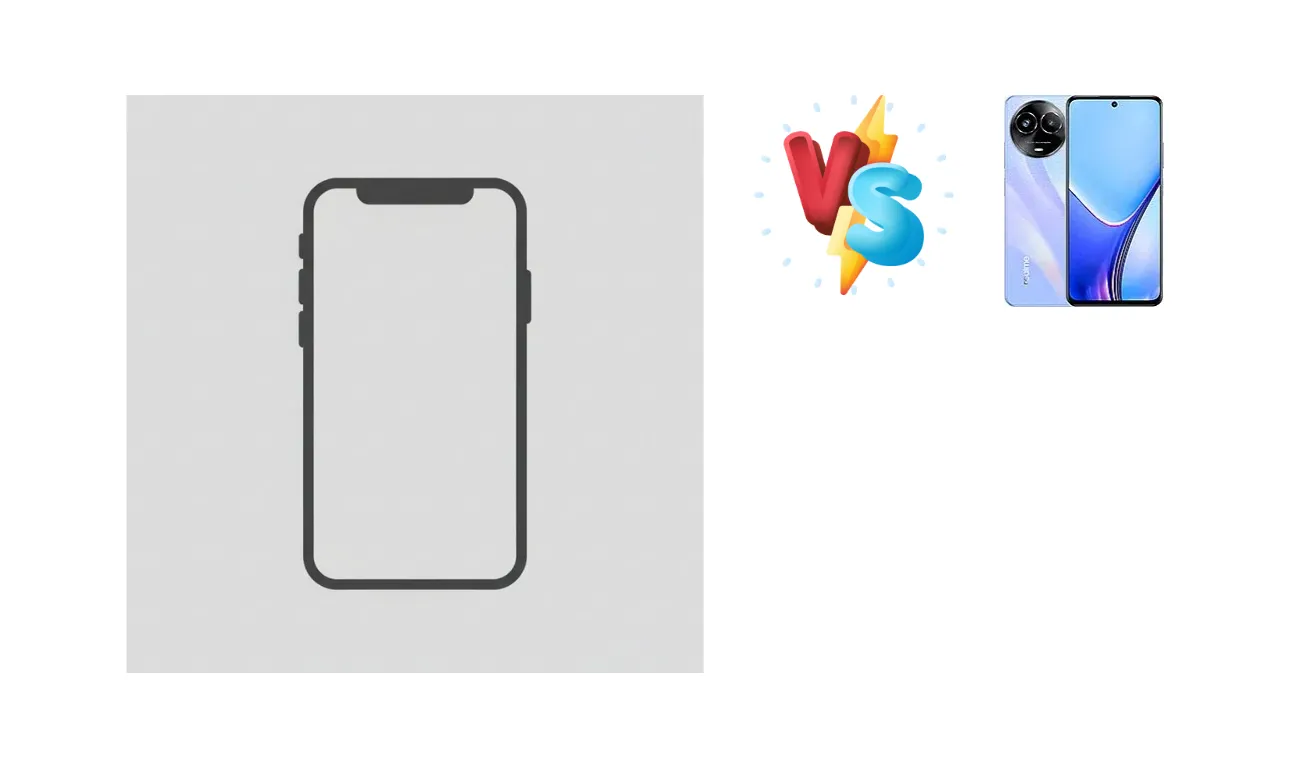
The sub-$200 smartphone market is fiercely competitive, and the Oppo A58 and Realme 11x are two strong contenders. Both leverage MediaTek's Dimensity series, but a closer look reveals key differences in chipset architecture and charging speed that impact real-world performance and user experience. This comparison dives deep to determine which phone offers the best value.
🏆 Quick Verdict
For most users, the Realme 11x is the better choice. While both phones share a 33W charging solution, the Realme 11x’s Dimensity 6100+ built on a 6nm process offers a noticeable performance advantage over the Oppo A58’s Dimensity 700 (7nm), making it better suited for gaming and demanding applications.
| Network |
|---|
| 2G bands | GSM 850 / 900 / 1800 / 1900 - SIM 1 & SIM 2 | GSM 850 / 900 / 1800 / 1900 |
| 3G bands | HSDPA 850 / 900 / 2100 | HSDPA 850 / 900 / 2100 |
| 4G bands | 1, 3, 5, 8, 28, 34, 38, 39, 40, 41 | 1, 3, 5, 8, 28, 40, 41 |
| 5G bands | 1, 5, 8, 28, 41, 77, 78 SA/NSA | 1, 3, 5, 8, 28, 40, 41, 77, 78 SA/NSA |
| Speed | HSPA, LTE-A, 5G | HSPA, LTE, 5G |
| Technology | GSM / CDMA / HSPA / CDMA2000 / LTE / 5G | GSM / HSPA / LTE / 5G |
| | CDMA2000 1x | - |
| Launch |
|---|
| Announced | 2022, November 08 | 2023, August 23 |
| Status | Available. Released 2022, November 10 | Available. Released 2023, August 30 |
| Body |
|---|
| Build | - | Glass front, aluminum frame, plastic back |
| Dimensions | 163.8 x 75 x 8 mm (6.45 x 2.95 x 0.31 in) | 165.7 x 76 x 7.9 mm (6.52 x 2.99 x 0.31 in) |
| SIM | Dual SIM (Nano-SIM, dual stand-by) | Nano-SIM + Nano-SIM |
| Weight | 188 g (6.63 oz) | 190 g (6.70 oz) |
| | IP54 | - |
| Display |
|---|
| Resolution | 720 x 1612 pixels, 20:9 ratio (~269 ppi density) | 1080 x 2400 pixels, 20:9 ratio (~392 ppi density) |
| Size | 6.56 inches, 103.4 cm2 (~84.2% screen-to-body ratio) | 6.72 inches, 109.0 cm2 (~86.6% screen-to-body ratio) |
| Type | IPS LCD, 90Hz, 480 nits (typ), 600 nits (HBM) | IPS LCD, 120Hz, 550 nits (typ), 680 nits (HBM) |
| Platform |
|---|
| CPU | Octa-core (2x2.2 GHz Cortex-A76 & 6x2.0 GHz Cortex-A55) | Octa-core (2x2.2 GHz Cortex-A76 & 6x2.0 GHz Cortex-A55) |
| Chipset | Mediatek MT6833 Dimensity 700 (7 nm) | Mediatek Dimensity 6100+ (6 nm) |
| GPU | Mali-G57 MC2 | Mali-G57 MC2 |
| OS | Android 12, ColorOS 12.1 | Android 13, Realme UI 4.0 |
| Memory |
|---|
| Card slot | microSDXC | microSDXC (dedicated slot) |
| Internal | 128GB 6GB RAM, 128GB 8GB RAM, 256GB 8GB RAM | 128GB 6GB RAM, 128GB 8GB RAM |
| | UFS 2.2 | - |
| Main Camera |
|---|
| Dual | 50 MP, f/1.8, 27mm (wide), PDAF
2 MP, f/2.4, (depth) | 64 MP, f/1.8, 25mm (wide), 1/2.0", 0.7µm, PDAF
Auxiliary lens |
| Features | LED flash, HDR, panorama | LED flash, HDR, panorama |
| Single | 8 MP, f/2.0, 27mm (wide) | - |
| Video | 1080p@30fps | 1080p@30fps |
| Selfie camera |
|---|
| Features | - | Panorama |
| Single | 8 MP, f/2.0, 27mm (wide) | 8 MP, f/2.1, 26mm (wide) |
| Video | 1080p@30fps | 1080p@30fps |
| Sound |
|---|
| 3.5mm jack | Yes | - |
| 35mm jack | - | Yes |
| Loudspeaker | Yes, with stereo speakers | Yes |
| Comms |
|---|
| Bluetooth | 5.3, A2DP, LE, aptX | 5.2, A2DP, LE |
| NFC | No | No |
| Positioning | GPS, GALILEO, GLONASS, BDS, QZSS | GPS, GALILEO, GLONASS, BDS |
| Radio | No | Unspecified |
| USB | USB Type-C 2.0, OTG | USB Type-C 2.0 |
| WLAN | Wi-Fi 802.11 a/b/g/n/ac, dual-band | Wi-Fi 802.11 a/b/g/n/ac, dual-band, Wi-Fi Direct |
| Features |
|---|
| Sensors | Fingerprint (side-mounted), accelerometer, proximity, compass | Fingerprint (side-mounted), accelerometer, proximity, compass |
| Battery |
|---|
| Charging | 33W wired | 33W wired, 50% in 29 min |
| Type | Li-Po 5000 mAh, non-removable | 5000 mAh |
| Misc |
|---|
| Colors | Black, Blue, Violet | Midnight Black, Purple Dawn |
| Models | - | RMX3785 |
| Price | About 230 EUR | About 170 EUR |
Oppo A58
- Reliable and established brand
- Solid build quality expected from Oppo
- Competitively priced
- Older Dimensity 700 chipset
- Less efficient 7nm process
- Potentially lower gaming performance
Realme 11x
- More efficient Dimensity 6100+ chipset
- 6nm fabrication process for better battery life
- Faster charging (advertised 50% in 29 mins)
- Realme’s software can be divisive
- May not have the same brand recognition as Oppo
Display Comparison
Neither Oppo nor Realme provide display specifications beyond resolution in their marketing materials. However, given the price point, both likely utilize LCD panels. The key difference lies under the hood. While both phones will offer adequate viewing experiences, the Realme 11x benefits from the more efficient Dimensity 6100+ which can contribute to slightly better sustained brightness and color reproduction due to reduced thermal throttling. Bezels are expected to be similar on both devices, typical of this price bracket.
Camera Comparison
Without detailed camera specs, a direct comparison is difficult. However, both phones likely feature a primary camera sensor around the 50MP mark. The Realme 11x’s more powerful chipset allows for more sophisticated image processing, potentially resulting in better dynamic range and low-light performance. The Oppo A58’s image processing will likely be more conservative, prioritizing speed over detail. The inclusion of a 2MP macro lens on both devices is largely a marketing gimmick and shouldn’t heavily influence purchasing decisions.
Performance
The Realme 11x’s Mediatek Dimensity 6100+ (6nm) is the clear winner here. While both chipsets feature the same CPU core configuration – 2x2.2 GHz Cortex-A76 and 6x2.0 GHz Cortex-A55 – the 6nm fabrication process of the 6100+ is significantly more efficient than the 7nm process used in the Oppo A58’s Dimensity 700. This translates to better thermal management, allowing the 11x to sustain peak performance for longer periods. The GPU within the 6100+ also offers a performance uplift, benefiting gamers. While both phones likely feature similar RAM configurations, the 6100+’s improved efficiency will also positively impact multitasking.
Battery Life
Both the Oppo A58 and Realme 11x feature 33W wired charging, with Realme advertising a 50% charge in 29 minutes. While battery capacity isn’t specified, the Realme 11x’s more efficient Dimensity 6100+ chipset will likely result in better battery life overall. The 6nm process consumes less power, allowing the phone to operate for longer on a single charge. The faster charging speed on the 11x, combined with its efficiency, makes it the more convenient option for users who frequently need to top up their battery.
Buying Guide
Buy the Oppo A58 if you prioritize a proven, reliable experience and are less concerned with pushing the limits of mobile gaming. It’s a solid all-rounder for everyday tasks. Buy the Realme 11x if you want a phone that can handle more demanding apps and games, and appreciate the efficiency gains of the newer Dimensity 6100+ chipset. It’s the better option for power users on a budget.
Frequently Asked Questions
❓ Will the Realme 11x’s Dimensity 6100+ handle demanding games like Genshin Impact?
The Dimensity 6100+ is a capable chipset, and should run Genshin Impact at medium settings with playable frame rates. However, don’t expect a consistently smooth experience at the highest settings. The 6nm process and improved thermal management will help maintain performance for longer sessions compared to the Oppo A58.
❓ Does the 33W charging on either phone support Power Delivery (PD) or Quick Charge (QC)?
Neither Oppo nor Realme explicitly state support for PD or QC on these models. They utilize their proprietary fast charging protocols. While compatible chargers will work, you won’t achieve the full 33W charging speed with standard PD or QC chargers.
❓ Is the camera on the Realme 11x significantly better than the Oppo A58?
While both phones likely have similar megapixel counts, the Realme 11x benefits from the more powerful Dimensity 6100+ chipset, which enables more sophisticated image processing. This can lead to improvements in dynamic range, low-light performance, and overall image clarity.
❓ How does the software experience differ between Oppo’s ColorOS and Realme UI?
Both ColorOS and Realme UI are based on Android, but offer distinct user interfaces. ColorOS is generally considered more polished and feature-rich, while Realme UI aims for a cleaner, more minimalist approach. Realme UI also tends to receive updates slightly faster.