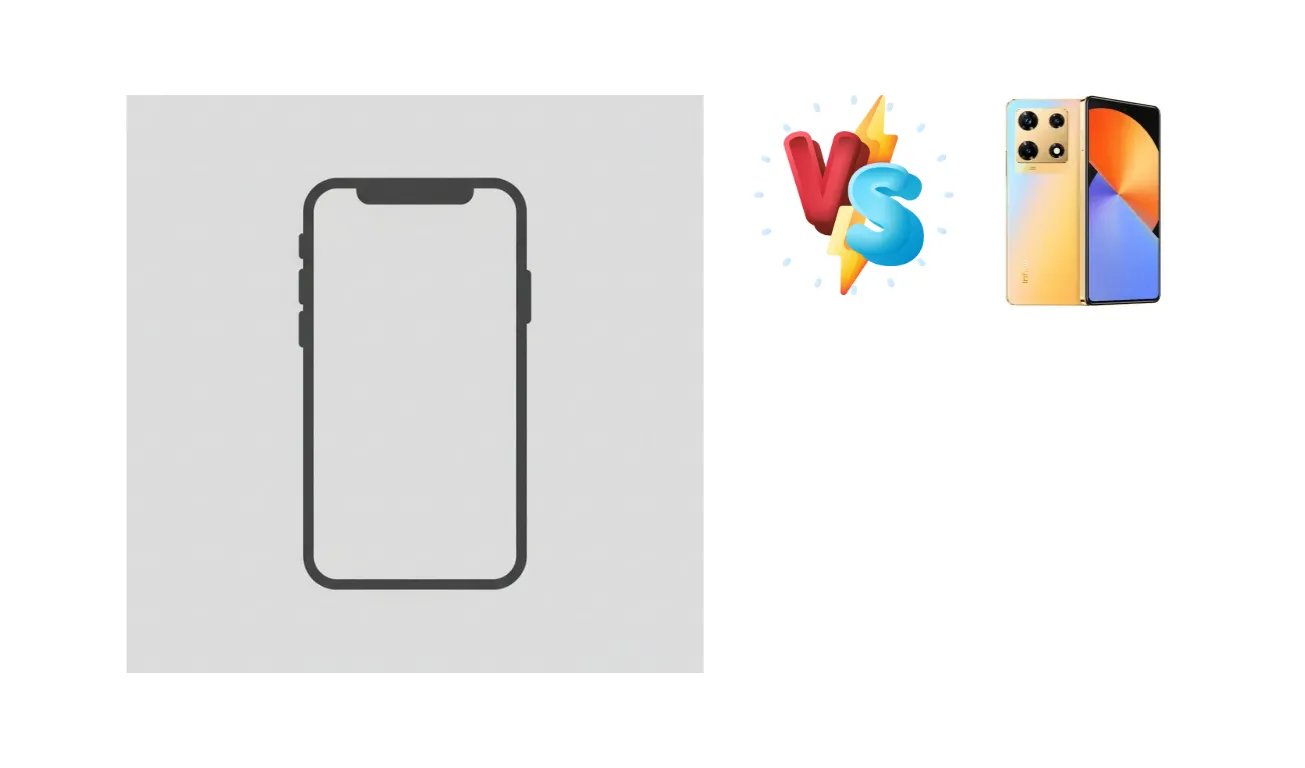
The sub-$200 smartphone market is fiercely competitive, and the Oppo A58 and Infinix Note 30 Pro are two contenders vying for your attention. While both aim to deliver a solid experience without breaking the bank, they take different approaches – the A58 focuses on a proven chipset, while the Note 30 Pro prioritizes rapid charging and a more modern process node. This comparison will dissect their strengths and weaknesses to help you choose the right device.
🏆 Quick Verdict
For the average user prioritizing fast charging and future-proofing, the Infinix Note 30 Pro is the clear winner. Its 68W charging, including wireless capabilities, and the more efficient Helio G99 chipset offer a superior experience. However, the Oppo A58 remains a viable option for those on a tighter budget who don't need the fastest charging.
| Network |
|---|
| 2G bands | GSM 850 / 900 / 1800 / 1900 - SIM 1 & SIM 2 | GSM 850 / 900 / 1800 / 1900 |
| 3G bands | HSDPA 850 / 900 / 2100 | HSDPA 850 / 900 / 1700(AWS) / 1900 / 2100 |
| 4G bands | 1, 3, 5, 8, 28, 34, 38, 39, 40, 41 | 1, 2, 3, 4, 5, 7, 8, 12, 17, 20, 28, 38, 40, 41, 66 |
| 5G bands | 1, 5, 8, 28, 41, 77, 78 SA/NSA | - |
| Speed | HSPA, LTE-A, 5G | HSPA, LTE |
| Technology | GSM / CDMA / HSPA / CDMA2000 / LTE / 5G | GSM / HSPA / LTE |
| | CDMA2000 1x | - |
| Launch |
|---|
| Announced | 2022, November 08 | 2023, May 22 |
| Status | Available. Released 2022, November 10 | Available. Released 2023, May 22 |
| Body |
|---|
| Build | - | Glass front, plastic frame, glass back |
| Dimensions | 163.8 x 75 x 8 mm (6.45 x 2.95 x 0.31 in) | 162.7 x 76 x 8.2 mm (6.41 x 2.99 x 0.32 in) |
| SIM | Dual SIM (Nano-SIM, dual stand-by) | Nano-SIM + Nano-SIM |
| Weight | 188 g (6.63 oz) | 203 g (7.16 oz) |
| | IP54 | IP53 |
| Display |
|---|
| Resolution | 720 x 1612 pixels, 20:9 ratio (~269 ppi density) | 1080 x 2400 pixels, 20:9 ratio (~395 ppi density) |
| Size | 6.56 inches, 103.4 cm2 (~84.2% screen-to-body ratio) | 6.67 inches, 107.4 cm2 (~86.9% screen-to-body ratio) |
| Type | IPS LCD, 90Hz, 480 nits (typ), 600 nits (HBM) | AMOLED, 1B colors, 120Hz, 900 nits (peak) |
| | - | * the display diagonal size and resolution is unconfirmed |
| Platform |
|---|
| CPU | Octa-core (2x2.2 GHz Cortex-A76 & 6x2.0 GHz Cortex-A55) | Octa-core (2x2.2 GHz Cortex-A76 & 6x2.0 GHz Cortex-A55) |
| Chipset | Mediatek MT6833 Dimensity 700 (7 nm) | Mediatek Helio G99 (6 nm) |
| GPU | Mali-G57 MC2 | Mali-G57 MC2 |
| OS | Android 12, ColorOS 12.1 | Android 13, XOS 13 |
| Memory |
|---|
| Card slot | microSDXC | microSDXC (dedicated slot) |
| Internal | 128GB 6GB RAM, 128GB 8GB RAM, 256GB 8GB RAM | 256GB 8GB RAM |
| | UFS 2.2 | - |
| Main Camera |
|---|
| Dual | 50 MP, f/1.8, 27mm (wide), PDAF
2 MP, f/2.4, (depth) | - |
| Features | LED flash, HDR, panorama | Quad-LED flash, HDR, panorama |
| Single | 8 MP, f/2.0, 27mm (wide) | - |
| Triple | - | 108 MP, (wide), 1/1.67", PDAF
2 MP (macro)
Auxiliary lens |
| Video | 1080p@30fps | 1440p@30fps, 1080p@30fps |
| Selfie camera |
|---|
| Features | - | LED flash, HDR |
| Single | 8 MP, f/2.0, 27mm (wide) | 32 MP, f/2.0, (wide), 1/2.8" |
| Video | 1080p@30fps | 1080p@30fps |
| Sound |
|---|
| 3.5mm jack | Yes | Yes |
| 35mm jack | - | Yes |
| Loudspeaker | Yes, with stereo speakers | Yes, with dual speakers |
| | - | Sound by JBL
24-bit/192kHz audio |
| Comms |
|---|
| Bluetooth | 5.3, A2DP, LE, aptX | Yes |
| NFC | No | Yes (market/region dependent) |
| Positioning | GPS, GALILEO, GLONASS, BDS, QZSS | GPS |
| Radio | No | FM radio |
| USB | USB Type-C 2.0, OTG | USB Type-C 2.0, OTG |
| WLAN | Wi-Fi 802.11 a/b/g/n/ac, dual-band | Wi-Fi 802.11 a/b/g/n/ac, dual-band, Wi-Fi Direct |
| Features |
|---|
| Sensors | Fingerprint (side-mounted), accelerometer, proximity, compass | Fingerprint (side-mounted), accelerometer, gyro, proximity, compass |
| Battery |
|---|
| Charging | 33W wired | 68W wired, PD3.0, 80% in 30 min
15W wireless
Reverse wireless |
| Type | Li-Po 5000 mAh, non-removable | 5000 mAh |
| Misc |
|---|
| Colors | Black, Blue, Violet | Magic Black, Variable Gold |
| Models | - | X678B |
| Price | About 230 EUR | - |
Oppo A58
- Proven Mediatek Dimensity 700 chipset
- Reliable performance for everyday tasks
- Generally lower price point
- Slower 33W charging
- Less efficient 7nm process
- Lacks wireless charging
Infinix Note 30 Pro
- 68W wired charging with fast top-up times
- More efficient 6nm Helio G99 chipset
- 15W wireless and reverse wireless charging
- Helio G99 may not offer a substantial performance leap over Dimensity 700
- Potentially slightly higher price
Display Comparison
Neither device boasts a standout display. While specific panel details (like peak brightness or color gamut coverage) are unavailable, both likely utilize IPS LCD panels common in this price bracket. The focus here isn't on visual fidelity, but on functionality. Bezels are expected to be moderate on both, and color accuracy will likely be standard for the segment. The absence of high refresh rates is also expected, prioritizing battery life over smooth scrolling.
Camera Comparison
Camera performance is difficult to assess without detailed sensor information. Both phones likely feature a multi-camera setup, but the emphasis will be on the main sensor. The absence of details suggests neither device will challenge flagship camera systems. The inclusion of a 2MP macro lens on either device is largely a marketing tactic, offering limited practical benefit due to its low resolution and fixed focus. Image processing will likely lean towards vibrant colors and boosted contrast to appeal to a wider audience. The Note 30 Pro *may* benefit from slightly better image signal processing (ISP) capabilities inherent in the Helio G99 chipset.
Performance
Both the Oppo A58 and Infinix Note 30 Pro employ an octa-core CPU configuration with the same core arrangement: 2x2.2 GHz Cortex-A76 and 6x2.0 GHz Cortex-A55. However, the chipset differs significantly. The A58 uses the Mediatek Dimensity 700 built on a 7nm process, while the Note 30 Pro features the Helio G99 fabricated on a more efficient 6nm node. This 6nm process gives the Helio G99 an edge in thermal efficiency, potentially leading to less throttling during sustained workloads like gaming. While raw CPU performance will be similar, the G99's improved efficiency translates to better sustained performance and potentially longer battery life. RAM configurations are not specified, but LPDDR4X is likely on both devices.
Battery Life
The Infinix Note 30 Pro significantly differentiates itself with its charging capabilities. While the A58 offers 33W wired charging, the Note 30 Pro boasts a much faster 68W wired charging, capable of reaching 80% charge in just 30 minutes. Furthermore, the Note 30 Pro adds 15W wireless charging and reverse wireless charging, features absent on the A58. This makes the Note 30 Pro ideal for users who frequently need to top up their battery quickly or want the convenience of wireless charging. While battery capacity isn't specified, the more efficient Helio G99 chipset in the Note 30 Pro will likely offset any capacity differences.
Buying Guide
Buy the Oppo A58 if you need a reliable, everyday smartphone with a known chipset and aren't overly concerned with the latest charging technologies. It's ideal for users who prioritize stability and a predictable experience. Buy the Infinix Note 30 Pro if you prefer blazing-fast charging, wireless charging convenience, and a slightly more efficient processor, making it better suited for power users and those who frequently find themselves needing a quick top-up.
Frequently Asked Questions
❓ Does the Helio G99 in the Infinix Note 30 Pro get noticeably hotter than the Dimensity 700 during extended gaming sessions?
While both chipsets can generate heat, the Helio G99's 6nm process is inherently more efficient. This means it's likely to produce less heat for the same level of performance, resulting in less thermal throttling and a more consistent gaming experience over longer periods. However, sustained gaming on either device will still lead to some heat buildup.
❓ How long does it *actually* take to fully charge the Infinix Note 30 Pro from 0% using the 68W charger?
Infinix claims 80% charge in 30 minutes. Based on this, a full 0-100% charge should take approximately 40-45 minutes, depending on background processes and battery health. This is significantly faster than the Oppo A58's 33W charging, which would likely take over 1.5 hours for a full charge.
❓ Is the reverse wireless charging on the Infinix Note 30 Pro useful for charging accessories like earbuds?
Yes, the 15W reverse wireless charging is practical for topping up accessories like true wireless earbuds or smartwatches. While it won't be as fast as a dedicated charger, it provides a convenient way to charge these devices on the go without needing extra cables.