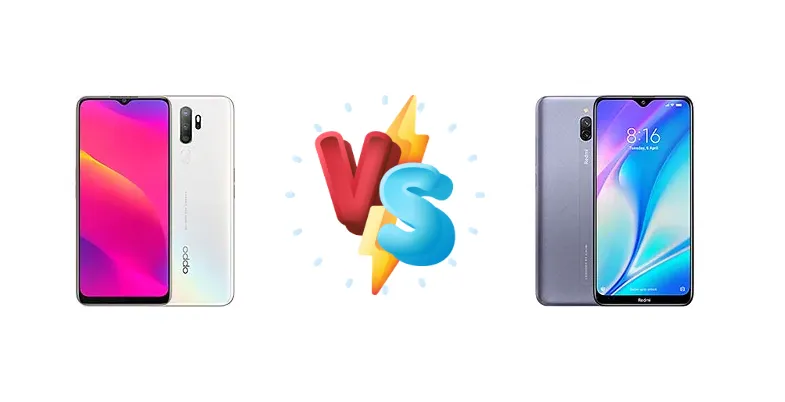
The Oppo A11 and Xiaomi Redmi 8A Pro represent the fiercely competitive sub-$150 smartphone market. Both aim to deliver essential smartphone functionality at an accessible price point, but they take different approaches to achieving this. The A11 leverages a more modern, albeit still entry-level, Snapdragon 665, while the 8A Pro opts for the older, but power-efficient, Snapdragon 439. This comparison will dissect the key differences to determine which device offers the best value.
🏆 Quick Verdict
For the average user prioritizing responsiveness and future-proofing, the Oppo A11 emerges as the better choice. Its Snapdragon 665 chipset provides a noticeable performance uplift over the Redmi 8A Pro’s Snapdragon 439, making it more suitable for multitasking and light gaming. However, the Redmi 8A Pro’s faster 18W charging is a significant advantage for those who value quick top-ups.
| Network |
|---|
| 2G bands | GSM 850 / 900 / 1800 / 1900 | GSM 850 / 900 / 1800 / 1900 |
| 3G bands | HSDPA 850 / 900 / 2100 | HSDPA 850 / 900 / 1900 / 2100 |
| 4G bands | 1, 3, 4, 5, 8, 34, 38, 39, 40, 41 | 1, 3, 5, 8, 40, 41 |
| Speed | HSPA 42.2/5.76 Mbps, LTE (2CA) Cat6 400/50 Mbps | HSPA, LTE |
| Technology | GSM / CDMA / HSPA / LTE | GSM / HSPA / LTE |
| | CDMA 800 & TD-SCDMA | - |
| Launch |
|---|
| Announced | 2019, October. Released 2019, October | 2020, April 02. Released 2020, April 02 |
| Status | Discontinued | Discontinued |
| Body |
|---|
| Build | Glass front, plastic back, plastic frame | Glass front (Gorilla Glass 5), plastic back, plastic frame |
| Dimensions | 163.6 x 75.6 x 9.1 mm (6.44 x 2.98 x 0.36 in) | 156.5 x 75.4 x 9.4 mm (6.16 x 2.97 x 0.37 in) |
| SIM | Nano-SIM + Nano-SIM | Nano-SIM + Nano-SIM |
| Weight | 195 g (6.88 oz) | 188 g (6.63 oz) |
| | - | Water-repellent coating |
| Display |
|---|
| Protection | - | Corning Gorilla Glass 5 |
| Resolution | 720 x 1600 pixels, 20:9 ratio (~270 ppi density) | 720 x 1520 pixels, 19:9 ratio (~270 ppi density) |
| Size | 6.5 inches, 102.0 cm2 (~82.5% screen-to-body ratio) | 6.22 inches, 96.6 cm2 (~81.8% screen-to-body ratio) |
| Type | IPS LCD | IPS LCD, 400 nits (typ) |
| Platform |
|---|
| CPU | Octa-core (4x2.0 GHz Kryo 260 Gold & 4x1.8 GHz Kryo 260 Silver) | Octa-core (4x1.95 GHz Cortex-A53 & 4x1.45 GHz Cortex A53) |
| Chipset | Qualcomm SDM665 Snapdragon 665 (11 nm) | Qualcomm SDM439 Snapdragon 439 (12 nm) |
| GPU | Adreno 610 | Adreno 505 |
| OS | Android 9.0 (Pie), ColorOS 6.0 | Android 9.0 (Pie), planned upgrade to Android 10, MIUI 12 |
| Memory |
|---|
| Card slot | microSDXC (dedicated slot) | microSDXC (dedicated slot) |
| Internal | 64GB 4GB RAM, 128GB 4GB RAM, 128GB 6GB RAM, 256GB 6GB RAM | 32GB 2GB RAM, 32GB 3GB RAM |
| | UFS 2.1 | eMMC 5.1 |
| Main Camera |
|---|
| Dual | - | 13 MP, f/2.2, (wide), 1/3.1", 1.12µm, PDAF
Auxiliary lens |
| Features | LED flash, HDR, panorama | LED flash, HDR, panorama |
| Quad | 12 MP, f/1.8, (wide), PDAF
8 MP, f/2.3, 13mm (ultrawide), 1/4.0", 1.12µm, AF
2 MP, f/2.4, 1/5.0", 1.75µm
Auxiliary lens | - |
| Video | 4K@30fps, 1080p@30fps, gyro-EIS | 1080p@30fps |
| Selfie camera |
|---|
| Features | HDR | HDR |
| Single | 8 MP, f/2.0 | 8 MP, f/2.0, 1/4.0", 1.12µm |
| Video | 1080p@30fps | 1080p@30fps |
| Sound |
|---|
| 3.5mm jack | Yes | Yes |
| 35mm jack | Yes | Yes |
| Loudspeaker | Yes, with stereo speakers | Yes |
| | 24-bit/192kHz audio | - |
| Comms |
|---|
| Bluetooth | 5.0, A2DP, LE | 4.2, A2DP, LE |
| NFC | No | No |
| Positioning | GPS, GLONASS, GALILEO, QZSS, BDS | GPS, GLONASS, BDS |
| Radio | FM radio | FM Radio, built-in antenna |
| USB | USB Type-C 2.0 | USB Type-C 2.0, OTG |
| WLAN | Wi-Fi 802.11 a/b/g/n/ac, dual-band, Wi-Fi Direct | Wi-Fi 802.11 b/g/n, Wi-Fi Direct |
| Features |
|---|
| Sensors | Fingerprint (rear-mounted), accelerometer, gyro, proximity, compass | Accelerometer, proximity, compass |
| Battery |
|---|
| Charging | 10W wired
Reverse wired | 18W wired
2.5W reverse wired |
| Type | Li-Po 5000 mAh, non-removable | Li-Po 5000 mAh |
| Misc |
|---|
| Colors | Purple, Lake Green, Cloud White | Sky White, Sea Blue, Midnight Grey |
| Models | PCHM10, PCHT10 | - |
| Price | About 200 EUR | About 90 EUR |
Oppo A11
- More powerful Snapdragon 665 chipset
- Better multitasking performance
- Reverse wired charging capability
- Slower 10W charging
- Likely less optimized software
Xiaomi Redmi 8A Pro
- Faster 18W wired charging
- Potentially better battery life due to efficient chipset
- Larger display size
- Less powerful Snapdragon 439 chipset
- Slower app loading times
Display Comparison
Neither device boasts a standout display. Both likely feature LCD panels, typical for this price bracket. The focus here isn't on visual fidelity, but on basic usability. Without specific display specs (resolution, brightness), it's difficult to definitively declare a winner. However, the Redmi 8A Pro's larger 6.22-inch display (versus the A11's 6.1-inch) may offer a slightly more immersive viewing experience, though this comes at the cost of potentially lower pixel density.
Camera Comparison
Both phones likely feature modest camera setups geared towards casual photography. Without detailed sensor information, it’s difficult to make a precise comparison. However, the focus should be on real-world image quality rather than megapixel counts. Image processing will play a crucial role, and both brands have their own algorithms. Given the similar price points, the camera performance is likely comparable, with neither device excelling in low-light conditions. Expect acceptable results in well-lit environments.
Performance
The core difference lies in the chipsets. The Oppo A11’s Qualcomm Snapdragon 665 (11nm) is architecturally superior to the Redmi 8A Pro’s Snapdragon 439 (12nm). The 665 utilizes Kryo 260 cores – a mix of performance (Gold) and efficiency (Silver) – offering a more balanced approach. The 439 relies solely on Cortex-A53 cores, which are older and less efficient. This translates to a tangible performance advantage for the A11 in multitasking and app loading times. While both are capable of handling basic tasks, the A11 will exhibit less lag and stuttering. The 11nm process node of the 665 also suggests better thermal efficiency, potentially leading to sustained performance during prolonged use.
Battery Life
The Redmi 8A Pro takes a clear lead in charging speed with its 18W wired charging support, compared to the Oppo A11’s slower 10W charging. This means significantly faster top-up times for the Redmi 8A Pro. While battery capacity isn't specified, the faster charging is a practical benefit for users who frequently find themselves needing to quickly replenish their battery. The A11 does offer reverse wired charging, a niche feature allowing it to charge other devices, but its 10W output is slow and unlikely to be a primary use case.
Buying Guide
Buy the Oppo A11 if you need a phone that feels more responsive for everyday tasks like browsing, social media, and messaging, and you anticipate keeping the device for more than a year. Buy the Xiaomi Redmi 8A Pro if you prioritize fast charging and are primarily concerned with basic smartphone functions like calls, texts, and light app usage, and are less concerned with long-term performance.
Frequently Asked Questions
❓ Will the Snapdragon 439 in the Redmi 8A Pro struggle with modern apps over time?
Yes, the Snapdragon 439 is an older chipset and may exhibit noticeable slowdowns as app requirements increase with software updates. While it handles basic tasks well initially, its limited processing power will become more apparent over the lifespan of the device.
❓ Is the 18W charging on the Redmi 8A Pro a game-changer for battery anxiety?
For users who frequently find themselves with low battery and limited access to a charger, the 18W charging is a significant benefit. It allows for a substantial charge in a short amount of time, reducing downtime and providing peace of mind.
❓ Does the Oppo A11's reverse charging feature actually work well?
The Oppo A11's reverse wired charging is a convenient feature, but its 10W output is quite slow. It's best suited for emergency situations or topping up accessories like wireless earbuds, rather than fully charging another smartphone.