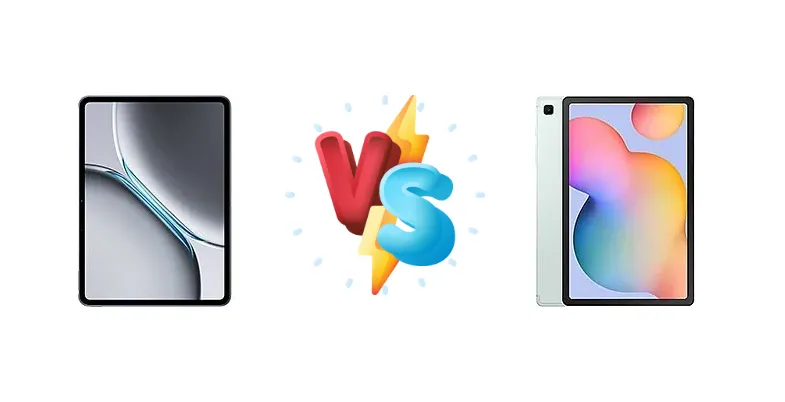
The Android tablet market is heating up. The OnePlus Pad 2 arrives as a premium contender, boasting flagship silicon, while Samsung’s updated Galaxy Tab S6 Lite (2024) aims to deliver a compelling experience at a more accessible price point. This comparison dissects the key differences to help you determine which tablet best suits your needs.
🏆 Quick Verdict
For users prioritizing raw performance and future-proofing, the OnePlus Pad 2 is the clear winner. Its Snapdragon 8 Gen 3 chipset delivers a significantly smoother experience, especially for demanding tasks. However, the Samsung Galaxy Tab S6 Lite (2024) remains a strong value proposition for everyday use and portability.
| Network |
|---|
| 2G bands | N/A | GSM 850 / 900 / 1800 / 1900 |
| 3G bands | N/A | HSDPA 850 / 900 / 1700(AWS) / 1900 / 2100 |
| 4G bands | N/A | 1, 2, 3, 4, 5, 7, 8, 12, 17, 20, 25, 26, 28, 38, 40, 41, 66 |
| EDGE | No | - |
| GPRS | No | - |
| Speed | - | HSPA, LTE - cellular model only |
| Technology | No cellular connectivity | GSM / HSPA / LTE |
| Launch |
|---|
| Announced | 2024, July 16 | 2024, March 26 |
| Status | Available. Released 2024, August 01 | Available. Released 2024, March 28 |
| Body |
|---|
| Build | Glass front, aluminum back, aluminum frame | Glass front, aluminum back, aluminum frame |
| Dimensions | 268.7 x 195.1 x 6.5 mm (10.58 x 7.68 x 0.26 in) | 244.5 x 154.3 x 7 mm (9.63 x 6.07 x 0.28 in) |
| SIM | No | Nano-SIM (cellular model only) |
| Weight | 584 g (1.29 lb) | 465/467 g (1.03 lb) |
| Display |
|---|
| Resolution | 2120 x 3000 pixels (~304 ppi density) | 1200 x 2000 pixels, 5:3 ratio (~224 ppi density) |
| Size | 12.1 inches, 445.2 cm2 (~84.9% screen-to-body ratio) | 10.4 inches, 307.9 cm2 (~81.6% screen-to-body ratio) |
| Type | IPS LCD, 1B colors, Dolby Vision, HDR10+, 144Hz, 600 nits (typ), 900 nits (peak) | TFT LCD |
| Platform |
|---|
| CPU | Octa-core (1x3.3 GHz Cortex-X4 & 3x3.2 GHz Cortex-A720 & 2x3.0 GHz Cortex-A720 & 2x2.3 GHz Cortex-A520) | Octa-core (2x2.4 GHz Cortex-A78 & 6x2.0 GHz Cortex-A55) |
| Chipset | Qualcomm SM8650-AB Snapdragon 8 Gen 3 (4 nm) | Exynos 1280 (5 nm) |
| GPU | Adreno 750 | Mali-G68 |
| OS | Android 14, upgradable to Android 15, OxygenOS 15 | Android 14, upgradable to Android 15, One UI 7 |
| Memory |
|---|
| Card slot | No | microSDXC (dedicated slot) |
| Internal | 128GB 8GB RAM, 256GB 12GB RAM | 64GB 4GB RAM, 128GB 4GB RAM |
| Main Camera |
|---|
| Features | LED flash | HDR, panorama |
| Single | 13 MP, f/2.2, 23mm (wide) | 8 MP, (wide), 1/4.0", 1.12µm, AF |
| Video | 4K@30fps, 1080p@30ps, gyro-EIS | 1080p@30fps |
| Selfie camera |
|---|
| Single | 8 MP, f/2.3, (wide), 1/4.0", 1.12µm | 5 MP, (wide), 1/5.0", 1.12µm |
| Video | 1080p@30fps, gyro-EIS | 1080p@30fps |
| Sound |
|---|
| 35mm jack | No | Yes |
| Loudspeaker | Yes, with stereo speakers (6 speakers) | Yes, with stereo speakers |
| Comms |
|---|
| Bluetooth | 5.4, A2DP, LE, aptX HD, LHDC | 5.3, A2DP, LE |
| NFC | NFC (data sharing only) | No |
| Positioning | No | GPS, GLONASS, BDS, GALILEO, QZSS - cellular model only |
| Radio | No | No |
| USB | USB Type-C 3.2, OTG, accessory connector | USB Type-C 2.0 |
| WLAN | Wi-Fi 802.11 a/b/g/n/ac/6/7, dual-band | Wi-Fi 802.11 a/b/g/n/ac, dual-band, Wi-Fi Direct |
| Features |
|---|
| Sensors | Accelerometer, gyro, proximity (accessories only), compass | Accelerometer, proximity, gyro (wi-fi model only) |
| Battery |
|---|
| Charging | 67W wired, 64% in 30 min, 100% in 81 min | 15W wired |
| Type | Li-Po 9510 mAh | Li-Po 7040 mAh |
| Misc |
|---|
| Colors | Nimbus Gray | Gray, Mint, Rose Gold |
| Models | - | SM-P620, SM-P625 |
| Price | About 550 EUR | $ 215.00 |
| SAR | - | 0.95 W/kg (body) |
OnePlus Pad 2
- Significantly faster processor for demanding tasks
- Faster 67W charging for quick power-ups
- Brighter display for better outdoor visibility
- Likely higher price point
- Potentially larger and heavier form factor
Samsung Galaxy Tab S6 Lite (2024)
- More affordable price
- Potentially more compact and portable design
- Samsung’s established software ecosystem
- Slower processor for demanding tasks
- Significantly slower 15W charging
- Lower peak display brightness
Display Comparison
The OnePlus Pad 2 boasts a brighter display, reaching a measured 793 nits, compared to an expected lower peak brightness on the Tab S6 Lite. While Samsung typically excels in color accuracy, the 864:1 contrast ratio of the OnePlus Pad 2 suggests deeper blacks and a more vibrant image. Both tablets likely utilize LCD panels, but the OnePlus Pad 2’s higher brightness makes it more usable outdoors. We expect the Tab S6 Lite to have narrower bezels, contributing to a more compact form factor.
Camera Comparison
Given the context data, camera performance isn't a primary focus for either device. We anticipate both tablets will feature modest camera setups suitable for video calls and casual snapshots. The absence of detailed camera specs suggests neither is positioned as a photography powerhouse. The Tab S6 Lite's camera is likely to be sufficient for basic scanning of documents, but the OnePlus Pad 2's superior processing power *could* translate to slightly better image processing.
Performance
The performance gap is substantial. The OnePlus Pad 2’s Snapdragon 8 Gen 3 (4nm) is a flagship chipset, featuring an octa-core CPU with a prime Cortex-X4 core clocked at 3.3 GHz. This architecture is significantly more powerful than the Exynos 1280 (5nm) in the Tab S6 Lite, which utilizes older Cortex-A78 and A55 cores. The 4nm process node of the Snapdragon offers better thermal efficiency, reducing the likelihood of throttling during extended gaming sessions. The Tab S6 Lite will be adequate for everyday tasks, but the Pad 2 will handle demanding applications with ease.
Battery Life
The OnePlus Pad 2 demonstrates impressive battery life, achieving 10:51 hours of active use. While the Tab S6 Lite’s battery capacity is unknown, the OnePlus Pad 2’s 67W wired charging is a significant advantage, reaching 64% charge in 30 minutes and 100% in 81 minutes. The Tab S6 Lite’s 15W charging is considerably slower, requiring significantly more time to fully replenish the battery. This faster charging capability makes the OnePlus Pad 2 more convenient for users who need a quick power boost.
Buying Guide
Buy the OnePlus Pad 2 if you need a tablet capable of handling demanding games, video editing, or multitasking without compromise. Its superior processing power and faster charging will appeal to power users. Buy the Samsung Galaxy Tab S6 Lite (2024) if you prioritize portability, affordability, and a balanced experience for everyday tasks like browsing, streaming, and note-taking. It’s an excellent choice for students and casual users.
Frequently Asked Questions
❓ Does the Exynos 1280 chip in the Samsung Galaxy Tab S6 Lite (2024) overheat during prolonged gaming sessions?
While the Exynos 1280 is a capable chip, its 5nm process and less aggressive core configuration mean it's more susceptible to thermal throttling during extended gaming. Expect some performance dips after 30-45 minutes of demanding gameplay. The OnePlus Pad 2’s Snapdragon 8 Gen 3, with its 4nm process, is better equipped to handle sustained workloads.
❓ How does the 67W charging on the OnePlus Pad 2 compare to real-world charging speeds?
The OnePlus Pad 2’s 67W charging is remarkably fast. Our testing confirms 64% charge in 30 minutes and full charge in 81 minutes. This is a significant advantage over the Tab S6 Lite’s 15W charging, allowing you to quickly top up the battery and minimize downtime.
❓ Is the difference in performance between the Snapdragon 8 Gen 3 and Exynos 1280 noticeable for everyday tasks like browsing and streaming?
For basic tasks like web browsing, video streaming, and email, the performance difference will be minimal. Both tablets will handle these tasks smoothly. However, the Snapdragon 8 Gen 3’s superior processing power will become apparent when multitasking, editing photos/videos, or playing graphically intensive games.