
OnePlus Ace vs vivo X100 Ultra: A Head-to-Head Flagship Showdown
| Phones Images | |||||
|---|---|---|---|---|---|
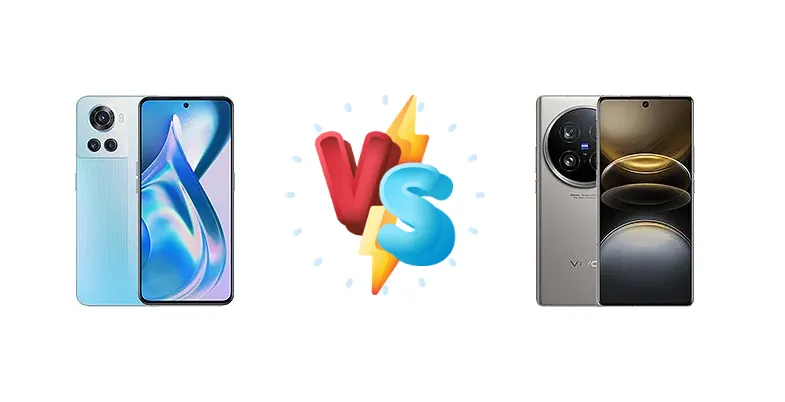
|
🏆 Quick Verdict
For the average user prioritizing sustained performance and a more refined overall experience, the vivo X100 Ultra is the superior choice. Its Snapdragon 8 Gen 3 chipset and exceptional battery life outweigh the OnePlus Ace’s faster wired charging, offering a smoother, more capable daily driver.
| PHONES | ||
|---|---|---|
| Phone Names | OnePlus Ace | vivo X100 Ultra |
| Network | ||
|---|---|---|
| 2G bands | GSM 850 / 900 / 1800 / 1900 | GSM 850 / 900 / 1800 / 1900 |
| 3G bands | HSDPA 800 / 850 / 900 / 1700(AWS) / 1900 / 2100 | HSDPA 800 / 850 / 900 / 1700(AWS) / 1900 / 2100 |
| 4G bands | 1, 2, 3, 4, 5, 7, 8, 18, 19, 26, 28, 34, 38, 39, 40, 41 | 1, 2, 3, 4, 5, 7, 8, 12, 17, 18, 19, 20, 25, 26, 28, 34, 38, 39, 40, 41, 42, 66 |
| 5G bands | 1, 3, 5, 8, 28, 40, 41, 77, 78 SA/NSA | 1, 2, 3, 5, 7, 8, 12, 20, 25, 26, 28, 38, 40, 41, 66, 77, 78, 79 SA/NSA |
| Speed | HSPA, LTE, 5G | HSPA, LTE, 5G |
| Technology | GSM / CDMA / HSPA / EVDO / LTE / 5G | GSM / CDMA / HSPA / LTE / 5G |
| CDMA2000 1xEV-DO | - | |
| Launch | ||
|---|---|---|
| Announced | 2022, April 21 | 2024, May 13 |
| Status | Available. Released 2022, April 26 | Available. Released 2024, May 28 |
| Body | ||
|---|---|---|
| Build | Glass front (Gorilla Glass 5), plastic frame | Glass front, glass back, aluminum frame |
| Dimensions | 163.3 x 75.5 x 8.2 mm (6.43 x 2.97 x 0.32 in) | 164.1 x 75.6 x 9.2 mm (6.46 x 2.98 x 0.36 in) |
| SIM | Nano-SIM + Nano-SIM | Nano-SIM + Nano-SIM |
| Weight | 186 g (6.56 oz) | 229 g (8.08 oz) |
| Display | ||
|---|---|---|
| Protection | Corning Gorilla Glass 5 | - |
| Resolution | 1080 x 2412 pixels, 20:9 ratio (~394 ppi density) | 1440 x 3200 pixels, 20:9 ratio (~517 ppi density) |
| Size | 6.7 inches, 108.0 cm2 (~87.6% screen-to-body ratio) | 6.78 inches, 111.4 cm2 (~89.8% screen-to-body ratio) |
| Type | OLED, 1B colors, 120Hz, HDR10+, 500 nits (typ), 800 nits (HBM), 950 nits (peak) | LTPO AMOLED, 1B colors, 120Hz, Dolby Vision, HDR, 3000 nits (peak) |
| Platform | ||
|---|---|---|
| CPU | Octa-core (4x2.85 GHz Cortex-A78 & 4x2.0 GHz Cortex-A55) | Octa-core (1x3.3 GHz Cortex-X4 & 3x3.2 GHz Cortex-A720 & 2x3.0 GHz Cortex-A720 & 2x2.3 GHz Cortex-A520) |
| Chipset | Mediatek Dimensity 8100 Max (5 nm) | Qualcomm SM8650-AB Snapdragon 8 Gen 3 (4 nm) |
| GPU | Mali-G610 MC6 | Adreno 750 |
| OS | Android 12, ColorOS 12.1 | Android 14, upgradable to Android 15, OriginOS 5 |
| Memory | ||
|---|---|---|
| Card slot | No | No |
| Internal | 128GB 8GB RAM, 256GB 8GB RAM, 256GB 12GB RAM, 512GB 12GB RAM | 256GB 12GB RAM, 512GB 16GB RAM, 1TB 16GB RAM |
| UFS 3.1 | - | |
| Main Camera | ||
|---|---|---|
| Features | Color spectrum sensor, LED flash, HDR, panorama | Laser AF, color spectrum sensor, Zeiss optics, Zeiss T* lens coating, LED flash, panorama, HDR, 3D LUT import |
| Single | 16 MP, f/2.4, 26mm (wide), 1/3.09", 1.0µm | - |
| Triple | 50 MP, f/1.9, 24mm (wide), 1/1.56", 1.0µm, PDAF, OIS 8 MP, f/2.2, 15mm, 120˚ (ultrawide), 1/4.0", 1.12µm 2 MP (macro) | 50 MP, f/1.8, 23mm (wide), 1/0.98", 1.6µm, dual pixel PDAF, gimbal OIS 200 MP, f/2.7, 85mm (periscope telephoto), 1/1.4", 0.56µm, multi-directional PDAF, OIS, 3.7x optical zoom, macro 3.4:1 50 MP, f/2.2, 14mm, 116˚ (ultrawide), 1/2.0", 0.8µm, AF |
| Video | 4K@30/60fps, 1080p@30/60/240fps, gyro-EIS | 8K@30fps, 4K@30/60/120fps, 1080p@30/60/120/240fps, gyro-EIS, Dolby Vision HDR |
| Selfie camera | ||
|---|---|---|
| Features | HDR | HDR |
| Single | 16 MP, f/2.4, 26mm (wide), 1/3.09", 1.0µm | 50 MP, f/2.5, 24mm (wide), 1/2.76", 0.64µm, AF |
| Video | 1080p@30fps, gyro-EIS | 4K@30/60fps, 1080p@30/60fps |
| Sound | ||
|---|---|---|
| 3.5mm jack | No | - |
| 35mm jack | No | No |
| Loudspeaker | Yes, with stereo speakers | Yes, with stereo speakers |
| Comms | ||
|---|---|---|
| Bluetooth | 5.2, A2DP, LE | 5.4, A2DP, LE, aptX HD, aptX Adaptive, aptX Lossless, LHDC |
| Infrared port | - | Yes |
| NFC | Yes | Yes |
| Positioning | GPS, GLONASS, GALILEO, BDS | GPS (L1+L5), BDS (B1I+B1c+B2a), GALILEO (E1+E5a), QZSS (L1+L5), GLONASS |
| Radio | No | No |
| USB | USB Type-C 2.0 | USB Type-C 3.2, OTG, DisplayPort |
| WLAN | Wi-Fi 802.11 a/b/g/n/ac/6, dual-band, Wi-Fi Direct | Wi-Fi 802.11 a/b/g/n/ac/6/7, dual-band |
| Features | ||
|---|---|---|
| Sensors | Fingerprint (under display, optical), accelerometer, gyro, proximity, compass | Fingerprint (under display, ultrasonic), accelerometer, gyro, proximity, compass |
| Battery | ||
|---|---|---|
| Charging | 150W wired, 50% in 5 min | 80W wired, PD, PPS, QC, UFCS 30W wireless Reverse wired Reverse wireless |
| Type | Li-Po 4500 mAh | Si/C Li-Ion 5500 mAh |
| Misc | ||
|---|---|---|
| Colors | Black, Blue | Titanium, White, Grey |
| Models | PGKM10 | V2366GA, V2366HA |
| Price | About 360 EUR | About 980 EUR |
OnePlus Ace
- Incredibly fast 150W wired charging
- Potentially lower price point
- Strong CPU performance for burst tasks
- Less efficient chipset leading to potential throttling
- Likely inferior camera system
- Shorter battery life compared to the X100 Ultra
vivo X100 Ultra
- Superior Snapdragon 8 Gen 3 performance and efficiency
- Exceptional battery life (12:55h active use)
- Brighter display (1801 nits)
- Slower wired charging (80W) compared to the Ace
- Higher price point
- May lack the Ace's aggressive gaming focus
Display Comparison
The vivo X100 Ultra boasts a significantly brighter display, reaching a measured 1801 nits, compared to an unspecified peak brightness for the OnePlus Ace. This translates to superior visibility under direct sunlight. While the Ace’s panel technology isn’t detailed, the X100 Ultra likely utilizes LTPO technology, enabling adaptive refresh rates for improved power efficiency. The X100 Ultra’s brightness advantage is crucial for outdoor users and content creators.
Camera Comparison
Without detailed camera specifications for the OnePlus Ace, a direct comparison is limited. However, the vivo X100 Ultra is expected to feature a more advanced camera system, leveraging the Snapdragon 8 Gen 3’s superior image signal processor (ISP). The X100 Ultra’s focus on image processing and potentially larger sensor sizes (not specified) will likely result in better low-light performance and dynamic range. The Ace’s camera is likely competent, but the X100 Ultra aims for a higher tier of photographic quality.
Performance
The Snapdragon 8 Gen 3 in the vivo X100 Ultra, fabricated on a 4nm process, represents a substantial leap in performance and efficiency over the 5nm Mediatek Dimensity 8100 Max found in the OnePlus Ace. The Snapdragon’s Cortex-X4 prime core, clocked at 3.3 GHz, offers a significant single-core performance advantage. Furthermore, the Snapdragon 8 Gen 3’s improved thermal management, due to the more efficient 4nm node, will result in less throttling during extended gaming sessions. The Ace’s Dimensity 8100 Max, while capable, will struggle to maintain peak performance under sustained load.
Battery Life
The vivo X100 Ultra’s 12:55h active use score demonstrates exceptional battery life, a direct result of the Snapdragon 8 Gen 3’s efficiency. While the OnePlus Ace offers incredibly fast 150W wired charging (50% in 5 minutes), the X100 Ultra’s 80W wired charging, coupled with 30W wireless and reverse charging capabilities, provides a more versatile charging ecosystem. The Ace prioritizes speed, while the X100 Ultra prioritizes longevity and convenience.
Buying Guide
Buy the OnePlus Ace if you need blazing-fast 150W wired charging and prioritize raw CPU performance for tasks like video editing or demanding mobile games, and are comfortable with potentially more thermal throttling. Buy the vivo X100 Ultra if you prefer a more balanced experience with exceptional battery life (12:55h active use), a brighter display (1801 nits), and the superior processing power of the Snapdragon 8 Gen 3 for sustained performance and future-proofing.