
OnePlus Ace 5 vs. Meizu 20 Classic: A Deep Dive into Snapdragon Power
| Phones Images | |||||
|---|---|---|---|---|---|
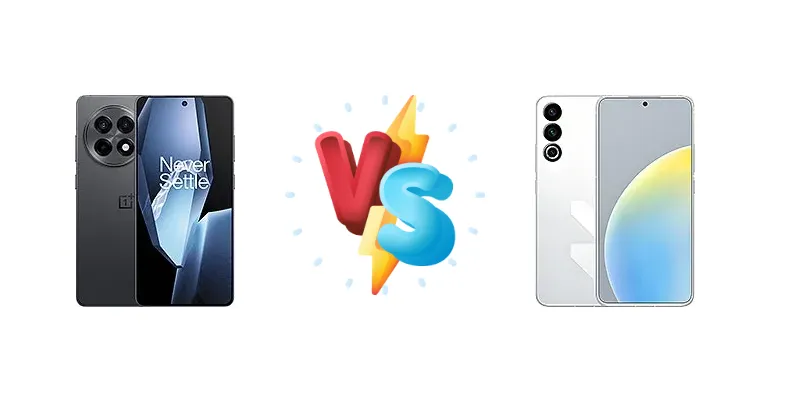
|
🏆 Quick Verdict
For most users, the OnePlus Ace 5 emerges as the stronger choice. Its Snapdragon 8 Gen 3 chipset delivers a noticeable performance uplift, and the 80W charging significantly reduces downtime. While the Meizu 20 Classic offers a polished experience, the Ace 5’s raw power and faster charging provide a more compelling package.
| PHONES | ||
|---|---|---|
| Phone Names | OnePlus Ace 5 | Meizu 20 Classic |
| Network | ||
|---|---|---|
| 2G bands | GSM 850 / 900 / 1800 / 1900 | GSM 850 / 900 / 1800 / 1900 |
| 3G bands | HSDPA 800 / 850 / 900 / 1700(AWS) / 2100 | HSDPA 800 / 850 / 900 / 1900 / 2100 |
| 4G bands | 1, 3, 4, 5, 8, 18, 19, 26, 28, 34, 38, 39, 40, 41, 42, 48, 66 | 1, 2, 3, 4, 5, 7, 8, 12, 28, 34, 38, 39, 40, 41 |
| 5G bands | 1, 3, 5, 8, 28, 38, 40, 41, 48, 66, 77, 78 SA/NSA | 1, 3, 5, 8, 28, 38, 41, 77, 78 SA/NSA |
| Speed | HSPA, LTE, 5G | HSPA, LTE, 5G |
| Technology | GSM / CDMA / HSPA / LTE / 5G | GSM / HSPA / LTE / 5G |
| Launch | ||
|---|---|---|
| Announced | 2024, December 26 | 2023, October 19 |
| Status | Available. Released 2024, December 26 | Available. Released 2023, October 31 |
| Body | ||
|---|---|---|
| Build | Glass front (Crystal Shield Glass), glass back (Crystal Shield Glass), aluminum frame | - |
| Dimensions | 161.7 x 75.8 x 8.1 mm (6.37 x 2.98 x 0.32 in) | 157.9 x 73.5 x 8 mm (6.22 x 2.89 x 0.31 in) |
| SIM | Nano-SIM + Nano-SIM | Nano-SIM + Nano-SIM |
| Weight | 206 g or 223 g (7.27 oz) | 190 g (6.70 oz) |
| Display | ||
|---|---|---|
| Protection | Crystal Shield Glass | - |
| Resolution | 1264 x 2780 pixels (~450 ppi density) | 1080 x 2400 pixels, 20:9 ratio (~402 ppi density) |
| Size | 6.78 inches, 111.7 cm2 (~91.2% screen-to-body ratio) | 6.55 inches, 103.6 cm2 (~89.2% screen-to-body ratio) |
| Type | LTPO AMOLED, 1B colors, 120Hz, HDR10+, Dolby Vision, 800 nits (typ), 1600 nits (HBM), 4500 nits (peak) | OLED, 1B colors, 144Hz, 500 nits (typ), 800 nits (HBM) |
| Platform | ||
|---|---|---|
| CPU | Octa-core (1x3.3 GHz Cortex-X4 & 3x3.2 GHz Cortex-A720 & 2x3.0 GHz Cortex-A720 & 2x2.3 GHz Cortex-A520) | Octa-core (1x3.2 GHz Cortex-X3 & 2x2.8 GHz Cortex-A715 & 2x2.8 GHz Cortex-A710 & 3x2.0 GHz Cortex-A510) |
| Chipset | Qualcomm SM8650-AB Snapdragon 8 Gen 3 (4 nm) | Qualcomm SM8550-AB Snapdragon 8 Gen 2 (4 nm) |
| GPU | Adreno 750 | Adreno 740 |
| OS | Android 15, ColorOS 15 | Android 13, Flyme 10 |
| Memory | ||
|---|---|---|
| Card slot | No | No |
| Internal | 256GB 12GB RAM, 256GB 16GB RAM, 512GB 12GB RAM, 512GB 16GB RAM, 1TB 16GB RAM | 256GB 16GB RAM, 512GB 16GB RAM |
| Main Camera | ||
|---|---|---|
| Features | Color spectrum sensor, Dual-LED flash, HDR, panorama | Ring-LED flash, panorama, HDR |
| Triple | 50 MP, f/1.8, 24mm (wide), 1/1.56", 1.0µm, PDAF, OIS 8 MP, f/2.2, 16mm, 112˚ (ultrawide), 1/4.0", 1.12µm 2 MP (macro) | 50 MP, f/1.9, 24mm (wide), 1/1.56", PDAF, OIS 16 MP, f/2.4, 16mm, 122˚ (ultrawide) 5 MP, f/2.4 |
| Video | 4K@30/60fps, 1080p@30/60/120/240fps, gyro-EIS, OIS | 8K, 4K, 1080p; gyro-EIS |
| Selfie camera | ||
|---|---|---|
| Features | HDR, panorama | HDR |
| Single | 16 MP, f/2.4, 24mm (wide), 1/3", 1.0µm | 32 MP, f/2.5, (wide) |
| Video | 1080p@30fps, gyro-EIS | Yes |
| Sound | ||
|---|---|---|
| 35mm jack | No | No |
| Loudspeaker | Yes, with stereo speakers | Yes, with stereo speakers |
| Comms | ||
|---|---|---|
| Bluetooth | 5.4, A2DP, LE, aptX HD, LHDC 5 | 5.3, A2DP, LE |
| Infrared port | Yes | - |
| NFC | Yes | Yes |
| Positioning | GPS (L1+L5), GLONASS (G1), BDS (B1I+B1c+B2a), GALILEO (E1+E5a), QZSS (L1+L5) | GPS (L1+L5), GLONASS, BDS (B1I+B1c+B2a), GALILEO, QZSS |
| Radio | No | No |
| USB | USB Type-C 2.0 | USB Type-C, OTG |
| WLAN | Wi-Fi 802.11 a/b/g/n/ac/6/7, dual-band | Wi-Fi 802.11 а/b/g/n/ac/6e/7, dual-band |
| Features | ||
|---|---|---|
| Sensors | Fingerprint (under display, optical), accelerometer, gyro, proximity, compass | Fingerprint (under display, ultrasonic), accelerometer, gyro, proximity, compass |
| Battery | ||
|---|---|---|
| Charging | 80W wired, 18W PD, 55% in 15 min, 100% in 35 min | 67W wired, PD3 PPS, QC4+ |
| Type | Si/C Li-Ion 6415 mAh | Li-Po 4700 mAh |
| Misc | ||
|---|---|---|
| Colors | Gray, White, Green | Gray, Silver, Green |
| Models | PKG110 | - |
| Price | About 300 EUR | About 400 EUR |
OnePlus Ace 5
- Significantly faster charging (80W)
- More powerful Snapdragon 8 Gen 3 chipset
- Likely superior gaming performance
- Potential for higher thermal throttling
- Software experience may be less refined than Meizu
Meizu 20 Classic
- Potentially more refined software experience
- Likely more compact and ergonomic design
- Support for PD3 PPS and QC4+ charging standards
- Less powerful Snapdragon 8 Gen 2 chipset
- Slower charging speed (67W)
Display Comparison
While specific display specs are missing, both devices likely utilize high-refresh-rate AMOLED panels given their flagship positioning. However, the Ace 5’s focus on gaming suggests a potentially higher peak brightness and more aggressive refresh rate scaling for smoother visuals. The Meizu 20 Classic, leaning towards a more balanced experience, may prioritize color accuracy and viewing angles. Bezels are likely comparable, but Meizu often emphasizes design aesthetics, potentially resulting in slightly slimmer bezels.
Camera Comparison
Without detailed camera specs, it’s difficult to make definitive claims. However, given the market positioning, both phones likely feature multi-camera systems with a primary sensor exceeding 50MP. The Ace 5, targeting gamers, might prioritize video recording capabilities and image stabilization. The Meizu 20 Classic, with its emphasis on overall experience, could focus on computational photography and color science. The absence of information on sensor sizes and lens apertures makes a precise comparison impossible, but we can assume both will offer competitive image quality in good lighting conditions.
Performance
The core difference lies in the chipsets: the OnePlus Ace 5 boasts the Snapdragon 8 Gen 3 (4nm) with its octa-core configuration peaking at 3.3 GHz, while the Meizu 20 Classic features the Snapdragon 8 Gen 2 (4nm) topping out at 3.2 GHz. This generational leap translates to a significant performance advantage for the Ace 5, particularly in sustained workloads. The Ace 5’s CPU architecture – incorporating the Cortex-X4 prime core – offers improved single-core performance, while the Gen 2’s Cortex-X3 is still highly capable. Both utilize LPDDR5x RAM, but the Ace 5’s superior chipset will better leverage its bandwidth. Thermal management will be crucial; the Gen 3 is known to run warmer, so OnePlus’ cooling solution will be critical to avoid throttling.
Battery Life
The OnePlus Ace 5’s 80W wired charging is a clear advantage over the Meizu 20 Classic’s 67W charging. The Ace 5 claims a 55% charge in 15 minutes and 100% in 35 minutes, significantly reducing downtime. While the Meizu 20 Classic supports PD3 PPS and QC4+, its slower charging speed means longer periods tethered to a power outlet. Battery capacity is unknown for both, but the faster charging of the Ace 5 mitigates the impact of a potentially smaller battery.
Buying Guide
Buy the OnePlus Ace 5 if you need uncompromising performance for demanding tasks like gaming or video editing, and prioritize the fastest possible charging speeds. Buy the Meizu 20 Classic if you prefer a more refined software experience, appreciate a potentially more compact form factor (based on Meizu’s design language), and are comfortable with slightly slower charging and a less powerful chipset.