
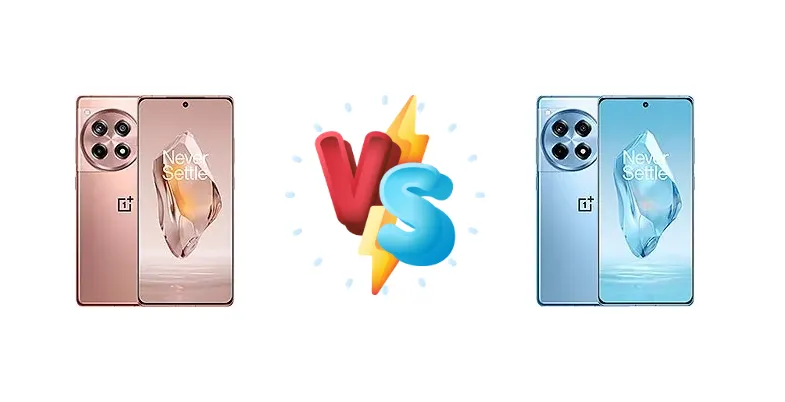
OnePlus Ace 3 vs OnePlus 12R: A Deep Dive into the Snapdragon 8 Gen 2 Twins
| Phones Images | |||||
|---|---|---|---|---|---|
|
🏆 Quick Verdict
For most users, the OnePlus 12R emerges as the slightly better value. Its impressive 14:32-hour active use battery life, combined with nearly identical performance to the Ace 3, makes it a more practical daily driver. The Ace 3’s slightly faster charging is a minor advantage.
| PHONES | ||
|---|---|---|
| Phone Names | OnePlus Ace 3 | OnePlus 12R |
| Network | ||
|---|---|---|
| 2G bands | GSM 850 / 900 / 1800 / 1900 | GSM 850 / 900 / 1800 / 1900 |
| 3G bands | HSDPA 850 / 900 / 1700(AWS) / 2100 | HSDPA 850 / 900 / 1700(AWS) / 1900 / 2100 |
| 4G bands | 1, 3, 4, 5, 8, 18, 19, 26, 28, 34, 38, 39, 40, 41 | 1, 2, 3, 4, 5, 7, 8, 12, 17, 18, 19, 20, 26, 28, 32, 38, 39, 40, 41, 66 |
| 5G bands | 1, 3, 5, 8, 28, 41, 77, 78 SA/NSA | 1, 2, 3, 5, 7, 8, 12, 20, 28, 38, 40, 41, 66, 77, 78 SA/NSA |
| Speed | HSPA, LTE, 5G | HSPA, LTE, 5G |
| Technology | GSM / CDMA / HSPA / LTE / 5G | GSM / CDMA / HSPA / LTE / 5G |
| Launch | ||
|---|---|---|
| Announced | 2024, January 04 | 2024, January 23 |
| Status | Available. Released 2024, January 15 | Available. Released 2024, February 06 |
| Body | ||
|---|---|---|
| Build | Glass front (Gorilla Glass Victus 2), glass back, aluminum frame | Glass front (Gorilla Glass Victus 2), aluminum frame, glass back |
| Dimensions | 163.3 x 75.3 x 8.8 mm (6.43 x 2.96 x 0.35 in) | 163.3 x 75.3 x 8.8 mm (6.43 x 2.96 x 0.35 in) |
| SIM | Nano-SIM + Nano-SIM | · Nano-SIM + Nano-SIM + eSIM (max 2 at a time)· Nano-SIM + Nano-SIM |
| Weight | 207 g (7.30 oz) | 207 g (7.30 oz) |
| Display | ||
|---|---|---|
| Protection | Corning Gorilla Glass Victus 2 | Corning Gorilla Glass Victus 2 |
| Resolution | 1264 x 2780 pixels (~450 ppi density) | 1264 x 2780 pixels (~450 ppi density) |
| Size | 6.78 inches, 111.7 cm2 (~90.9% screen-to-body ratio) | 6.78 inches, 111.7 cm2 (~90.9% screen-to-body ratio) |
| Type | LTPO AMOLED, 1B colors, 120Hz, HDR10+, Dolby Vision, 1600 nits (HBM), 4500 nits (peak) | LTPO4 AMOLED, 1B colors, 120Hz, HDR10+, Dolby Vision, 1600 nits (HBM), 4500 nits (peak) |
| Platform | ||
|---|---|---|
| CPU | Octa-core (1x3.2 GHz Cortex-X3 & 2x2.8 GHz Cortex-A715 & 2x2.8 GHz Cortex-A710 & 3x2.0 GHz Cortex-A510) | Octa-core (1x3.2 GHz Cortex-X3 & 2x2.8 GHz Cortex-A715 & 2x2.8 GHz Cortex-A710 & 3x2.0 GHz Cortex-A510) |
| Chipset | Qualcomm SM8550-AB Snapdragon 8 Gen 2 (4 nm) | Qualcomm SM8550-AB Snapdragon 8 Gen 2 (4 nm) |
| GPU | Adreno 740 | Adreno 740 |
| OS | Android 14, ColorOS 14 | Android 14, up to 3 major Android upgrades, OxygenOS 15 |
| Memory | ||
|---|---|---|
| Card slot | No | No |
| Internal | 256GB 12GB RAM, 512GB 16GB RAM, 1TB 16GB RAM | 128GB 8GB RAM, 256GB 8GB RAM, 256GB 12GB RAM, 256GB 16GB RAM |
| Main Camera | ||
|---|---|---|
| Features | Color spectrum sensor, LED flash, HDR, panorama | Laser AF, color spectrum sensor, LED flash, HDR, panorama |
| Triple | 50 MP, f/1.8, 24mm (wide), 1/1.56", 1.0µm, PDAF, OIS 8 MP, f/2.2, 16mm, 112˚ (ultrawide), 1/4.0", 1.12µm 2 MP (macro) | 50 MP, f/1.8, 24mm (wide), 1/1.56", 1.0µm, multi-directional PDAF, OIS 8 MP, f/2.2, 16mm, 112˚ (ultrawide), 1/4.0", 1.12µm 2 MP (macro) |
| Video | 4K@30/60fps, 1080p@30/60/120/240fps, gyro-EIS, OIS | 4K@30/60fps, 1080p@30/60/120/240fps, gyro-EIS, OIS |
| Selfie camera | ||
|---|---|---|
| Features | HDR | HDR, panorama |
| Single | 16 MP, f/2.4, 26mm (wide), 1/3", 1.0µm | 16 MP, f/2.4, 26mm (wide), 1/3", 1.0µm |
| Video | 1080p@30fps | 1080p@30fps, gyro-EIS |
| Sound | ||
|---|---|---|
| 35mm jack | No | No |
| Loudspeaker | Yes, with stereo speakers | Yes, with stereo speakers |
| Comms | ||
|---|---|---|
| Bluetooth | 5.3, A2DP, LE, aptX HD | 5.3, A2DP, LE, aptX HD |
| Infrared port | Yes | Yes |
| NFC | Yes | Yes |
| Positioning | GPS (L1+L5), GLONASS (G1), BDS (B1I+B1c+B2a), GALILEO (E1+E5a), QZSS (L1+L5) | GPS, GALILEO, GLONASS, BDS, QZSS |
| Radio | No | No |
| USB | USB Type-C 2.0 | USB Type-C 2.0 |
| WLAN | Wi-Fi 802.11 a/b/g/n/ac/6/7, dual-band | Wi-Fi 802.11 a/b/g/n/ac/6/7, dual-band |
| Features | ||
|---|---|---|
| Sensors | Fingerprint (under display, optical), accelerometer, gyro, proximity, compass | Fingerprint (under display, optical), accelerometer, gyro, proximity, compass |
| Battery | ||
|---|---|---|
| Charging | 100W wired, 100% in 27 min | 100W wired, 100% in 26 min |
| Type | 5500 mAh | Li-Ion 5500 mAh |
| Misc | ||
|---|---|---|
| Colors | Black, Blue, Rose Gold | Iron Gray, Cool Blue, Electric Violet, Sunset Dune |
| Models | PJE110 | CPH2609, CPH2585, CPH2611 |
| Price | About 340 EUR | € 410.84 / $ 399.95 / £ 649.00 |
| SAR | - | 1.19 W/kg (head) 0.82 W/kg (body) |
OnePlus Ace 3
- Potentially slightly faster charging (27 mins vs 26 mins)
- Flagship branding may appeal to some users
- Likely optimized software experience (regional variations may apply)
- Battery life not specified, potentially lower than 12R
- Limited information on display specifications
OnePlus 12R
- Excellent 14:32-hour active use battery life
- 1181 nits peak brightness for great outdoor visibility
- Fast 100W charging (26 mins)
- May lack some of the premium features of the Ace 3
- Software experience may be less refined (regional variations may apply)
Display Comparison
The OnePlus 12R boasts a measured peak brightness of 1181 nits, a significant figure indicating excellent outdoor visibility. While the Ace 3’s display specifications aren’t provided, it’s reasonable to expect similar performance given its flagship positioning. Both phones likely utilize AMOLED panels for vibrant colors and deep blacks. The absence of LTPO information for either device suggests they may not feature adaptive refresh rates for optimal power efficiency, relying instead on fixed refresh rate options. Bezels are expected to be minimal on both, aligning with current design trends.
Camera Comparison
Camera details are limited, but the focus should be on the main sensor capabilities. Without specific sensor size or aperture information, it’s difficult to definitively declare a winner. The absence of details regarding OIS (Optical Image Stabilization) is a key omission; its presence would significantly improve low-light photography and video stabilization. Any 2MP macro or depth sensors are likely to be of limited utility and shouldn’t heavily influence purchasing decisions. Image processing algorithms will play a crucial role in differentiating the final image quality.
Performance
Both the OnePlus Ace 3 and 12R are powered by the Qualcomm SM8550-AB Snapdragon 8 Gen 2 (4nm), featuring an octa-core CPU configuration: 1x3.2 GHz Cortex-X3, 2x2.8 GHz Cortex-A715, 2x2.8 GHz Cortex-A710, and 3x2.0 GHz Cortex-A510. This means CPU performance will be virtually indistinguishable between the two. The 4nm process node ensures excellent thermal efficiency, minimizing throttling during sustained workloads like gaming. RAM specifications are not provided, but both are expected to utilize LPDDR5x for fast memory access. Performance differences will likely stem from thermal management solutions and software optimization, rather than raw processing power.
Battery Life
The OnePlus 12R shines with a reported 14:32 hours of active use, demonstrating impressive battery endurance. The Ace 3’s battery capacity is not specified, but its 100W wired charging (100% in 27 minutes) is slightly slower than the 12R’s 100W charging (100% in 26 minutes). While the difference is minimal, the 12R’s longer battery life provides a more comfortable experience for users who don’t want to constantly reach for a charger. The 100W charging on both devices is exceptionally fast, offering a significant top-up in just a few minutes.
Buying Guide
Buy the OnePlus Ace 3 if you prioritize the absolute fastest charging speeds and potentially a more refined software experience (depending on regional variations). Buy the OnePlus 12R if you value extended battery life for all-day use and a more competitive price point without sacrificing flagship-level performance. Both are excellent choices for gamers and power users.