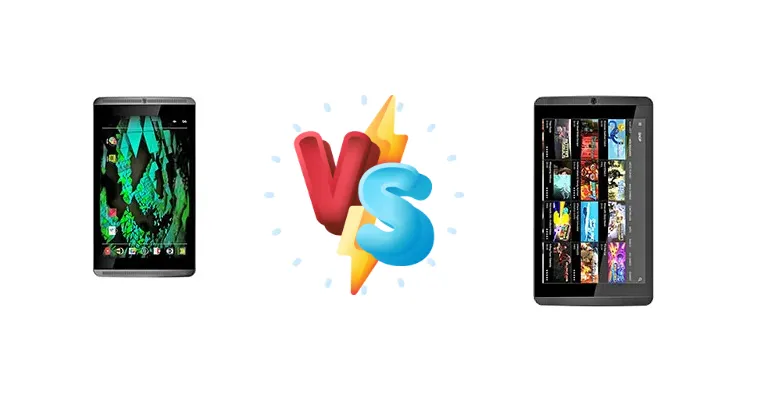
The original Nvidia Shield and the subsequent Shield K1 both aimed to deliver a premium Android gaming and streaming experience powered by Nvidia’s Tegra K1 chipset. However, the K1 represents a refinement of the initial concept, focusing on cost reduction while maintaining core performance. This comparison dissects the nuances between these two devices to help you determine which Shield best suits your needs.
🏆 Quick Verdict
For most users, the Nvidia Shield K1 offers the better value. While both devices share the same Tegra K1 processor and CPU, the K1’s streamlined design and often lower price point make it the more practical choice for gaming and streaming. The original Shield remains relevant for those seeking specific accessories or a slightly different form factor.
| Network |
|---|
| 2G bands | N/A | N/A |
| EDGE | No | No |
| GPRS | No | No |
| Technology | No cellular connectivity | No cellular connectivity |
| Launch |
|---|
| Announced | 2014, July. Released 2014, July | 2015, November. Released 2015, November |
| Status | Discontinued | Discontinued |
| Body |
|---|
| Dimensions | 221 x 126 x 9.2 mm (8.70 x 4.96 x 0.36 in) | 221 x 126 x 9.2 mm (8.70 x 4.96 x 0.36 in) |
| SIM | No | No |
| Weight | 390 g (13.76 oz) | 356 g (12.56 oz) |
| | Stylus | Stylus |
| Display |
|---|
| Resolution | 1920 x 1200 pixels, 16:10 ratio (~283 ppi density) | 1920 x 1200 pixels, 16:10 ratio (~283 ppi density) |
| Size | 8.0 inches, 185.6 cm2 (~66.6% screen-to-body ratio) | 8.0 inches, 185.6 cm2 (~66.6% screen-to-body ratio) |
| Type | IPS LCD | IPS LCD |
| Platform |
|---|
| CPU | Quad-core 2.2 GHz Cortex-A15 | Quad-core 2.2 GHz Cortex-A15 |
| Chipset | Nvidia Tegra K1 | Nvidia Tegra K1 |
| GPU | ULP GeForce Kepler (192 cores) | ULP GeForce Kepler (192 cores) |
| OS | Android 4.4.2 (KitKat), upgradable to 7.0 (Nougat) | Android 5.0 (Lollipop), upgradable to 7.0 (Nougat) |
| Memory |
|---|
| Card slot | microSDXC (dedicated slot) | microSDXC (dedicated slot) |
| Internal | 16GB 2GB RAM | 16GB 2GB RAM |
| Main Camera |
|---|
| Features | HDR | HDR |
| Single | 5 MP, AF | 5 MP, AF |
| Video | Yes | Yes |
| Selfie camera |
|---|
| Features | HDR | HDR |
| Single | 5 MP | 5 MP |
| Sound |
|---|
| 3.5mm jack | Yes | Yes |
| 35mm jack | Yes | Yes |
| Loudspeaker | Yes, with stereo speakers | Yes, with stereo speakers |
| | Dual bass reflex port | Dual bass reflex port |
| Comms |
|---|
| Bluetooth | 4.0, A2DP, LE | 4.0, A2DP, LE |
| NFC | No | No |
| Positioning | GPS | GPS, GLONASS |
| Radio | No | No |
| USB | microUSB 2.0 | microUSB 2.0 |
| WLAN | Wi-Fi 802.11 a/b/g/n, dual-band | Wi-Fi 802.11 a/b/g/n, dual-band |
| Features |
|---|
| Sensors | Accelerometer, gyro, compass | Accelerometer, gyro, compass |
| | HDMI port | HDMI port |
| Battery |
|---|
| Type | Li-Ion 5400 mAh, non-removable (19.75 Wh) | Li-Ion 5200 mAh, non-removable (19.75 Wh) |
| Misc |
|---|
| Colors | Black | Black |
| Price | About 230 EUR | About 200 EUR |
Nvidia Shield
- Built-in battery for portable gaming
- Compatibility with original Shield accessories
- Slightly more premium build quality
- Higher price (typically)
- Battery degrades over time
- Larger and heavier than the K1
Nvidia Shield K1
- Lower price (typically)
- More compact and lightweight design
- No battery degradation concerns
- Requires constant power connection
- Limited accessory compatibility compared to original Shield
- Slightly less premium build quality
Display Comparison
Both the Nvidia Shield and Shield K1 output to a television, and neither have built-in displays. Therefore, display quality is entirely dependent on the connected TV. However, the Shield K1’s HDMI output may benefit from minor revisions in the Tegra K1’s video encoder, potentially leading to slightly cleaner upscaling on older TVs, though this difference is likely imperceptible to most users.
Camera Comparison
Neither the Nvidia Shield nor the Nvidia Shield K1 are designed for photography. Both devices lack integrated cameras, focusing entirely on gaming and media streaming. Therefore, a camera comparison is irrelevant.
Performance
Both devices are equipped with the Nvidia Tegra K1 chipset featuring a quad-core 2.2 GHz Cortex-A15 CPU. This means CPU performance is virtually identical. The K1’s GPU, while also based on the Tegra K1 architecture, may have slightly different clock speeds or thermal management profiles. In practice, this translates to similar gaming performance across most titles, with both capable of running demanding Android games at high settings. The K1’s more efficient design *could* lead to slightly less thermal throttling during extended gaming sessions, but this is highly dependent on ambient temperature and case ventilation.
Battery Life
The original Nvidia Shield included a built-in battery for portable gaming, while the Shield K1 is strictly a set-top box requiring a constant power connection. This is a fundamental difference. The Shield’s battery capacity allowed for approximately 2-3 hours of gameplay, making it suitable for on-the-go gaming. The K1’s lack of a battery necessitates a nearby power outlet, making it ideal for a stationary entertainment setup. The Shield’s battery life degrades over time, a factor the K1 avoids entirely.
Buying Guide
Buy the Nvidia Shield if you prioritize a more robust build quality and are actively seeking compatibility with the original Shield’s ecosystem of accessories. Buy the Nvidia Shield K1 if you want the same core Tegra K1 performance at a more affordable price, and are less concerned with legacy accessory support or the original Shield’s slightly more premium feel. Both are excellent choices for Android gaming and media consumption.
Frequently Asked Questions
❓ Does the Nvidia Shield K1 support the same game controllers as the original Shield?
Yes, the Nvidia Shield K1 is compatible with the original Shield controller and other Bluetooth gamepads. However, some specialized accessories designed exclusively for the original Shield may not function correctly with the K1 due to driver or hardware differences.
❓ Will the Nvidia Shield K1 receive the same software updates as the original Shield?
While both devices initially received consistent software updates from Nvidia, support for the original Shield is now more limited. The K1 generally receives updates for a longer period, ensuring continued compatibility with newer Android TV features and streaming services. However, both devices are reaching the end of their software support lifecycle.
❓ Can I use the Nvidia Shield K1 for PC game streaming (GameStream)?
Yes, both the Nvidia Shield and Shield K1 fully support Nvidia’s GameStream technology, allowing you to stream games from a compatible Nvidia GeForce-equipped PC to your TV. Performance will depend on your network connection and the capabilities of your PC.