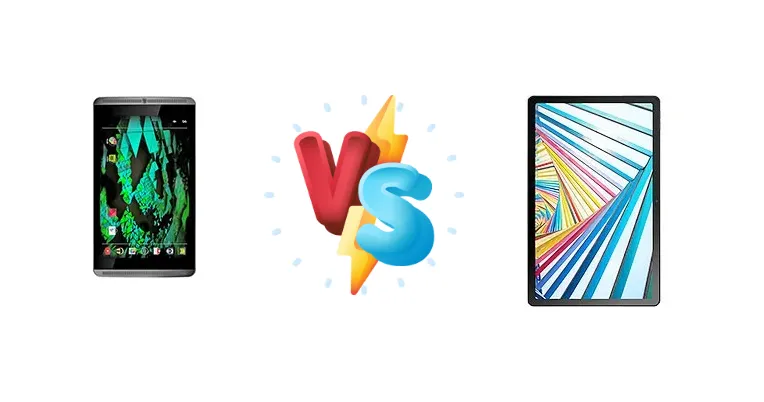
The Nvidia Shield remains a stalwart in the Android TV space, known for its gaming prowess despite its age. However, the Lenovo Tab M10 Plus (3rd Gen) offers a more modern Android tablet experience at a potentially lower price. This comparison dissects the core differences between these two devices, examining whether the Shield’s specialized hardware still justifies its position against a contemporary, general-purpose tablet.
🏆 Quick Verdict
For dedicated gamers and media enthusiasts already invested in the Nvidia ecosystem, the Shield remains a compelling choice. However, the Lenovo Tab M10 Plus (3rd Gen), particularly the Snapdragon 680 LTE variant, offers a more versatile and modern tablet experience for everyday tasks and casual gaming at a significantly lower cost.
| Network |
|---|
| 2G bands | N/A | GSM 850 / 900 / 1800 / 1900 |
| 3G bands | - | HSDPA 800 / 850 / 900 / 1900 / 2100 |
| 4G bands | - | 1, 2, 3, 4, 5, 7, 8, 19, 20, 26, 28, 28, 38, 40, 41 |
| EDGE | No | - |
| GPRS | No | - |
| Speed | - | HSPA 42.2/5.76 Mbps, LTE Cat13 390/75 Mbps - cellular model only |
| Technology | No cellular connectivity | GSM / HSPA / LTE |
| Launch |
|---|
| Announced | 2014, July. Released 2014, July | 2022, May |
| Status | Discontinued | Available. Released 2022, May |
| Body |
|---|
| Dimensions | 221 x 126 x 9.2 mm (8.70 x 4.96 x 0.36 in) | 251.2 x 158.8 x 7.5 mm (9.89 x 6.25 x 0.30 in) |
| SIM | No | Nano-SIM (cellular model only) |
| Weight | 390 g (13.76 oz) | 465 g (1.03 lb) |
| | Stylus | Stylus support |
| Display |
|---|
| Resolution | 1920 x 1200 pixels, 16:10 ratio (~283 ppi density) | 1200 x 2000 pixels, 5:3 ratio (~220 ppi density) |
| Size | 8.0 inches, 185.6 cm2 (~66.6% screen-to-body ratio) | 10.61 inches, 320.4 cm2 (~80.3% screen-to-body ratio) |
| Type | IPS LCD | IPS LCD, 400 nits (typ) |
| Platform |
|---|
| CPU | Quad-core 2.2 GHz Cortex-A15 | Octa-core (4x2.4 GHz Kryo 265 Gold & 4x1.9 GHz Kryo 265 Silver) - LTE model Octa-core (2x2.0 GHz Cortex-A75 & 6x1.8 GHz Cortex-A55) - Wi-Fi only model |
| Chipset | Nvidia Tegra K1 | Qualcomm SM6225 Snapdragon 680 4G (6 nm) - LTE model Mediatek MT6769V/CU Helio G80 (12 nm) - Wi-Fi only model |
| GPU | ULP GeForce Kepler (192 cores) | Adreno 610 - LTE model Mali-G52 MC2 - Wi-Fi only model |
| OS | Android 4.4.2 (KitKat), upgradable to 7.0 (Nougat) | Android 12 |
| Memory |
|---|
| Card slot | microSDXC (dedicated slot) | microSDXC (dedicated slot) |
| Internal | 16GB 2GB RAM | 32GB 3GB RAM, 64GB 4GB RAM, 128GB 4GB RAM, 128GB 6GB RAM |
| | - | eMCP/uMCP |
| Main Camera |
|---|
| Features | HDR | - |
| Single | 5 MP, AF | 8 MP, AF |
| Video | Yes | 1080p |
| Selfie camera |
|---|
| Features | HDR | - |
| Single | 5 MP | 8 MP |
| Sound |
|---|
| 3.5mm jack | Yes | Yes |
| 35mm jack | Yes | Yes |
| Loudspeaker | Yes, with stereo speakers | Yes, with stereo speakers (4 speakers) |
| | Dual bass reflex port | - |
| Comms |
|---|
| Bluetooth | 4.0, A2DP, LE | 5.0, A2DP, LE |
| NFC | No | No |
| Positioning | GPS | GPS, GLONASS, BDS - cellular model only |
| Radio | No | FM Radio |
| USB | microUSB 2.0 | USB Type-C 2.0 |
| WLAN | Wi-Fi 802.11 a/b/g/n, dual-band | Wi-Fi 802.11 a/b/g/n/ac, dual-band, Wi-Fi Direct |
| Features |
|---|
| Sensors | Accelerometer, gyro, compass | Accelerometer, proximity, gyro |
| | HDMI port | - |
| Battery |
|---|
| Charging | - | 20W wired |
| Type | Li-Ion 5400 mAh, non-removable (19.75 Wh) | Li-Po 7700 mAh |
| Misc |
|---|
| Colors | Black | Storm Grey, Frost Blue |
| Price | About 230 EUR | About 260 EUR |
Nvidia Shield
- Dedicated Nvidia gaming ecosystem
- Excellent streaming capabilities (GeForce Now)
- Compact form factor
- Aging Tegra K1 processor
- Outdated software support
- Limited battery life (estimated)
Lenovo Tab M10 Plus (3rd Gen)
- Modern Snapdragon 680/Helio G80 processor
- Larger 7,500 mAh battery with 20W charging
- More versatile Android tablet experience
- Less optimized for dedicated gaming
- Software updates may be slower
- Build quality may not match the Shield
Display Comparison
Display specifications are not provided for the Nvidia Shield, but it is known to feature a 1080p display. The Lenovo Tab M10 Plus (3rd Gen) offers a 10.61-inch IPS LCD. While both likely offer adequate viewing angles, the Tab M10 Plus benefits from a more recent panel technology, potentially offering improved color accuracy and brightness. The Shield’s age means it lacks features like higher refresh rates or HDR support, common in modern tablets. Bezels on the Shield are also likely more pronounced than on the newer Lenovo model.
Camera Comparison
Camera performance is not a primary focus for either device, but the Lenovo Tab M10 Plus (3rd Gen) likely holds an advantage. While specific sensor details are unavailable, modern tablet cameras generally outperform older ones. The Shield’s camera is likely a lower-resolution sensor with limited features. The Tab M10 Plus benefits from more advanced image processing capabilities inherent in the Snapdragon 680 chipset.
Performance
The core difference lies in the chipsets. The Nvidia Shield’s Tegra K1, with its quad-core 2.2 GHz Cortex-A15 CPU, is showing its age. While the K1’s GPU was once impressive, it’s significantly outmatched by the Qualcomm Snapdragon 680 (6nm) found in the LTE version of the Tab M10 Plus. The Snapdragon 680’s octa-core CPU (4x2.4 GHz Kryo 265 Gold & 4x1.9 GHz Kryo 265 Silver) offers a substantial performance uplift in multi-threaded tasks and general responsiveness. The Wi-Fi only version of the Tab M10 Plus uses the Mediatek Helio G80 (12nm), which is still a more modern and efficient chip than the Tegra K1, though less powerful than the Snapdragon 680. The 6nm process of the Snapdragon 680 also translates to better thermal efficiency, reducing the likelihood of performance throttling during extended gaming sessions. The Shield’s reliance on older LPDDR3 RAM further exacerbates the performance gap.
Battery Life
Battery capacity is not specified for the Nvidia Shield. The Lenovo Tab M10 Plus (3rd Gen) features a 7,500 mAh battery and supports 20W wired charging. The Shield’s battery life is likely shorter due to the less efficient Tegra K1 processor. The 20W charging on the Tab M10 Plus allows for a relatively quick recharge, a feature absent or slower on the older Shield.
Buying Guide
Buy the Nvidia Shield if you prioritize a dedicated gaming and streaming experience, particularly if you utilize Nvidia’s GeForce Now service or have a library of Android games optimized for its Tegra K1 processor. Buy the Lenovo Tab M10 Plus (3rd Gen) if you prefer a more general-purpose tablet for web browsing, video consumption, productivity tasks, and light gaming, and value a modern Android experience with LTE connectivity and faster charging.
Frequently Asked Questions
❓ Will the Nvidia Shield still run demanding Android games smoothly?
While the Shield can run many Android games, its Tegra K1 processor is showing its age. Newer, graphically intensive titles may require reduced settings or experience performance issues compared to the Lenovo Tab M10 Plus (3rd Gen) with its Snapdragon 680.
❓ Does the Lenovo Tab M10 Plus (3rd Gen) support Nvidia GeForce Now streaming?
Yes, the Lenovo Tab M10 Plus (3rd Gen) can run the GeForce Now app and stream games from Nvidia's servers, though the experience may not be as optimized as on the Shield due to the different chipset and potential network limitations.
❓ Which tablet is better for watching videos and streaming content?
Both tablets are capable of streaming video, but the Lenovo Tab M10 Plus (3rd Gen)'s larger screen and potentially better display quality offer a more immersive viewing experience. The Shield excels with its Nvidia ecosystem integration, but the difference in display quality is noticeable.
❓ Is the LTE connectivity on the Lenovo Tab M10 Plus (3rd Gen) worth the extra cost?
If you frequently travel or need internet access in areas without Wi-Fi, the LTE connectivity is a significant benefit. It allows you to stay connected for work, entertainment, and communication without relying on Wi-Fi hotspots.