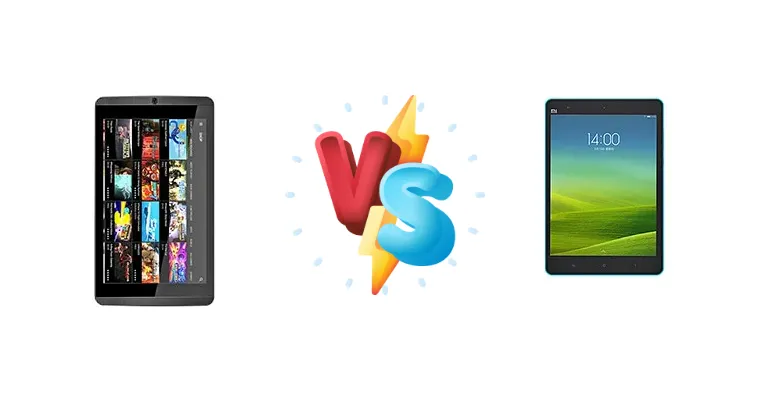
Both the Nvidia Shield K1 and the Xiaomi Mi Pad 7.9 represent interesting points in Android tablet history, both powered by the then-cutting-edge Nvidia Tegra K1 chipset. However, their target audiences and overall execution differ significantly. The Shield K1 aimed for a premium gaming and media consumption experience, while the Mi Pad 7.9 sought to deliver a more general-purpose tablet experience at a competitive price point.
🏆 Quick Verdict
For users prioritizing gaming and streaming, the Nvidia Shield K1 is the clear winner. Its focus on Nvidia’s ecosystem and potential for controller support outweigh the Mi Pad 7.9’s broader appeal. However, the Mi Pad 7.9 offers a more versatile experience for everyday tasks.
| Network |
|---|
| 2G bands | N/A | N/A |
| EDGE | No | No |
| GPRS | No | No |
| Technology | No cellular connectivity | No cellular connectivity |
| Launch |
|---|
| Announced | 2015, November. Released 2015, November | 2014, March. Released 2014, June |
| Status | Discontinued | Discontinued |
| Body |
|---|
| Dimensions | 221 x 126 x 9.2 mm (8.70 x 4.96 x 0.36 in) | 202 x 135.4 x 8.5 mm (7.95 x 5.33 x 0.33 in) |
| SIM | No | No |
| Weight | 356 g (12.56 oz) | 360 g (12.70 oz) |
| | Stylus | - |
| Display |
|---|
| Protection | - | Corning Gorilla Glass 3 |
| Resolution | 1920 x 1200 pixels, 16:10 ratio (~283 ppi density) | 1536 x 2048 pixels, 4:3 ratio (~326 ppi density) |
| Size | 8.0 inches, 185.6 cm2 (~66.6% screen-to-body ratio) | 7.9 inches, 190.9 cm2 (~69.8% screen-to-body ratio) |
| Type | IPS LCD | IPS LCD |
| Platform |
|---|
| CPU | Quad-core 2.2 GHz Cortex-A15 | Quad-core 2.2 GHz Cortex-A15 |
| Chipset | Nvidia Tegra K1 | Nvidia Tegra K1 |
| GPU | ULP GeForce Kepler (192 cores) | ULP GeForce Kepler (192 cores) |
| OS | Android 5.0 (Lollipop), upgradable to 7.0 (Nougat) | Android 4.4.4 (KitKat), MIUI 7 |
| Memory |
|---|
| Card slot | microSDXC (dedicated slot) | microSDXC (dedicated slot) |
| Internal | 16GB 2GB RAM | 16GB 2GB RAM, 64GB 2GB RAM |
| Main Camera |
|---|
| Features | HDR | - |
| Single | 5 MP, AF | 8 MP, f/2.0 |
| Video | Yes | 1080p@30fps |
| Selfie camera |
|---|
| Features | HDR | - |
| Single | 5 MP | 5 MP |
| Sound |
|---|
| 3.5mm jack | Yes | Yes |
| 35mm jack | Yes | Yes |
| Loudspeaker | Yes, with stereo speakers | Yes, with stereo speakers |
| | Dual bass reflex port | - |
| Comms |
|---|
| Bluetooth | 4.0, A2DP, LE | 4.0, A2DP |
| NFC | No | No |
| Positioning | GPS, GLONASS | No |
| Radio | No | No |
| USB | microUSB 2.0 | microUSB 2.0, OTG |
| WLAN | Wi-Fi 802.11 a/b/g/n, dual-band | Wi-Fi 802.11 a/b/g/n/ac, dual-band, Wi-Fi Direct, hotspot |
| Features |
|---|
| Sensors | Accelerometer, gyro, compass | Accelerometer, gyro |
| | HDMI port | - |
| Battery |
|---|
| Music play | - | Up to 86 h |
| Talk time | - | Up to 11 h (multimedia) |
| Type | Li-Ion 5200 mAh, non-removable (19.75 Wh) | Li-Po 6700 mAh, non-removable |
| Misc |
|---|
| Colors | Black | Blue, Green, Yellow, Pink, White, Gray |
| Price | About 200 EUR | About 240 EUR |
| Tests |
|---|
| Camera | - |
Photo / Video |
| Performance | - |
Basemark X: 24456 |
Nvidia Shield K1
- Optimized for Nvidia’s gaming ecosystem
- Potential for controller support and game streaming
- Likely superior software optimization for gaming
- Limited information on display specifications
- Battery life potentially impacted by gaming focus
- Camera specifications unknown
Xiaomi Mi Pad 7.9
- More versatile for general productivity tasks
- Potentially more compact form factor
- Xiaomi’s reputation for refined software experience
- May not receive the same level of gaming optimization
- Camera performance likely average
- Limited information on display specifications
Display Comparison
Both tablets share a 7.9-inch display size, but detailed display specifications beyond size are unavailable. Given Xiaomi’s history, the Mi Pad 7.9 likely employed an IPS LCD panel focused on color accuracy and viewing angles. The Shield K1, geared towards media consumption, may have prioritized higher brightness levels. Without specific nit ratings or color gamut coverage, it’s difficult to definitively declare a winner, but the Shield’s target use case suggests a potentially superior viewing experience in brighter environments.
Camera Comparison
Both devices feature photo and video capabilities, but detailed camera specifications are absent. Given the era, expecting flagship-level camera performance from either device is unrealistic. Xiaomi generally focuses on camera quality in its devices, suggesting the Mi Pad 7.9 might offer slightly better image processing and potentially a more refined camera app experience. However, without sensor size, aperture, or image stabilization details, this remains speculative. The presence of a camera on both is more for video conferencing and casual snapshots than serious photography.
Performance
Both devices are equipped with the Nvidia Tegra K1 chipset featuring a quad-core 2.2 GHz Cortex-A15 CPU. This means raw CPU performance will be nearly identical. The key differentiator lies in software optimization and thermal management. Nvidia’s control over the Shield K1’s software allows for tailored optimizations for gaming and streaming. While the Mi Pad 7.9 benefits from the Tegra K1’s GPU, it may not receive the same level of software attention, potentially leading to slightly lower sustained performance during extended gaming sessions. The lack of information on RAM configurations prevents a deeper analysis of multitasking capabilities.
Battery Life
Battery capacity and charging wattage are not specified for either device. Considering the Tegra K1’s power consumption, battery life will be a critical factor. The Shield K1, with its focus on gaming, likely benefits from software optimizations to manage power consumption during gameplay. The Mi Pad 7.9, aiming for broader use, may prioritize a balance between performance and battery life. Without concrete numbers, it’s impossible to determine which device offers superior endurance, but the Shield’s gaming focus suggests potential for aggressive power-saving modes.
Buying Guide
Buy the Nvidia Shield K1 if you need a dedicated gaming and streaming device with potential for Nvidia’s game streaming services and controller integration. Buy the Xiaomi Mi Pad 7.9 if you prefer a more balanced tablet experience for general productivity, media consumption, and light gaming, and value a potentially more compact form factor.
Frequently Asked Questions
❓ Can I use Nvidia’s GeForce Now streaming service on both tablets?
While both tablets run Android and can theoretically access GeForce Now through a browser or app, the Nvidia Shield K1 is likely to offer a smoother and more optimized experience due to Nvidia’s software integration and potential for controller support.
❓ Is the Tegra K1 still capable of running modern Android games?
The Tegra K1 was a powerful chipset for its time, but modern Android games are increasingly demanding. While many games will run, expect to lower graphics settings and potentially experience frame rate drops in more intensive titles. The Shield K1’s software optimizations may provide a slight advantage.
❓ Does the Xiaomi Mi Pad 7.9 support stylus input?
Information on stylus support for the Mi Pad 7.9 is limited. Xiaomi has included stylus support in some of its tablets, but it’s not confirmed for this specific model. The Shield K1 does not officially support stylus input.