
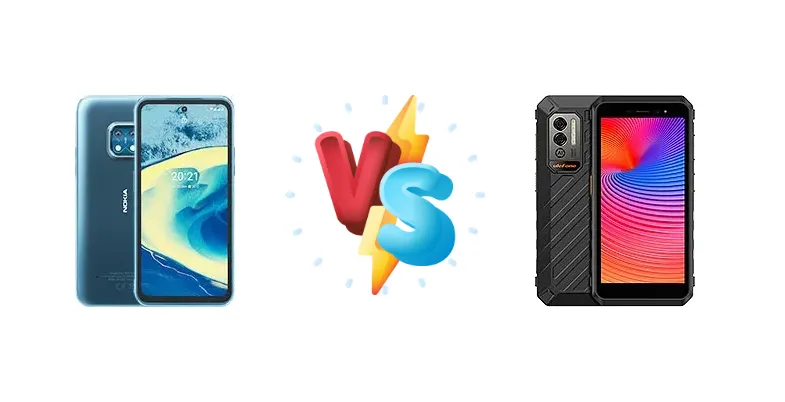
Nokia XR20 vs Ulefone Power Armor X11 Pro: The Ultimate Rugged Phone Comparison
| Phones Images | |||||
|---|---|---|---|---|---|
|
🏆 Quick Verdict
The Nokia XR20 takes the crown thanks to its superior chipset, 5G connectivity, wireless charging, and generally more refined software experience. While the Ulefone Power Armor X11 Pro boasts impressive battery life and a lower price, the XR20 offers a more compelling and future-proof package.
| PHONES | ||
|---|---|---|
| Phone Names | Nokia XR20 | Ulefone Power Armor X11 Pro |
| Network | ||
|---|---|---|
| 2G bands | GSM 850 / 900 / 1800 / 1900 | GSM 850 / 900 / 1800 / 1900 |
| 3G bands | HSDPA 850 / 900 / 1700(AWS) / 1900 / 2100 | HSDPA 850 / 900 / 1700(AWS) / 1900 / 2100 |
| 4G bands | 1, 2, 3, 4, 5, 7, 8, 12, 13, 14, 20, 25, 26, 28, 30, 38, 40, 41, 48, 66, 71 | 1, 2, 3, 4, 5, 7, 8, 12, 13, 17, 18, 19, 20, 25, 26, 28 |
| 5G bands | 2, 5, 25, 38, 41, 48, 66, 77, 78 SA/NSA | - |
| Speed | HSPA, LTE, 5G | HSPA, LTE |
| Technology | GSM / CDMA / HSPA / EVDO / LTE / 5G | GSM / HSPA / LTE |
| CDMA2000 1xEV-DO | eMMC 5.1 | |
| Launch | ||
|---|---|---|
| Announced | 2021, July 27 | 2022, September 16 |
| Status | Available. Released 2021, August 04 | Available. Released 2022, September 16 |
| Body | ||
|---|---|---|
| Dimensions | 171.6 x 81.5 x 10.6 mm (6.76 x 3.21 x 0.42 in) | 158.2 x 76.7 x 19.3 mm (6.23 x 3.02 x 0.76 in) |
| SIM | · Nano-SIM· Nano-SIM + Nano-SIM | Nano-SIM + Nano-SIM |
| Weight | 248 g (8.75 oz) | 330 g (11.64 oz) |
| IP68 dust/water resistant (up to 1.5m for 60 min) Drop-to-concrete resistance from up to 1.8m MIL-STD-810H compliant | IP68 dust/water resistant (up to 1.5m for 30 min) Drop-to-concrete resistance from up to 1.5m MIL-STD-810G compliant | |
| Display | ||
|---|---|---|
| Protection | Corning Gorilla Glass Victus | - |
| Resolution | 1080 x 2400 pixels, 20:9 ratio (~395 ppi density) | 720 x 1440 pixels, 18:9 ratio (~295 ppi density) |
| Size | 6.67 inches, 107.4 cm2 (~76.8% screen-to-body ratio) | 5.45 inches, 76.7 cm2 (~63.2% screen-to-body ratio) |
| Type | IPS LCD, 550 nits | IPS LCD |
| Platform | ||
|---|---|---|
| CPU | Octa-core (2x2.0 GHz Kryo 460 & 6x1.8 GHz Kryo 460) | Octa-core (4x2.0 GHz Cortex-A53 & 4x1.5 GHz Cortex-A53) |
| Chipset | Qualcomm SM4350 Snapdragon 480 5G (8 nm) | Mediatek MT6762G Helio G25 (12 nm) |
| GPU | Adreno 619 | PowerVR GE8320 |
| OS | Android 11, upgradable to Android 13 | Android 12 |
| Memory | ||
|---|---|---|
| Card slot | microSDXC (uses shared SIM slot) | microSDXC (dedicated slot) |
| Internal | 64GB 4GB RAM, 128GB 6GB RAM | 64GB 4GB RAM |
| Main Camera | ||
|---|---|---|
| Dual | 48 MP, f/1.8, (wide), 1/2.25", 0.8µm, PDAF 13 MP, f/2.4, 123˚ (ultrawide), 1/3.0", 1.12µm | 16 MP, f/1.8, (wide), 1.12µm, PDAF Auxiliary lens |
| Features | Zeiss optics, Dual-LED dual-tone flash, second LED flash, HDR, panorama | Dual-LED flash, HDR, panorama |
| Single | 8 MP, f/2.0 (wide), 1/4.0", 1.12µm | 5 MP, f/2.2 |
| Video | 1080p@30fps | 1080p@30fps |
| Selfie camera | ||
|---|---|---|
| Single | 8 MP, f/2.0 (wide), 1/4.0", 1.12µm | 5 MP, f/2.2 |
| Video | 1080p@30fps | 1080p@30fps |
| Sound | ||
|---|---|---|
| 3.5mm jack | Yes | Yes |
| 35mm jack | Yes | Yes |
| Loudspeaker | Yes, with stereo speakers | Yes |
| Comms | ||
|---|---|---|
| Bluetooth | 5.1, A2DP, LE, aptX Adaptive | 5.0, A2DP, LE |
| NFC | Yes | Yes |
| Positioning | GPS (L1+L5), GLONASS, BDS, GALILEO, QZSS, NavIC | GPS, GLONASS, GALILEO, BDS |
| Radio | Unspecified | FM radio, RDS, recording |
| USB | USB Type-C 3.0 | USB Type-C 2.0, OTG |
| WLAN | Wi-Fi 802.11 a/b/g/n/ac/6, dual-band, Wi-Fi Direct | Wi-Fi 802.11 a/b/g/n/ac, dual-band |
| Features | ||
|---|---|---|
| Sensors | Fingerprint (side-mounted), accelerometer, gyro, proximity, compass, barometer | Accelerometer, proximity, compass |
| Battery | ||
|---|---|---|
| Charging | 18W wired 15W wireless | - |
| Type | Li-Po 4630 mAh | Li-Po 8150 mAh |
| Misc | ||
|---|---|---|
| Colors | Ultra Blue, Granite Gray | Black |
| Models | TA-1368, TA-1362 | - |
| Price | About 270 EUR | About 170 EUR |
| SAR EU | 1.13 W/kg (head) 1.43 W/kg (body) | - |
Nokia XR20
- Superior Performance (Snapdragon 480 5G)
- 5G Connectivity
- Wireless Charging
- Better Display (FHD+)
- Likely Better Camera
- Higher Price
- Battery Life Potentially Shorter than Ulefone
Ulefone Power Armor X11 Pro
- Exceptional Battery Life
- Lower Price
- Rugged Design
- Expandable Storage
- Weaker Performance (Helio G25)
- No 5G
- Lower Resolution Display
- Likely Inferior Camera
Display Comparison
The Nokia XR20 features a 6.67-inch FHD+ display, offering a sharper and more vibrant viewing experience compared to the Ulefone Power Armor X11 Pro's likely smaller and lower-resolution display (estimated 6.53-inch HD+). Both phones are designed for outdoor visibility, but the XR20's higher resolution gives it an edge.
Camera Comparison
The Nokia XR20 is expected to have a better camera system, likely featuring a 64MP main sensor and improved image processing. The Ulefone Power Armor X11 Pro likely has a more basic camera setup, though both are designed for capturing photos in challenging conditions. Expect better low-light performance and detail from the XR20.
Performance
Here's where the XR20 truly shines. Its Qualcomm Snapdragon 480 5G chipset is significantly more powerful than the Ulefone's Helio G25. Expect smoother multitasking, faster app loading times, and better overall responsiveness on the XR20. The XR20 also supports 5G, a feature absent in the Ulefone.
Battery Life
The Ulefone Power Armor X11 Pro is known for its massive battery capacity (likely 6000mAh+), potentially offering significantly longer battery life than the XR20 (estimated 4470mAh). However, the XR20 supports 18W wired and 15W wireless charging, offering more convenient charging options.
Buying Guide
The Nokia XR20 is ideal for users who need a durable phone with good performance and 5G capabilities, and are willing to pay a premium. The Ulefone Power Armor X11 Pro is a great choice for budget-conscious buyers prioritizing extreme battery life and ruggedness above all else.