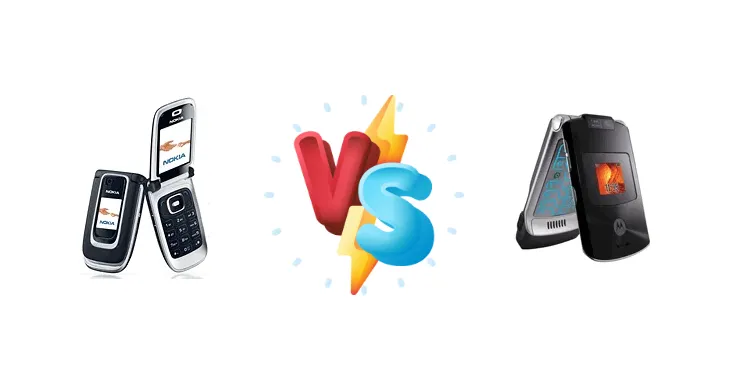
The early 2000s saw a revolution in mobile design, and the Nokia 6131 NFC and Motorola RAZR V3xx stood at the forefront. While both aimed for style and portability, they approached the market with distinct philosophies – the Nokia prioritizing functionality and emerging technologies like NFC, and the Motorola focusing on ultra-slim aesthetics and fashion appeal. This comparison dissects their strengths and weaknesses, revealing which phone better represents the era.
🏆 Quick Verdict
For the user seeking a durable, functional feature phone with early NFC capabilities, the Nokia 6131 NFC is the superior choice. While the RAZR V3xx captivated with its design, the 6131’s focus on usability and future-proofing (with NFC) provides more lasting value, even considering their age.
| Network |
|---|
| 2G bands | GSM 850 / 900 / 1800 / 1900 | GSM 900 / 1800 / 1900 |
| 3G bands | - | HSDPA 850 / 1900 |
| EDGE | Class 10 | - |
| GPRS | Class 10 | - |
| Speed | - | HSPA 3.6/0.384 Mbps |
| Technology | GSM | GSM / HSPA |
| Launch |
|---|
| Announced | 2007, February. Released 2007, Q1 | 2006, July |
| Status | Discontinued | Discontinued |
| Body |
|---|
| Dimensions | 92 x 47 x 20 mm (3.62 x 1.85 x 0.79 in) | 103 x 53 x 15 mm, 80 cc (4.06 x 2.09 x 0.59 in) |
| SIM | Mini-SIM | Mini-SIM |
| Weight | 104 g (3.67 oz) | 107 g (3.77 oz) |
| Display |
|---|
| Resolution | 240 x 320 pixels, 4:3 ratio (~182 ppi density) | 240 x 320 pixels, 4:3 ratio (~182 ppi density) |
| Size | 2.2 inches, 15.0 cm2 (~34.7% screen-to-body ratio) | 2.2 inches, 33 x 45 mm, 15.0 cm2 (~27.5% screen-to-body ratio) |
| Type | TFT LCD, 16M colors | TFT, 256K colors |
| | Second external display
256K colors, 1.36 inches, 128 x 160 pixels
Downloadable themes | Second external CSTN, 65K colors display (96 x 80 pixels)
Screensavers and wallpapers
Downloadable logos |
| Memory |
|---|
| Call records | 20 dialed, 20 received, 20 missed calls | 10 dialed, 10 received, 10 missed calls |
| Card slot | microSD (dedicated slot) | microSD (dedicated slot) |
| Internal | 11MB | 50MB |
| Phonebook | 1000 x 15 fields, Photo call | 1000 entries, Photocall |
| Main Camera |
|---|
| Single | 1.3 MP | 1.3 MP |
| Video | Yes | Yes |
| Selfie camera |
|---|
| Single | - | VGA videocall camera |
| | No | - |
| Sound |
|---|
| 3.5mm jack | No | No |
| 35mm jack | No | No |
| Alert types | - | Vibration; Downloadable polyphonic, MP3 ringtones |
| Loudspeaker | Yes | Yes |
| Comms |
|---|
| Bluetooth | 2.0 | 2.0, A2DP |
| Infrared port | Yes | - |
| NFC | Yes (payments) | - |
| Positioning | No | No |
| Radio | FM radio | No |
| USB | Pop-Port | miniUSB |
| WLAN | No | No |
| Features |
|---|
| Browser | - | WAP 2.0/xHTML, HTML (Opera) |
| Games | 3D Soccer and Snake + downloadable | Yes |
| Java | Yes, MIDP 2.0 | Yes, MIDP 2.0 |
| Messaging | SMS, MMS, Email, Instant Messaging | SMS, EMS, MMS, Email, Instant Messaging |
| | Push-to-open mechanism
Push to talk
MP3/MP4/AAC player
SyncML
Predictive text input
Presence enhanced contacts
Organizer
Voice dial/memo | Video download
MP3/AAC/AAC+ player
Predictive text input
Organizer
Voice memo |
| Battery |
|---|
| Stand-by | Up to 240 h | Up to 290 h |
| Talk time | Up to 3 h 20 min | Up to 3 h |
| Type | Li-Ion 860 mAh, removable (BL-4C) | Removable Li-Ion 940 mAh battery |
| Misc |
|---|
| Colors | Black, White, Red, Sand | Black |
| Price | About 250 EUR | About 160 EUR |
| SAR | 1.23 W/kg (head) 0.47 W/kg (body) | - |
| SAR EU | 0.96 W/kg (head) | - |
Nokia 6131 NFC
- Robust build quality and durability
- Early adoption of NFC technology
- Larger battery capacity for extended use
- Less visually striking design
- Series 40 platform limited in advanced features
Motorola RAZR V3xx
- Iconic and ultra-slim design
- Fashionable and eye-catching aesthetic
- Relatively lightweight and portable
- Smaller battery capacity
- Potentially less durable construction
- Limited functionality compared to Nokia 6131 NFC
Display Comparison
Given the era, both phones featured color displays, likely utilizing TFT technology. The RAZR V3xx’s display, while visually appealing within its clamshell form factor, was constrained by the need to maintain a slim profile, potentially resulting in lower peak brightness and narrower viewing angles compared to the Nokia 6131 NFC’s candybar design, which allowed for a larger display area. The Nokia likely benefited from a more readable screen in direct sunlight due to its larger size.
Camera Comparison
Both phones included basic cameras for their time, likely VGA resolution (0.3 megapixels). Image quality would have been limited by sensor size, lens quality, and the lack of image stabilization. The Nokia 6131 NFC, with its candybar form factor, may have offered a slightly more stable shooting experience compared to the RAZR V3xx’s clamshell design, which could introduce camera shake. However, the practical utility of the cameras on both devices was limited to casual snapshots.
Performance
Both devices operated on proprietary platforms – Nokia’s Series 40 and Motorola’s P2K. Performance differences were less about raw processing power (which was limited in this era) and more about software optimization. Nokia’s Series 40 was known for its stability and efficient resource management, potentially offering a smoother user experience for common tasks like calls and SMS. The RAZR V3xx, while visually striking, may have experienced occasional slowdowns due to the demands of its more complex user interface and animations.
Battery Life
Battery life was a key consideration for feature phones. The Nokia 6131 NFC, with its larger physical volume, likely housed a larger capacity battery than the RAZR V3xx. This, combined with the more efficient Series 40 platform, likely translated to longer standby and talk times. The RAZR V3xx’s slim design necessitated a smaller battery, potentially requiring more frequent charging, especially with active use of its features.
Buying Guide
Buy the Nokia 6131 NFC if you need a robust, reliable feature phone with the added benefit of early NFC contactless payment functionality, appealing to those interested in exploring mobile payment technology. Buy the Motorola RAZR V3xx if you prioritize a strikingly fashionable and ultra-slim design, valuing aesthetics and a statement piece over extensive features or long-term durability.
Frequently Asked Questions
❓ What was the practical use of NFC on the Nokia 6131 NFC at the time of its release?
While NFC payment infrastructure was nascent, the Nokia 6131 NFC allowed for basic contactless data exchange, primarily for pairing with compatible accessories or accessing limited information. It was a forward-looking feature demonstrating Nokia’s commitment to emerging technologies, even if widespread NFC adoption was still years away.
❓ Is the Motorola RAZR V3xx still functional today, and what are the common issues owners face?
Many RAZR V3xx units remain functional, but common issues include battery degradation (due to age), hinge wear, and potential screen failures. The phone’s complex hinge mechanism is particularly susceptible to damage, and finding replacement parts can be challenging.
❓ Which phone would be better for someone looking to collect vintage mobile phones?
Both are highly collectible, but the Motorola RAZR V3xx often commands a higher price due to its iconic status and design. However, a well-preserved Nokia 6131 NFC with original packaging is also valuable, particularly for collectors interested in the history of mobile payment technology.