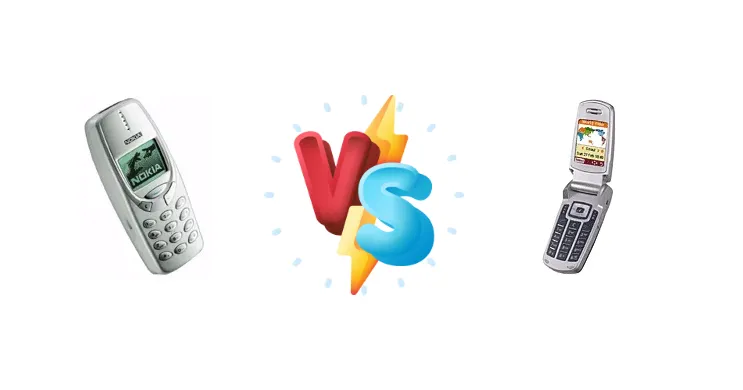
The Nokia 3310 and Samsung E700 represent a bygone era of mobile phones – a time before smartphones dominated our lives. While both devices prioritize simplicity and reliability, they approach the concept from different angles. The 3310 is legendary for its near-indestructible build, while the E700 aimed for a more stylish and feature-rich experience within the constraints of early 2000s technology. This comparison dissects their strengths and weaknesses, revealing which phone best embodies the spirit of the retro mobile experience.
🏆 Quick Verdict
For the average user seeking a truly durable and long-lasting phone, the Nokia 3310 emerges as the winner. Its reputation for resilience and exceptional battery life outweighs the Samsung E700’s slightly more refined aesthetics and limited additional features. The 3310 is a workhorse, while the E700 is a more delicate throwback.
| Network |
|---|
| 2G bands | GSM 900 / 1800 | GSM 900 / 1800 |
| EDGE | No | No |
| GPRS | No | Class 10 |
| Technology | GSM | GSM |
| Launch |
|---|
| Announced | 2000 | 2003, Q3 |
| Status | Discontinued | Discontinued |
| Body |
|---|
| Dimensions | 113 x 48 x 22 mm, 97 cc (4.45 x 1.89 x 0.87 in) | 90 x 45 x 23 mm (3.54 x 1.77 x 0.91 in) |
| SIM | Mini-SIM | Mini-SIM |
| Weight | 133 g (4.69 oz) | 85 g (3.00 oz) |
| Display |
|---|
| Resolution | 5 lines | 128 x 160 pixels, 6 lines |
| Type | Monochrome graphic | TFT, 65K colors |
| | - | Second external OLED, 256 colors ( 64 x 96 pixels )
Four way navigation keys
Wallpapers |
| Memory |
|---|
| Call records | 8 dialed, 8 received, 8 missed calls | 20 dialed, 20 received, 20 missed calls |
| Card slot | No | No |
| Phonebook | SIM only | 1000 x 6 fields |
| | - | 9 MB shared memory for pictures, MMS messages
600 Kb for Java apps
200 short messages |
| Main Camera |
|---|
| Single | - | VGA |
| Video | - | No |
| Sound |
|---|
| 3.5mm jack | - | No |
| 35mm jack | No | No |
| Alert types | Vibration; Downloadable monophonic ringtones | Vibration; Downloadable polyphonic ringtones |
| Loudspeaker | No | No |
| Comms |
|---|
| Bluetooth | No | No |
| Infrared port | - | Yes |
| Positioning | No | No |
| Radio | No | No |
| WLAN | No | No |
| Features |
|---|
| Alarm | Yes | - |
| Browser | - | WAP 2.0/xHTML |
| Clock | Yes | - |
| Games | 4 ( Snake II, Pairs II, Space Impact, Bantumi ) | 5 - Go!Hamster, Honey Ball, Bowling + Java |
| Java | No | Yes |
| Languages | 17 for menu, 11 for T9 | - |
| Messaging | SMS | SMS, EMS, MMS |
| | - | Predictive text input
Organizer
Stopwatch |
| Battery |
|---|
| Stand-by | 55 h to 245 h | Up to 230 h |
| Talk time | 2 h 30 min to 4 h 30 | Up to 3 h |
| Type | Removable NiMH 900 mAh battery (BMC-3) | Removable Li-Ion 780 mAh battery |
| Misc |
|---|
| Colors | User exchangeable front and back covers | Indigo Blue, Metallic Silver, Beaujolais Red, Pearl White |
| SAR EU | 0.96 W/kg (head) | 0.73 W/kg (head) |
Nokia 3310
- Exceptional durability and build quality
- Incredibly long battery life (weeks of standby)
- Simple and reliable operation
- Very basic features
- Small, low-resolution display
Samsung E700
- More stylish and refined design
- Slightly larger display
- Additional features like voice recording
- Less durable than the Nokia 3310
- Shorter battery life
Display Comparison
Given the era, both phones feature small, low-resolution displays. The Samsung E700 likely offered a marginally larger screen size than the Nokia 3310, potentially around 1.5 inches versus the 3310’s 1.5 inches, offering a slightly more comfortable viewing experience for text messages. However, neither display boasts any advanced features like color depth or brightness, focusing instead on legibility under typical lighting conditions. The E700’s attempt at a more polished aesthetic likely extended to a slightly more refined display assembly, but this doesn’t translate to a significant functional advantage.
Camera Comparison
Neither the Nokia 3310 nor the Samsung E700 featured a built-in camera. This was standard for feature phones of this generation. The absence of a camera contributes to their simplicity and focus on core communication functions. Any image capture would have required external accessories, which were not commonly used.
Performance
Performance is a relative term for these devices. Both the Nokia 3310 and Samsung E700 rely on basic chipsets designed for voice calls and SMS messaging. The Nokia 3310’s processor was optimized for extreme efficiency, contributing to its legendary battery life. The E700, while also efficient, likely dedicated a small amount of processing power to its additional features, such as voice recording and potentially basic games. Neither phone is capable of multitasking or running complex applications; their performance is limited by their hardware and software design.
Battery Life
The Nokia 3310’s battery life is its defining characteristic. Its efficient chipset and minimal features allowed for weeks of standby time and days of talk time on a single charge. The Samsung E700, with its slightly larger display and additional features, likely offered a shorter battery life, potentially measured in days rather than weeks. While the E700’s battery capacity might have been slightly higher in mAh, the 3310’s superior power management gives it a significant advantage in real-world usage.
Buying Guide
Buy the Nokia 3310 if you need a phone that can withstand significant abuse, prioritize weeks of standby time, and value simplicity above all else. It’s the ideal choice for construction workers, outdoor enthusiasts, or anyone who wants a reliable backup device. Buy the Samsung E700 if you prefer a more aesthetically pleasing design, appreciate a slightly larger display, and desire a few extra features like voice recording, even if it comes at the cost of ultimate durability and battery longevity.
Frequently Asked Questions
❓ Is the Nokia 3310 truly indestructible?
While not literally indestructible, the Nokia 3310 is renowned for its exceptional durability. Its robust construction and simple design make it highly resistant to drops, impacts, and general wear and tear, far exceeding the resilience of modern smartphones.
❓ Can I use the Samsung E700 as a primary phone in 2024?
Technically, yes, you can use the Samsung E700 for basic calls and texts. However, its limited features, shorter battery life, and lack of modern connectivity options make it impractical for most users accustomed to smartphones. It's best suited as a nostalgic novelty or a very basic backup device.
❓ Does the Samsung E700 support ringtones beyond the pre-installed options?
The Samsung E700 allowed for limited customization of ringtones, often through polyphonic sounds or by composing simple melodies using the phone's interface. However, it lacked support for MP3 or other modern audio formats.