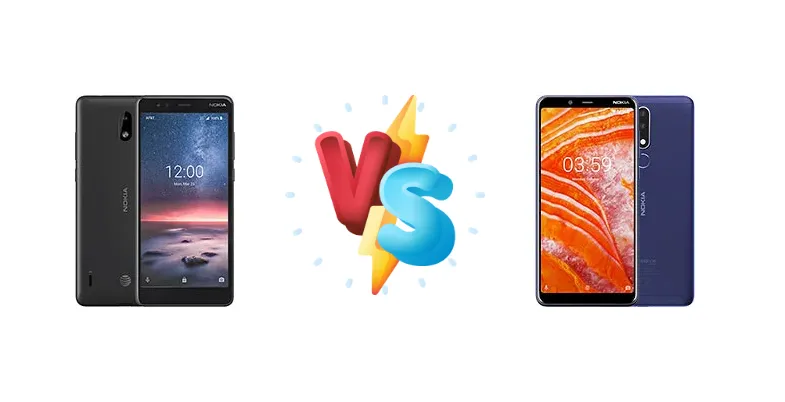
The Nokia 3.1 A and 3.1 Plus were both popular budget smartphones offering reliable performance and the classic Nokia build quality. But which one is the better choice for your needs? This comprehensive comparison dives deep into their specs, features, and overall value to help you decide.
🏆 Quick Verdict
The Nokia 3.1 Plus generally edges out the 3.1 A thanks to its octa-core processor and slightly improved performance. While both offer a solid budget experience, the Plus provides a noticeable boost in speed and responsiveness, making it the preferred choice for most users.
| Network |
|---|
| 2G bands | GSM 850 / 900 / 1800 / 1900 | GSM 850 / 900 / 1800 / 1900 |
| 3G bands | HSDPA 850 / 1700(AWS) / 1900 | HSDPA 850 / 900 / 1900 / 2100 |
| 4G bands | 2, 4, 5, 12, 14, 29, 30 | 2, 4, 5, 12, 14, 29, 30 - USA |
| Speed | HSPA 42.2/5.76 Mbps, LTE Cat4 150/50 Mbps | HSPA 42.2/5.76 Mbps, LTE Cat4 150/50 Mbps |
| Technology | GSM / HSPA / LTE | GSM / HSPA / LTE |
| | - | HSDPA 850 / 1700(AWS) / 1900 - USA |
| Launch |
|---|
| Announced | 2019, June. Released 2019, June | 2018, October. Released 2018, October |
| Status | Discontinued | Discontinued |
| Body |
|---|
| Build | - | Glass front, aluminum back, aluminum frame |
| Dimensions | 152.7 x 71.9 x 9.4 mm (6.01 x 2.83 x 0.37 in) | 156.9 x 76.4 x 8.2 mm (6.18 x 3.01 x 0.32 in) |
| SIM | Nano-SIM | Nano-SIM + Nano-SIM |
| Weight | 156 g (5.50 oz) | 180 g (6.35 oz) |
| Display |
|---|
| Resolution | 720 x 1440 pixels, 18:9 ratio (~295 ppi density) | 720 x 1440 pixels, 18:9 ratio (~268 ppi density) |
| Size | 5.45 inches, 76.7 cm2 (~69.8% screen-to-body ratio) | 6.0 inches, 92.9 cm2 (~77.5% screen-to-body ratio) |
| Type | IPS LCD | IPS LCD |
| Platform |
|---|
| CPU | Quad-core 1.8 GHz Cortex-A53 | Octa-core 2.0 GHz Cortex-A53 - GlobalOcta-core (4x1.95 GHz Cortex-A53 & 4x1.45 GHz Cortex A53) - USA |
| Chipset | Qualcomm SDM429 Snapdragon 429 (12 nm) | Mediatek MT6762 Helio P22 (12 nm) - GlobalQualcomm SDM439 Snapdragon 439 (12 nm) - USA |
| GPU | Adreno 504 | PowerVR GE8320 - GlobalAdreno 505 - USA |
| OS | Android 9.0 (Pie) | Android 8.1 (Oreo), upgradable to Android 10, Android One |
| Memory |
|---|
| Card slot | microSDXC (dedicated slot) | microSDXC (dedicated slot) |
| Internal | 32GB 2GB RAM | 16GB 2GB RAM, 32GB 2GB RAM, 32GB 3GB RAM |
| | eMMC 5.1 | eMMC 5.1 |
| Main Camera |
|---|
| Dual | - | 13 MP, f/2.0, AF
Auxiliary lens |
| Features | LED flash, HDR, panorama | LED flash, HDR, panorama |
| Single | 8 MP, f/2.0, AF | - |
| Video | 1080p@30fps | 1080p@30fps |
| Selfie camera |
|---|
| Features | HDR | LED flash, HDR |
| Single | 5 MP, f/2.2 | 8 MP, f/2.2 |
| Video | 720p@30fps | 720p@30fps |
| Sound |
|---|
| 3.5mm jack | Yes | Yes |
| 35mm jack | Yes | Yes |
| Loudspeaker | Yes | Yes |
| Comms |
|---|
| Bluetooth | 5.0, A2DP, LE | 4.1, A2DP, LE |
| NFC | No | Yes (USA, APAC & EMEA) |
| Positioning | GPS, GLONASS, BDS | GPS, GLONASS, BDS, GALILEO |
| Radio | FM radio | FM radio |
| USB | USB Type-C 2.0 | microUSB 2.0, OTG |
| WLAN | Wi-Fi 802.11 b/g/n | Wi-Fi 802.11 b/g/n, Wi-Fi Direct |
| Features |
|---|
| Sensors | Accelerometer, gyro, proximity | Fingerprint (rear-mounted), accelerometer, gyro, proximity, compass |
| Battery |
|---|
| Charging | 10W wired | 10W wired |
| Type | Li-Ion 2990 mAh, non-removable | Li-Ion 3500 mAh, non-removable |
| Misc |
|---|
| Colors | Black | Blue, White, Gray |
| Models | TA1140 | TA-1118, TA-1125, TA-1113, TA-1117, TA-1124, TA-1125 |
| Price | - | About 120 EUR |
| SAR | 1.11 W/kg (head) 0.81 W/kg (body) | - |
| SAR EU | - | 0.41 W/kg (head) 1.58 W/kg (body) |
Nokia 3.1 A
- Simple and user-friendly Android experience
- Reliable Nokia build quality
- Affordable price
- Less powerful processor
- Slower performance compared to the Plus
- Limited gaming capabilities
Nokia 3.1 Plus
- Faster octa-core processor
- Smoother performance
- Better multitasking
- Slightly improved camera processing
- Slightly higher price
- Still a budget phone with limitations
- 10W charging is slow
Display Comparison
Both phones feature a 6.26-inch HD+ (720 x 1520) IPS LCD display. While the resolution is the same, the 3.1 Plus might offer slightly better color accuracy due to potential panel variations. Viewing angles and brightness are comparable on both devices.
Camera Comparison
The Nokia 3.1 A and 3.1 Plus both feature a 13MP rear camera with autofocus and LED flash. Image quality is generally similar in good lighting conditions. Low-light performance is adequate on both, but not exceptional. The 3.1 Plus might have a slight edge in processing due to its more powerful chipset.
Performance
This is where the 3.1 Plus shines. Its octa-core MediaTek Helio P22 (or Snapdragon 439 in the USA) provides a significant performance advantage over the 3.1 A's quad-core Snapdragon 429. Expect smoother multitasking, faster app loading times, and better overall responsiveness on the Plus.
Battery Life
Both phones are equipped with a 3000mAh battery. Battery life is comparable, offering a full day of moderate usage. Charging speeds are identical at 10W wired.
Buying Guide
The Nokia 3.1 A is a good option for users prioritizing simplicity and a slightly lower price point. The Nokia 3.1 Plus is ideal for those seeking a smoother, more responsive experience for everyday tasks and light gaming, justifying the slightly higher cost.
Frequently Asked Questions
❓ What Android version did these phones ship with?
Both the Nokia 3.1 A and 3.1 Plus launched with Android 8.1 Oreo and were eligible for updates to Android 9 Pie.
❓ Is the Nokia 3.1 Plus worth the extra money?
Generally, yes. The performance boost from the octa-core processor makes a noticeable difference in everyday use, justifying the slightly higher price.