
Nio Phone vs OnePlus 11R: A Deep Dive into Snapdragon Generations
| Phones Images | |||||
|---|---|---|---|---|---|
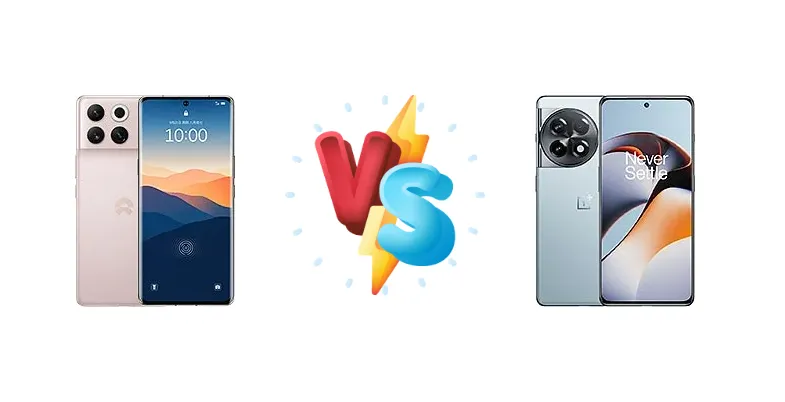
|
🏆 Quick Verdict
For users prioritizing raw performance and future-proofing, the Nio Phone’s Snapdragon 8 Gen 2 is the clear winner. However, the OnePlus 11R offers exceptional value with its 100W charging and still-potent Snapdragon 8+ Gen 1, making it ideal for budget-conscious gamers and power users.
| PHONES | ||
|---|---|---|
| Phone Names | Nio Phone | OnePlus 11R |
| Network | ||
|---|---|---|
| 2G bands | GSM 850 / 900 / 1800 / 1900 | GSM 850 / 900 / 1800 / 1900 |
| 3G bands | HSDPA 800 / 850 / 900 / 1700(AWS) / 1900 / 2100 | HSDPA 850 / 900 / 1700(AWS) / 2100 |
| 4G bands | 1, 2, 3, 4, 5, 7, 8, 12, 17, 18, 19, 20, 26, 28, 34, 38, 39, 40, 41 | 1, 3, 4, 5, 8, 28, 34, 38, 39, 40, 41 |
| 5G bands | 1, 3, 5, 8, 28, 41, 77, 78, 79 SA/NSA | 1, 3, 5, 8, 28, 40, 41, 77, 78 SA/NSA |
| Speed | HSPA, LTE, 5G | HSPA, LTE (3CA), 5G |
| Technology | GSM / CDMA / HSPA / CDMA2000 / LTE / 5G | GSM / CDMA / HSPA / LTE / 5G |
| - | CDMA 800 | |
| Launch | ||
|---|---|---|
| Announced | 2023, September 21 | 2023, February 07 |
| Status | Available. Released 2023, September 21 | Available. Released 2023, February 21 |
| Body | ||
|---|---|---|
| Build | - | Glass front, glass back (Gorilla Glass 5), plastic frame |
| Dimensions | 165.2 x 75.5 x 8.9 mm (6.50 x 2.97 x 0.35 in) | 163.4 x 74.3 x 8.7 mm (6.43 x 2.93 x 0.34 in) |
| SIM | Nano-SIM + Nano-SIM | Nano-SIM + Nano-SIM |
| Weight | 212 g or 216 g (7.48 oz) | 204 g (7.20 oz) |
| Display | ||
|---|---|---|
| Protection | Corning Gorilla Glass Victus | - |
| Resolution | 1440 x 3200 pixels, 20:9 ratio (~515 ppi density) | 1240 x 2772 pixels, 20:9 ratio (~451 ppi density) |
| Size | 6.81 inches, 112.0 cm2 (~89.8% screen-to-body ratio) | 6.74 inches, 109.2 cm2 (~90.0% screen-to-body ratio) |
| Type | LTPO AMOLED, 120Hz, HDR10+, 1800 nits (peak) | Fluid AMOLED, 1B colors, 120Hz, HDR10+, 1450 nits (peak) |
| Platform | ||
|---|---|---|
| CPU | Octa-core (1x3.36 GHz Cortex-X3 & 2x2.8 GHz Cortex-A715 & 2x2.8 GHz Cortex-A710 & 3x2.0 GHz Cortex-A510) | Octa-core (1x3.0 GHz Cortex-X2 & 3x2.5 GHz Cortex-A710 & 4x1.80 GHz Cortex-A510) |
| Chipset | Qualcomm SM8550-AC Snapdragon 8 Gen 2 (4 nm) | Qualcomm SM8475 Snapdragon 8+ Gen 1 (4 nm) |
| GPU | Adreno 740 | Adreno 730 |
| OS | SkyUI | Android 13, upgradable to Android 15, OxygenOS 15 |
| Memory | ||
|---|---|---|
| Card slot | No | No |
| Internal | 512GB 12GB RAM, 1TB 12GB RAM, 1TB 16GB RAM | 128GB 8GB RAM, 256GB 16GB RAM, 512GB 18GB RAM |
| - | UFS 3.1 | |
| Main Camera | ||
|---|---|---|
| Features | Ring-LED flash, HDR, panorama | Color spectrum sensor, LED flash, HDR, panorama |
| Single | - | 16 MP, f/2.4, 24mm (wide), 1/3.09", 1.0µm |
| Triple | 50 MP, f/1.9, 23mm (wide), 1/1.28", 1.22µm, PDAF, OIS 50 MP, f/2.6, 65mm (periscope telephoto), 1/1.56", 1.0µm, PDAF, OIS, 2.8x optical zoom 50 MP, f/2.4, 15mm, 110˚ (ultrawide), 1/1.56", 1.0µm | 50 MP, f/1.8, 24mm (wide), 1/1.56", 1.0µm, multi-directional PDAF, OIS 8 MP, f/2.2, 120˚ (ultrawide), 1/4.0", 1.12µm 2 MP (macro) |
| Video | 4K@24/30/60fps, 1080p@30/60/120fps, gyro-EIS, OIS | 4K@30/60fps, 1080p@30/60/240fps, gyro-EIS |
| Selfie camera | ||
|---|---|---|
| Features | - | HDR |
| Single | 12 MP, f/2.5, (wide) | 16 MP, f/2.4, 24mm (wide), 1/3.09", 1.0µm |
| Video | 4K@30/60fps, 1080p@30fps, gyro-EIS | 1080p@30fps |
| Sound | ||
|---|---|---|
| 3.5mm jack | - | No |
| 35mm jack | No | No |
| Loudspeaker | Yes | Yes, with stereo speakers |
| - | 24-bit/192kHz audio | |
| Comms | ||
|---|---|---|
| Bluetooth | 5.3, A2DP, LE, aptX HD, aptX Lossless | 5.3, A2DP, LE, aptX HD |
| Infrared port | Yes | Yes |
| NFC | Yes | Yes |
| Positioning | GPS (L1+L5), BDS (B1I+B1c+B2a), GALILEO (E1+E5a), QZSS (L1+L5), GLONASS | GPS (L1+L5), GLONASS (G1), BDS (B1I+B1c+B2a), GALILEO (E1+E5a), QZSS (L1+L5) |
| Radio | No | No |
| USB | USB Type-C, OTG | USB Type-C 2.0 |
| WLAN | Yes | Wi-Fi 802.11 a/b/g/n/ac/6, dual-band |
| Features | ||
|---|---|---|
| Sensors | Fingerprint (under display, optical), accelerometer, proximity, gyro, compass | Fingerprint (under display, optical), accelerometer, gyro, proximity, compass |
| Battery | ||
|---|---|---|
| Charging | 66W wired, PD3.0, QC4 50W wireless 10W reverse wireless | 100W wired |
| Type | Li-Po 5200 mAh | Li-Po 5000 mAh |
| Misc | ||
|---|---|---|
| Colors | Black, Gray, Pink, Gold, Green, Blue, Dark Blue | Galactic Silver, Sonic Black, Solar Red |
| Models | N2301 | CPH2487 |
| Price | About 820 EUR | About 600 EUR |
| SAR | - | 1.16 W/kg (head) 0.61 W/kg (body) |
Nio Phone
- Latest Snapdragon 8 Gen 2 chipset for top-tier performance
- 50W Wireless Charging and 10W Reverse Wireless Charging
- Potentially superior display quality and LTPO implementation
- Slower 66W wired charging compared to the OnePlus 11R
- Likely higher price point
OnePlus 11R
- Incredibly fast 100W wired charging
- Excellent value for money
- Still a very capable Snapdragon 8+ Gen 1 processor
- Older Snapdragon 8+ Gen 1 chipset
- No wireless charging support
Display Comparison
Both phones utilize 4nm chipsets, suggesting similar thermal profiles under sustained load. Display specifications are not provided, so a direct comparison is limited. However, given the Nio Phone’s positioning, it’s reasonable to expect a higher-quality panel with potentially higher peak brightness and a more sophisticated LTPO implementation for variable refresh rates, contributing to better battery life. The OnePlus 11R likely focuses on a high refresh rate for gaming, potentially at the expense of peak brightness.
Camera Comparison
Camera specifications are not provided, making a detailed comparison impossible. However, given the Nio Phone’s premium positioning, it’s likely to feature a more advanced camera system with a larger main sensor and more sophisticated image processing algorithms. The OnePlus 11R, while capable, likely prioritizes value, potentially utilizing a slightly older or smaller sensor. The absence of telephoto lens details on both phones suggests a focus on main and ultrawide cameras.
Performance
The Nio Phone’s Snapdragon 8 Gen 2 represents a significant architectural upgrade over the OnePlus 11R’s Snapdragon 8+ Gen 1. The Gen 2 features a new Cortex-X3 prime core clocked at 3.36 GHz, compared to the Gen 1’s Cortex-X2 at 3.0 GHz. This, combined with improvements to the Cortex-A715 and A710 cores, translates to a noticeable performance advantage in CPU-intensive tasks. While the 8+ Gen 1 remains a capable performer, the Gen 2’s superior efficiency also means less thermal throttling during extended gaming sessions. The Nio Phone will likely exhibit faster app loading times and smoother multitasking.
Battery Life
The OnePlus 11R’s 100W wired charging is a major advantage, allowing for a full charge in under 30 minutes. The Nio Phone offers 66W wired charging, which is still fast, but significantly slower. The Nio Phone compensates with 50W wireless charging and 10W reverse wireless charging, features absent on the OnePlus 11R. The actual battery life will depend on the mAh capacity of each device (not provided), but the OnePlus 11R’s faster charging mitigates the impact of a potentially smaller battery.
Buying Guide
Buy the Nio Phone if you demand the absolute best Android performance, benefit from advanced features enabled by the latest chipset, and value wireless charging capabilities. Buy the OnePlus 11R if you prioritize incredibly fast wired charging, a smooth gaming experience without breaking the bank, and are comfortable sacrificing the latest processor generation for significant cost savings.