
Nio Phone 2 vs Xiaomi 14 Pro: A Deep Dive into Flagship Android Performance
| Phones Images | |||||
|---|---|---|---|---|---|
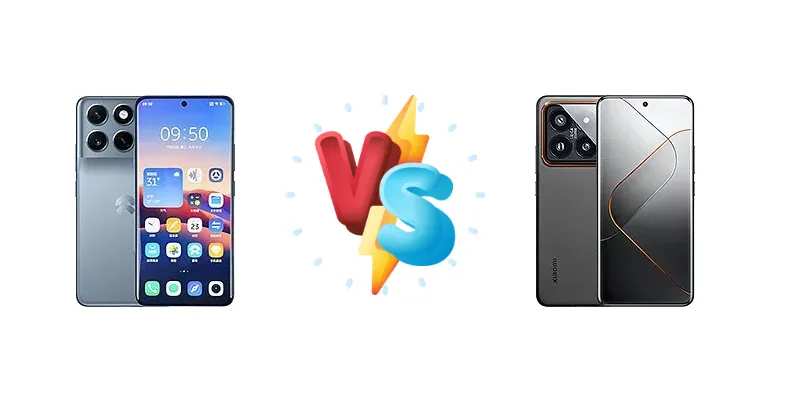
|
🏆 Quick Verdict
For the average user prioritizing raw charging speed and a slightly more refined software experience, the Xiaomi 14 Pro emerges as the winner. Its 120W wired charging significantly reduces downtime. However, Nio Phone 2 owners deeply invested in the Nio ecosystem will find compelling advantages in seamless integration.
| PHONES | ||
|---|---|---|
| Phone Names | Nio Phone 2 | Xiaomi 14 Pro |
| Network | ||
|---|---|---|
| 2G bands | GSM 850 / 900 / 1800 / 1900 | GSM 850 / 900 / 1800 / 1900 |
| 3G bands | HSDPA 800 / 850 / 900 / 1700(AWS) / 1900 / 2100 | HSDPA 800 / 850 / 900 / 1700(AWS) / 1900 / 2100 |
| 4G bands | 1, 2, 3, 4, 5, 7, 8, 12, 17, 18, 19, 20, 26, 28, 34, 38, 39, 40, 41, 42 | 1, 3, 4, 5, 7, 8, 18, 19, 26, 28, 34, 38, 39, 40, 41, 42, 48, 66 |
| 5G bands | 1, 3, 5, 7, 8, 20, 28, 38, 40, 41, 77, 78, 79 SA/NSA | 1, 3, 5, 7, 8, 28, 38, 40, 41, 48, 66, 77, 78, 79 SA/NSA |
| Speed | HSPA, LTE, 5G | HSPA, LTE, 5G |
| Technology | GSM / CDMA / HSPA / CDMA2000 / LTE / 5G | GSM / CDMA / HSPA / CDMA2000 / LTE / 5G |
| Launch | ||
|---|---|---|
| Announced | 2024, July 27 | 2023, October 26 |
| Status | Available. Released 2024, July 27 | Available. Released 2023, November 01 |
| Body | ||
|---|---|---|
| Build | - | Glass front, aluminum frame or titanium frame, glass back |
| Dimensions | 163.9 x 77.5 x 8.5 / 8.6 / 8.7 mm | 161.4 x 75.3 x 8.5 mm |
| SIM | Nano-SIM + Nano-SIM | Nano-SIM + Nano-SIM |
| Weight | 209 / 214 / 226 g (7.37 oz) | 223 g or 230 g (7.87 oz) |
| Display | ||
|---|---|---|
| Protection | Corning Gorilla Glass Victus 2 | Shatterproof glass |
| Resolution | 1440 x 3168 pixels (~510 ppi density) | 1440 x 3200 pixels, 20:9 ratio (~522 ppi density) |
| Size | 6.82 inches, 113.0 cm2 (~89.0% screen-to-body ratio) | 6.73 inches, 108.9 cm2 (~89.6% screen-to-body ratio) |
| Type | LTPO AMOLED, 1B colors, 120Hz, HDR10+, 2600 nits (peak) | LTPO AMOLED, 68B colors, 120Hz, Dolby Vision, HDR10+, 3000 nits (peak) |
| Platform | ||
|---|---|---|
| CPU | Octa-core (1x3.3 GHz Cortex-X4 & 3x3.2 GHz Cortex-A720 & 2x3.0 GHz Cortex-A720 & 2x2.3 GHz Cortex-A520) | Octa-core (1x3.3 GHz Cortex-X4 & 3x3.2 GHz Cortex-A720 & 2x3.0 GHz Cortex-A720 & 2x2.3 GHz Cortex-A520) |
| Chipset | Qualcomm SM8650-AB Snapdragon 8 Gen 3 (4 nm) | Qualcomm SM8650-AB Snapdragon 8 Gen 3 (4 nm) |
| GPU | Adreno 750 | Adreno 750 |
| OS | SkyUI 2.0 | Android 14, HyperOS |
| Memory | ||
|---|---|---|
| Card slot | No | No |
| Internal | 512GB 12GB RAM, 1TB 12GB RAM, 1TB 16GB RAM | 256GB 12GB RAM, 512GB 16GB RAM, 1TB 16GB RAM |
| Main Camera | ||
|---|---|---|
| Features | Laser AF, Ring-LED flash, HDR, panorama | Laser AF, color spectrum sensor, Leica lens, Dual-LED dual-tone flash, HDR, panorama |
| Triple | 48 MP, f/1.8, 25mm (wide), 1/1.43", 1.12µm, multi-directional PDAF, OIS 50 MP, f/2.6, 65mm (periscope telephoto), 1/1.56", 1.0µm, PDAF, OIS, 2.6x optical zoom 48 MP, f/2.3, 14mm, 114˚ (ultrawide), 1/1.95", 0.8µm, PDAF | 50 MP, f/1.4-f/4.0, 23mm (wide), 1/1.31", 1.2µm, dual pixel PDAF, OIS 50 MP, f/2.0, 75mm (telephoto), PDAF (10cm - ∞), OIS, 3.2x optical zoom 50 MP, f/2.2, 14mm, 115˚ (ultrawide), AF |
| Video | 4K@30/60fps, 1080p@30/60/120/240fps, gyro-EIS, OIS, HDR10+ | 8K@24fps (HDR), 4K@24/30/60fps (HDR10+, 10-bit Dolby Vision HDR, 10-bit LOG), 1080p@30/60/120/240/960fps, 720p@1920fps, gyro-EIS |
| Selfie camera | ||
|---|---|---|
| Features | - | HDR, panorama |
| Single | 12 MP, f/2.5, (wide) | 32 MP, f/2.0, 22mm (wide), 0.7µm |
| Video | 4K@30/60fps, 1080p@30fps, gyro-EIS | 4K@30/60fps, 1080p@30/60fps, gyro-EIS |
| Sound | ||
|---|---|---|
| 35mm jack | No | No |
| Loudspeaker | Yes | Yes, with stereo speakers |
| Comms | ||
|---|---|---|
| Bluetooth | 5.3, A2DP, LE, aptX HD, aptX Lossless | 5.4, A2DP, LE, aptX HD, aptX Adaptive |
| Infrared port | Yes | Yes |
| NFC | Yes | Yes |
| Positioning | GPS (L1+L5), BDS (B1I+B1c+B2a), GALILEO (E1+E5a), QZSS (L1+L5), GLONASS | GPS (L1+L5), GLONASS (G1), BDS (B1I+B1c+B2a), GALILEO (E1+E5a), QZSS (L1+L5), NavIC (L5) |
| Radio | No | No |
| USB | USB Type-C 3.2, DisplayPort 1.2, OTG | USB Type-C 3.2 Gen 2, OTG |
| WLAN | Wi-Fi 802.11 a/b/g/n/ac/6/7, dual-band | Wi-Fi 802.11 a/b/g/n/ac/6e/7, dual-band, Wi-Fi Direct |
| Features | ||
|---|---|---|
| Sensors | Fingerprint (under display, optical), accelerometer, proximity, gyro, compass, barometer | Fingerprint (under display, optical), accelerometer, proximity, gyro, compass, barometer |
| Battery | ||
|---|---|---|
| Charging | 80W wired, PD3.0, QC4 50W wireless 10W reverse wireless | 120W wired, PD3.0, QC4, 100% in 18 min 50W wireless, 100% in 40 min 10W reverse wireless |
| Type | Li-Po 5020 mAh | Li-Po 4880 mAh |
| Misc | ||
|---|---|---|
| Colors | Space Blue, Moonlight Silver, Pine Green, Golden Sand, Nebula Red, EPedition | Black, Silver, Titanium, Green |
| Models | N2301 | 23116PN5BC |
| Price | About 820 EUR | About 650 EUR |
Nio Phone 2
- Seamless integration with Nio car ecosystem.
- 80W wired and 50W wireless charging offer respectable speeds.
- Powered by the latest Snapdragon 8 Gen 3 for top-tier performance.
- Slower wired charging compared to Xiaomi 14 Pro.
- Camera specifications are currently unknown, potentially lagging behind competitors.
Xiaomi 14 Pro
- Industry-leading 120W wired charging for incredibly fast top-ups.
- 50W wireless charging provides convenient power replenishment.
- Likely features a highly capable camera system based on Xiaomi's reputation.
- Lacks the ecosystem integration benefits of the Nio Phone 2.
- Potential for software bloat, a common characteristic of Xiaomi's MIUI.
Display Comparison
Both devices utilize the Qualcomm SM8650-AB Snapdragon 8 Gen 3, meaning display performance will be largely dictated by panel quality and calibration. While specific display specs (resolution, refresh rate, peak brightness) are not provided, the focus shifts to charging. The absence of display details suggests both manufacturers are aiming for a competitive, high-end experience, likely with LTPO technology for adaptive refresh rates. Bezels are expected to be minimal on both, reflecting current flagship trends.
Camera Comparison
Without detailed camera specifications, a direct comparison is limited. However, Xiaomi is known for its camera prowess, and the 14 Pro likely features a sophisticated multi-camera system with a large primary sensor and advanced image processing algorithms. The Nio Phone 2’s camera capabilities are less well-defined, potentially focusing on integration with Nio’s automotive features (e.g., dashcam functionality). The absence of information on sensor sizes and lens apertures suggests both manufacturers are prioritizing other features.
Performance
The core performance is identical: both the Nio Phone 2 and Xiaomi 14 Pro are equipped with the Qualcomm SM8650-AB Snapdragon 8 Gen 3 (4nm). The CPU configuration – Octa-core (1x3.3 GHz Cortex-X4 & 3x3.2 GHz Cortex-A720 & 2x3.0 GHz Cortex-A720 & 2x2.3 GHz Cortex-A520) – is also identical. This means CPU-bound tasks will perform similarly. Thermal management will be the differentiating factor, and without testing data, it’s difficult to predict which device will sustain peak performance for longer. The 4nm process node contributes to improved thermal efficiency compared to previous generations, mitigating throttling during extended gaming sessions.
Battery Life
The charging capabilities are a key differentiator. The Xiaomi 14 Pro boasts 120W wired charging, promising a full charge in just 18 minutes, a significant advantage for users who prioritize minimizing downtime. The Nio Phone 2 offers 80W wired charging, which is still fast but considerably slower. Both support 50W wireless charging, with the Xiaomi 14 Pro taking 40 minutes for a full wireless charge. Both also include 10W reverse wireless charging. The faster wired charging of the Xiaomi 14 Pro is a clear win for users constantly on the go.
Buying Guide
Buy the Nio Phone 2 if you are already a Nio car owner and value the seamless integration with your vehicle, including features like keyless entry and remote control. Buy the Xiaomi 14 Pro if you prioritize the fastest possible charging speeds, a versatile camera system, and a broader, more established software ecosystem with frequent updates.