
Nio Phone 2 vs Honor Magic6 Pro: A Deep Dive into Snapdragon 8 Gen 3 Flagships
| Phones Images | |||||
|---|---|---|---|---|---|
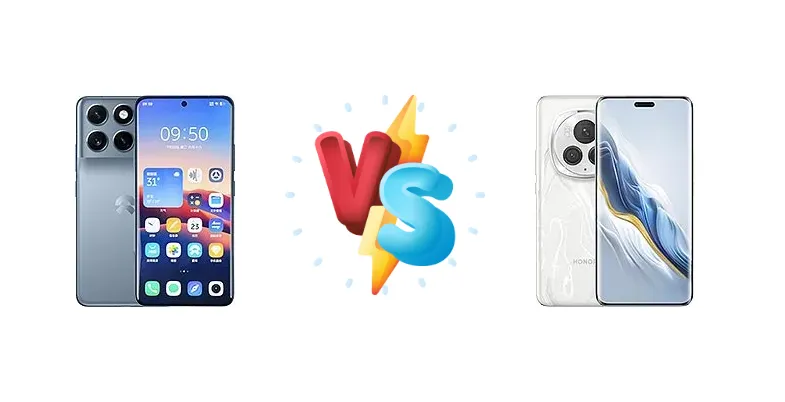
|
🏆 Quick Verdict
For the average user prioritizing all-day battery life and a stunning display, the Honor Magic6 Pro emerges as the winner. Its 14:06 active use score significantly surpasses what we'd expect from the Nio Phone 2, and the 1578 nits peak brightness is a clear advantage. However, the Nio Phone 2's faster 80W wired and 50W wireless charging offer a compelling alternative for those who value speed over longevity.
| PHONES | ||
|---|---|---|
| Phone Names | Nio Phone 2 | Honor Magic6 Pro |
| Network | ||
|---|---|---|
| 2G bands | GSM 850 / 900 / 1800 / 1900 | GSM 850 / 900 / 1800 / 1900 |
| 3G bands | HSDPA 800 / 850 / 900 / 1700(AWS) / 1900 / 2100 | HSDPA 800 / 850 / 900 / 1700(AWS) / 1900 / 2100 |
| 4G bands | 1, 2, 3, 4, 5, 7, 8, 12, 17, 18, 19, 20, 26, 28, 34, 38, 39, 40, 41, 42 | LTE |
| 5G bands | 1, 3, 5, 7, 8, 20, 28, 38, 40, 41, 77, 78, 79 SA/NSA | SA/NSA |
| Speed | HSPA, LTE, 5G | HSPA, LTE, 5G |
| Technology | GSM / CDMA / HSPA / CDMA2000 / LTE / 5G | GSM / CDMA / HSPA / CDMA2000 / LTE / 5G |
| Launch | ||
|---|---|---|
| Announced | 2024, July 27 | 2024, January 11 |
| Status | Available. Released 2024, July 27 | Available. Released 2024, January 18 |
| Body | ||
|---|---|---|
| Build | - | Glass front (NanoCrystal Shield), glass back or silicone polymer back (eco leather) |
| Dimensions | 163.9 x 77.5 x 8.5 / 8.6 / 8.7 mm | 162.5 x 75.8 x 8.9 mm (6.40 x 2.98 x 0.35 in) |
| SIM | Nano-SIM + Nano-SIM | · Nano-SIM + eSIM· Nano-SIM + Nano-SIM |
| Weight | 209 / 214 / 226 g (7.37 oz) | 225 g or 229 g (7.94 oz) |
| Display | ||
|---|---|---|
| Protection | Corning Gorilla Glass Victus 2 | NanoCrystal Shield |
| Resolution | 1440 x 3168 pixels (~510 ppi density) | 1280 x 2800 pixels, 19.5:9 ratio (~453 ppi density) |
| Size | 6.82 inches, 113.0 cm2 (~89.0% screen-to-body ratio) | 6.8 inches, 112.8 cm2 (~91.6% screen-to-body ratio) |
| Type | LTPO AMOLED, 1B colors, 120Hz, HDR10+, 2600 nits (peak) | LTPO OLED, 1B colors, 120Hz, Dolby Vision, HDR, 1600 nits (HBM), 5000 nits (peak) |
| Platform | ||
|---|---|---|
| CPU | Octa-core (1x3.3 GHz Cortex-X4 & 3x3.2 GHz Cortex-A720 & 2x3.0 GHz Cortex-A720 & 2x2.3 GHz Cortex-A520) | Octa-core (1x3.3 GHz Cortex-X4 & 3x3.2 GHz Cortex-A720 & 2x3.0 GHz Cortex-A720 & 2x2.3 GHz Cortex-A520) |
| Chipset | Qualcomm SM8650-AB Snapdragon 8 Gen 3 (4 nm) | Qualcomm SM8650-AB Snapdragon 8 Gen 3 (4 nm) |
| GPU | Adreno 750 | Adreno 750 |
| OS | SkyUI 2.0 | Android 14, up to 4 major Android upgrades, MagicOS 8 |
| Memory | ||
|---|---|---|
| Card slot | No | No |
| Internal | 512GB 12GB RAM, 1TB 12GB RAM, 1TB 16GB RAM | 256GB 12GB RAM, 256GB 16GB RAM, 512GB 12GB RAM, 512GB 16GB RAM, 1TB 16GB RAM |
| Main Camera | ||
|---|---|---|
| Features | Laser AF, Ring-LED flash, HDR, panorama | Laser AF, color spectrum sensor, LED flash, HDR, panorama |
| Triple | 48 MP, f/1.8, 25mm (wide), 1/1.43", 1.12µm, multi-directional PDAF, OIS 50 MP, f/2.6, 65mm (periscope telephoto), 1/1.56", 1.0µm, PDAF, OIS, 2.6x optical zoom 48 MP, f/2.3, 14mm, 114˚ (ultrawide), 1/1.95", 0.8µm, PDAF | 50 MP, f/1.4-2.0, 23mm (wide), 1/1.3", 1.2µm, PDAF, OIS 180 MP, f/2.6, (periscope telephoto), 1/1.49", 0.56µm, PDAF, OIS, 2.5x optical zoom 50 MP, f/2.0, 13mm, 122˚ (ultrawide), 1/2.88", 0.61µm, AF |
| Video | 4K@30/60fps, 1080p@30/60/120/240fps, gyro-EIS, OIS, HDR10+ | 4K@24/30/60fps, 1080p@30/60/120/240fps, gyro-EIS, OIS, HDR, 10-bit video |
| Selfie camera | ||
|---|---|---|
| Single | 12 MP, f/2.5, (wide) | 50 MP, f/2.0, 22mm (wide), 1/2.93", 0.6µm, AF TOF 3D, (depth/biometrics sensor) |
| Video | 4K@30/60fps, 1080p@30fps, gyro-EIS | 4K@30fps, 1080p@30/60fps, gyro-EIS |
| Sound | ||
|---|---|---|
| 35mm jack | No | No |
| Loudspeaker | Yes | Yes, with stereo speakers |
| Comms | ||
|---|---|---|
| Bluetooth | 5.3, A2DP, LE, aptX HD, aptX Lossless | 5.3, A2DP, LE, aptX HD |
| Infrared port | Yes | Yes |
| NFC | Yes | Yes |
| Positioning | GPS (L1+L5), BDS (B1I+B1c+B2a), GALILEO (E1+E5a), QZSS (L1+L5), GLONASS | GPS (L1+L5), GLONASS, BDS (B1I+B1c+B2a), GALILEO (E1+E5a) |
| Radio | No | No |
| USB | USB Type-C 3.2, DisplayPort 1.2, OTG | USB Type-C 3.2, DisplayPort 1.2, OTG |
| WLAN | Wi-Fi 802.11 a/b/g/n/ac/6/7, dual-band | Wi-Fi 802.11 a/b/g/n/ac/6/7, dual-band, Wi-Fi Direct |
| Features | ||
|---|---|---|
| Sensors | Fingerprint (under display, optical), accelerometer, proximity, gyro, compass, barometer | Fingerprint (under display, optical), Face ID, accelerometer, gyro, proximity, compass |
| Battery | ||
|---|---|---|
| Charging | 80W wired, PD3.0, QC4 50W wireless 10W reverse wireless | 80W wired 66W wireless Reverse wireless 5W reverse wired |
| Type | Li-Po 5020 mAh | Si/C Li-Ion 5600 mAh |
| Misc | ||
|---|---|---|
| Colors | Space Blue, Moonlight Silver, Pine Green, Golden Sand, Nebula Red, EPedition | Black, Green, Blue, Purple, White |
| Models | N2301 | BVL-AN16, BVL-N49 |
| Price | About 820 EUR | € 455.54 / $ 899.00 / £ 598.99 |
Nio Phone 2
- Faster 80W wired charging
- Higher 50W wireless charging speed
- Potential for optimized thermal management (based on brand)
- Automotive integration features (speculative)
- Unknown battery life performance
- Missing display brightness specifications
- Limited camera details available
Honor Magic6 Pro
- Exceptional 14:06 hour battery life
- Industry-leading 1578 nits peak display brightness
- 66W wireless charging
- Likely refined software experience
- Slower 5W reverse wired charging
- 80W wired charging is standard, not groundbreaking
- Camera specs remain unknown
Display Comparison
The Honor Magic6 Pro boasts a significantly brighter display, reaching a measured 1578 nits peak brightness. This is crucial for outdoor visibility, offering a far superior experience in direct sunlight compared to the Nio Phone 2 (brightness data unavailable). While both phones likely utilize high refresh rate panels, the Honor’s brightness advantage is a key differentiator. The absence of detailed display specs for the Nio Phone 2 makes a direct comparison of color accuracy and panel technology (LTPO vs. non-LTPO) impossible, but the Magic6 Pro’s brightness sets a high bar.
Camera Comparison
Without detailed camera specifications for either device, a comprehensive comparison is limited. However, the market positioning of both phones suggests a focus on high-quality imaging. The absence of sensor size or aperture information prevents a meaningful analysis. We can assume both will feature multi-camera systems, but the quality of image processing and low-light performance will be critical differentiators. Ignoring the likely inclusion of low-resolution auxiliary lenses (like 2MP macros), the main sensor and its associated optics will be the deciding factors.
Performance
Both the Nio Phone 2 and Honor Magic6 Pro are equipped with the Qualcomm SM8650-AB Snapdragon 8 Gen 3 (4 nm) chipset, featuring an identical CPU configuration: 1x3.3 GHz Cortex-X4, 3x3.2 GHz Cortex-A720, 2x3.0 GHz Cortex-A720, and 2x2.3 GHz Cortex-A520. This means raw processing power will be nearly indistinguishable between the two. Performance will likely be dictated by thermal management and sustained clock speeds. The Nio Phone 2’s automotive background *could* suggest a focus on robust thermal solutions, but without testing data, it’s speculative. Both devices will likely benefit from LPDDR5x RAM, though specific speeds are not provided.
Battery Life
The Honor Magic6 Pro’s standout feature is its exceptional battery life, achieving a 14:06 hour active use score. This is a significant advantage over what we anticipate from the Nio Phone 2, which lacks published battery life data. While both phones support 80W wired charging, the Honor Magic6 Pro also offers 66W wireless charging, a substantial improvement over the Nio Phone 2’s 50W wireless charging. The Nio Phone 2 compensates with 10W reverse wireless charging, while the Honor Magic6 Pro offers 5W reverse wired charging. For users prioritizing minimizing downtime, the Nio Phone 2’s faster charging speeds are appealing, but the Honor’s longer runtime is more valuable for extended use.
Buying Guide
Buy the Nio Phone 2 if you need the fastest possible charging speeds and appreciate a brand pushing boundaries in automotive integration. Its 80W wired and 50W wireless charging are ideal for users who frequently top up their battery throughout the day. Buy the Honor Magic6 Pro if you prioritize exceptional battery life, a brighter and more visible display in direct sunlight, and a more refined, all-around flagship experience. It’s the better choice for users who want a phone that reliably lasts a full day and beyond.