
Nio Phone 2 vs Asus ROG Phone 8 Pro: A Head-to-Head Comparison of Flagship Power
| Phones Images | |||||
|---|---|---|---|---|---|
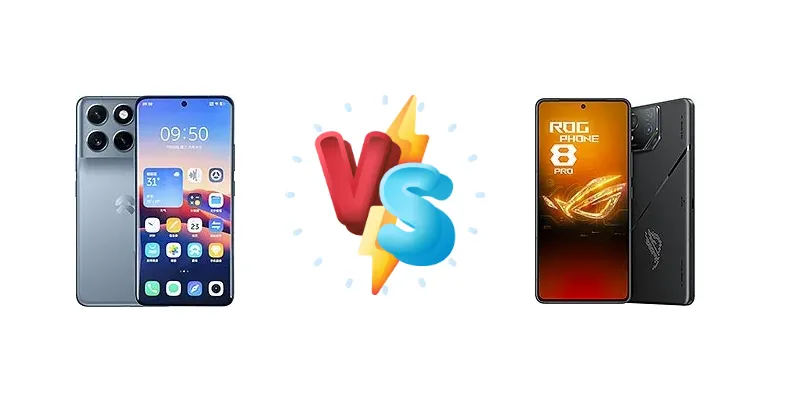
|
🏆 Quick Verdict
For the average user prioritizing all-around performance and exceptionally fast charging, the Nio Phone 2 emerges as the winner. Its 80W wired and 50W wireless charging capabilities significantly outperform the ROG Phone 8 Pro, while offering comparable processing power. However, gamers will appreciate the ROG Phone 8 Pro's optimized software and potentially better sustained performance.
| PHONES | ||
|---|---|---|
| Phone Names | Nio Phone 2 | Asus ROG Phone 8 Pro |
| Network | ||
|---|---|---|
| 2G bands | GSM 850 / 900 / 1800 / 1900 | GSM 850 / 900 / 1800 / 1900 |
| 3G bands | HSDPA 800 / 850 / 900 / 1700(AWS) / 1900 / 2100 | HSDPA 850 / 900 / 1700(AWS) / 1800 / 1900 / 2100 - International |
| 4G bands | 1, 2, 3, 4, 5, 7, 8, 12, 17, 18, 19, 20, 26, 28, 34, 38, 39, 40, 41, 42 | 1, 2, 3, 4, 5, 7, 8, 12, 17, 18, 19, 20, 25, 26, 28, 32, 34, 38, 39, 40, 41, 42, 43, 48, 66 - International |
| 5G bands | 1, 3, 5, 7, 8, 20, 28, 38, 40, 41, 77, 78, 79 SA/NSA | 1, 2, 3, 5, 7, 8, 12, 18, 20, 25, 26, 28, 38, 40, 41, 48, 66, 77, 78, 79 SA/NSA/Sub6 - International |
| Speed | HSPA, LTE, 5G | HSPA, LTE (Up to 7CA), 5G |
| Technology | GSM / CDMA / HSPA / CDMA2000 / LTE / 5G | GSM / CDMA / HSPA / LTE / 5G |
| Launch | ||
|---|---|---|
| Announced | 2024, July 27 | 2024, January 08 |
| Status | Available. Released 2024, July 27 | Available. Released 2024, January 18 |
| Body | ||
|---|---|---|
| Build | - | Glass front (Gorilla Glass Victus 2), glass back (Gorilla Glass), aluminum frame |
| Dimensions | 163.9 x 77.5 x 8.5 / 8.6 / 8.7 mm | 163.8 x 76.8 x 8.9 mm (6.45 x 3.02 x 0.35 in) |
| SIM | Nano-SIM + Nano-SIM | Nano-SIM + Nano-SIM |
| Weight | 209 / 214 / 226 g (7.37 oz) | 225 g (7.94 oz) |
| Display | ||
|---|---|---|
| Protection | Corning Gorilla Glass Victus 2 | Corning Gorilla Glass Victus 2 |
| Resolution | 1440 x 3168 pixels (~510 ppi density) | 1080 x 2400 pixels, 20:9 ratio (~388 ppi density) |
| Size | 6.82 inches, 113.0 cm2 (~89.0% screen-to-body ratio) | 6.78 inches, 111.0 cm2 (~88.2% screen-to-body ratio) |
| Type | LTPO AMOLED, 1B colors, 120Hz, HDR10+, 2600 nits (peak) | LTPO AMOLED, 1B colors, 165Hz, HDR10, 1600 nits (HBM), 2500 nits (peak) |
| Platform | ||
|---|---|---|
| CPU | Octa-core (1x3.3 GHz Cortex-X4 & 3x3.2 GHz Cortex-A720 & 2x3.0 GHz Cortex-A720 & 2x2.3 GHz Cortex-A520) | Octa-core (1x3.3 GHz Cortex-X4 & 3x3.2 GHz Cortex-A720 & 2x3.0 GHz Cortex-A720 & 2x2.3 GHz Cortex-A520) |
| Chipset | Qualcomm SM8650-AB Snapdragon 8 Gen 3 (4 nm) | Qualcomm SM8650-AB Snapdragon 8 Gen 3 (4 nm) |
| GPU | Adreno 750 | Adreno 750 |
| OS | SkyUI 2.0 | Android 14, up to 2 major Android upgrades |
| Memory | ||
|---|---|---|
| Card slot | No | No |
| Internal | 512GB 12GB RAM, 1TB 12GB RAM, 1TB 16GB RAM | 512GB 16GB RAM, 1TB 24GB RAM |
| Main Camera | ||
|---|---|---|
| Features | Laser AF, Ring-LED flash, HDR, panorama | LED flash, HDR, panorama |
| Triple | 48 MP, f/1.8, 25mm (wide), 1/1.43", 1.12µm, multi-directional PDAF, OIS 50 MP, f/2.6, 65mm (periscope telephoto), 1/1.56", 1.0µm, PDAF, OIS, 2.6x optical zoom 48 MP, f/2.3, 14mm, 114˚ (ultrawide), 1/1.95", 0.8µm, PDAF | 50 MP, f/1.9, 24mm (wide), 1/1.56", 1.0µm, PDAF, gimbal OIS 32 MP, f/2.4, (telephoto), 1/3.2", 0.7µm, PDAF, OIS, 3x optical zoom 13 MP, f/2.2, 13mm, 120˚ (ultrawide) |
| Video | 4K@30/60fps, 1080p@30/60/120/240fps, gyro-EIS, OIS, HDR10+ | 8K@24fps, 4K@30/60fps, 1080p@30/60/120/240fps, 720p@480fps; gyro-EIS, HDR10+ |
| Selfie camera | ||
|---|---|---|
| Features | - | Panorama, HDR |
| Single | 12 MP, f/2.5, (wide) | 32 MP, f/2.5, 22mm (wide), 1/3.2", 0.7µm |
| Video | 4K@30/60fps, 1080p@30fps, gyro-EIS | 1080p@30fps |
| Sound | ||
|---|---|---|
| 35mm jack | No | Yes |
| Loudspeaker | Yes | Yes, with stereo speakers |
| Comms | ||
|---|---|---|
| Bluetooth | 5.3, A2DP, LE, aptX HD, aptX Lossless | 5.4, A2DP, LE, aptX HD, aptX Adaptive, aptX Lossless |
| Infrared port | Yes | - |
| NFC | Yes | Yes |
| Positioning | GPS (L1+L5), BDS (B1I+B1c+B2a), GALILEO (E1+E5a), QZSS (L1+L5), GLONASS | GPS (L1+L5), BDS (B1I+B1c+B2a), GALILEO (E1+E5a), QZSS (L1+L5), NavIC (L5), GLONASS |
| Radio | No | No |
| USB | USB Type-C 3.2, DisplayPort 1.2, OTG | USB Type-C (side), DisplayPort 1.4; USB Type-C (bottom), OTG |
| WLAN | Wi-Fi 802.11 a/b/g/n/ac/6/7, dual-band | Wi-Fi 802.11 a/b/g/n/ac/6e/7, tri-band, Wi-Fi Direct |
| Features | ||
|---|---|---|
| Sensors | Fingerprint (under display, optical), accelerometer, proximity, gyro, compass, barometer | Fingerprint (under display, optical), accelerometer, gyro, proximity, compass |
| Battery | ||
|---|---|---|
| Charging | 80W wired, PD3.0, QC4 50W wireless 10W reverse wireless | 65W wired, PD3.0, PPS, QC5, 100% in 39 min - International 30W wired, PD3.0, PPS - India 15W wireless (Qi) 10W reverse wired |
| Type | Li-Po 5020 mAh | 5500 mAh |
| Misc | ||
|---|---|---|
| Colors | Space Blue, Moonlight Silver, Pine Green, Golden Sand, Nebula Red, EPedition | Phantom Black |
| Models | N2301 | AI2401, AI2401_A, AI2401_D |
| Price | About 820 EUR | $ 1,157.98 / £ 1,693.75 / € 632.66 |
Nio Phone 2
- Significantly faster wired and wireless charging (80W/50W)
- Potentially more convenient due to rapid charging
- Snapdragon 8 Gen 3 provides top-tier performance
- Battery capacity and active use time are unknown
- Camera specifications are not available for comparison
Asus ROG Phone 8 Pro
- Longer active use battery life (14:43h)
- Brighter display (1765 nits) for outdoor visibility
- Optimized thermal management for sustained gaming
- Slower charging speeds compared to Nio Phone 2
- Camera details are limited, suggesting it's not a primary focus
Display Comparison
The Asus ROG Phone 8 Pro boasts a significantly brighter display, reaching a measured peak of 1765 nits, making it more visible outdoors under direct sunlight. While the Nio Phone 2’s display specifications are not provided, the ROG Phone 8 Pro’s brightness advantage is substantial. Both devices likely utilize AMOLED panels, but the ROG Phone 8 Pro’s higher brightness and potential for a higher refresh rate (based on ROG Phone tradition) give it an edge for multimedia consumption and gaming. The ROG Phone 8 Pro’s display is also likely to feature advanced features like LTPO for adaptive refresh rates, improving power efficiency.
Camera Comparison
Camera details for the Nio Phone 2 are absent, making a direct comparison difficult. The Asus ROG Phone 8 Pro’s camera capabilities are described as 'Photo / Video,' lacking specific sensor details. Given the ROG Phone’s gaming focus, it’s reasonable to assume the camera system is competent but not a primary selling point. Without knowing the Nio Phone 2’s sensor size, aperture, or image processing algorithms, it’s impossible to determine a clear winner. However, the ROG Phone 8 Pro’s inclusion of OIS (Optical Image Stabilization) is a likely advantage for video recording and low-light photography.
Performance
Both the Nio Phone 2 and Asus ROG Phone 8 Pro are equipped with the Qualcomm SM8650-AB Snapdragon 8 Gen 3 (4 nm) chipset, featuring the same CPU configuration: 1x3.3 GHz Cortex-X4, 3x3.2 GHz Cortex-A720, 2x3.0 GHz Cortex-A720, and 2x2.3 GHz Cortex-A520. This means raw processing power will be nearly identical. However, the ROG Phone 8 Pro benefits from Asus’s extensive thermal management system, including vapor chamber cooling, which is designed to prevent throttling during extended gaming sessions. While the Nio Phone 2’s thermal solution isn’t detailed, the ROG Phone 8 Pro’s dedicated gaming focus suggests superior sustained performance under heavy load. Both devices likely utilize LPDDR5x RAM, further contributing to fast application loading and multitasking.
Battery Life
The Asus ROG Phone 8 Pro demonstrates a clear advantage in battery endurance, achieving 14 hours and 43 minutes of active use. The Nio Phone 2’s battery capacity is not specified, but its charging capabilities are a standout feature. The Nio Phone 2 supports 80W wired charging, 50W wireless charging, and 10W reverse wireless charging, significantly outpacing the ROG Phone 8 Pro’s 65W wired (International), 30W wired (India), 15W wireless (Qi), and 10W reverse wired. The Nio Phone 2 can fully charge in a shorter timeframe, potentially mitigating any capacity disadvantage. The ROG Phone 8 Pro’s longer active use score suggests better power efficiency, but the Nio Phone 2’s faster charging offers a different kind of convenience.
Buying Guide
Buy the Nio Phone 2 if you need blazing-fast charging speeds, both wired and wireless, and a balanced flagship experience. It’s ideal for users who frequently top up their phones and value convenience. Buy the Asus ROG Phone 8 Pro if you prioritize a dedicated gaming experience, potentially longer battery life during active use, and are willing to trade some charging speed for optimized gaming features and software.