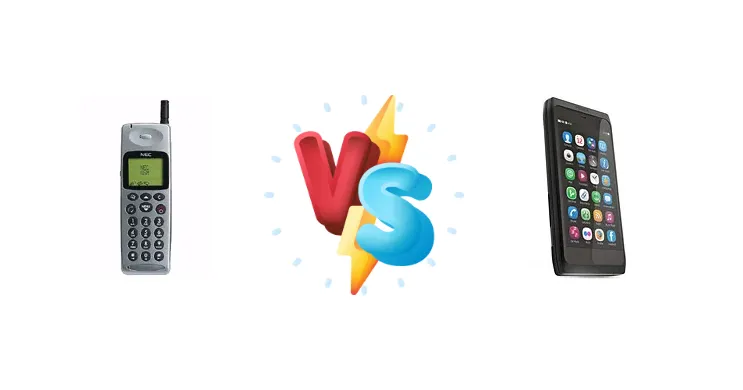
The NEC G9D+ and Nokia N950 represent distinct approaches to early smartphone development. The N950, powered by Texas Instruments' OMAP 3630, showcased the potential of the MeeGo OS, while the NEC G9D+ remains a more enigmatic device, lacking readily available specifications. This comparison aims to contextualize both within the landscape of early 2010s mobile technology, focusing on what we *can* deduce about their capabilities.
🏆 Quick Verdict
For the average user interested in a functional, documented smartphone experience, the Nokia N950 is the clear winner. Its 1.0 GHz Cortex-A8 processor and known software platform provide a usable, if dated, experience. The NEC G9D+'s lack of publicly available specifications makes it a collector's item rather than a practical daily driver.
| Network |
|---|
| 2G bands | GSM 900 | GSM 850 / 900 / 1800 / 1900 |
| 3G bands | - | HSDPA 850 / 900 / 1700 / 1900 / 2100 |
| EDGE | No | - |
| GPRS | No | - |
| Speed | - | HSPA 14.4/5.76 Mbps |
| Technology | GSM | GSM / HSPA |
| Launch |
|---|
| Announced | 1997 | 2011, June |
| Status | Discontinued | Discontinued |
| Body |
|---|
| Dimensions | 145 x 49 x 22.5 mm (5.71 x 1.93 x 0.89 in) | - |
| Keyboard | - | QWERTY |
| SIM | Mini-SIM | Mini-SIM |
| Weight | 200 g (7.05 oz) | - |
| Display |
|---|
| Resolution | 4 x 12 chars | 480 x 854 pixels, 16:9 ratio (~245 ppi density) |
| Size | - | 4.0 inches, 44.1 cm2 |
| Type | Alphanumeric | LCD |
| Platform |
|---|
| CPU | - | 1.0 GHz Cortex-A8 |
| Chipset | - | TI OMAP 3630 |
| GPU | - | PowerVR SGX530 |
| OS | - | MeeGo 1.2 Harmattan OS |
| Memory |
|---|
| Card slot | No | No |
| Internal | - | 8.5GB user available, 1GB RAM |
| Main Camera |
|---|
| Features | - | Dual-LED flash |
| Single | - | 12 MP, AF |
| Video | - | Yes |
| Sound |
|---|
| 3.5mm jack | - | Yes |
| 35mm jack | No | Yes |
| Alert types | Vibration; Monophonic ringtones | - |
| Loudspeaker | No | Yes |
| Comms |
|---|
| Bluetooth | No | 2.1, A2DP, EDR |
| Positioning | No | GPS, A-GPS; Ovi Maps |
| Radio | No | No |
| USB | - | microUSB 2.0 |
| WLAN | No | Wi-Fi 802.11 b/g/n |
| Features |
|---|
| Alarm | No | - |
| Browser | - | WAP 2.0/xHTML, HTML, RSS feeds |
| Clock | No | - |
| Games | No | - |
| Java | No | - |
| Messaging | SMS | - |
| Sensors | - | Accelerometer, proximity, compass |
| | - | MP3/WAV/eAAC+/WMA/FLAC player
MP4/H.264/WMV player
Document viewer (Word, Excel, PowerPoint, PDF viewer)
Video/photo editor
Predictive text input (Swype) |
| Battery |
|---|
| Stand-by | 56 h | - |
| Talk time | 210 min | - |
| Type | Removable NiMH battery | Removable Li-Ion 1320 mAh battery |
| Misc |
|---|
| Colors | - | Black |
| SAR | - | 0.80 W/kg (head) 1.24 W/kg (body) |
NEC G9D+
- Potential rarity for collectors
- Unique design (speculation based on brand history)
- Historical significance as an early smartphone
- Lack of publicly available specifications
- Potential difficulty finding replacement parts
- Unknown software support
Nokia N950
- Documented specifications and performance
- Innovative MeeGo OS
- Functional and usable (despite age)
- Outdated hardware
- Limited app availability
- No longer receiving software updates
Display Comparison
Without specifications for the NEC G9D+, a direct display comparison is impossible. The Nokia N950 likely featured a standard LCD panel for the time, prioritizing visibility over advanced features like high refresh rates or OLED technology. Given the era, both devices likely had relatively low pixel densities compared to modern standards, and bezels were substantial. Color accuracy would have been limited by the display technology and calibration of the time.
Camera Comparison
Details regarding the camera systems of both devices are scarce. The Nokia N950 likely featured a rear-facing camera with a resolution typical of the era (5-8 megapixels), potentially with autofocus. Image quality would have been limited by sensor size and image processing capabilities. The NEC G9D+'s camera specifications are unknown, making a meaningful comparison impossible. It's reasonable to assume it featured a similar camera setup to other smartphones of the time.
Performance
The Nokia N950's TI OMAP 3630 chipset, featuring a 1.0 GHz Cortex-A8 CPU, represents a significant step up from earlier smartphone processors. The Cortex-A8 architecture, while dated by today's standards, was capable of handling basic multitasking and web browsing. The NEC G9D+'s processor remains unknown, but given its contemporary release timeframe, it likely utilized a similar ARM-based architecture, potentially from Qualcomm or another vendor. Without specific clock speeds or core counts, it's difficult to assess its relative performance. The N950's GPU, integrated within the OMAP 3630, would have been sufficient for basic 2D and early 3D gaming.
Battery Life
Battery capacity for both devices is not readily available. However, given the hardware specifications of the Nokia N950 (1.0 GHz Cortex-A8, LCD display), battery life would have been moderate, likely lasting a full day with moderate usage. The NEC G9D+'s battery life is entirely speculative without knowing its internal components. Charging times would have been significantly longer than modern smartphones, likely requiring several hours to fully charge.
Buying Guide
Buy the NEC G9D+ if you are a collector of rare mobile devices and are interested in researching and potentially restoring a piece of smartphone history. Its appeal lies in its obscurity. Buy the Nokia N950 if you want to experience a relatively well-documented, albeit discontinued, smartphone running the innovative MeeGo OS, offering a glimpse into an alternative mobile ecosystem.
Frequently Asked Questions
❓ Is the Nokia N950's MeeGo OS still usable today?
While the MeeGo OS is no longer actively developed, it remains usable on the N950. However, app availability is extremely limited, and users should expect a significantly different experience compared to modern smartphone operating systems. Community support exists for maintaining and extending the OS, but it requires technical expertise.
❓ What kind of connectivity does the Nokia N950 offer?
The Nokia N950 supports Wi-Fi, Bluetooth, and cellular data connectivity (likely 3G). It lacks support for modern standards like 4G or 5G. Its connectivity options are typical for a smartphone released in 2011.
❓ Given the lack of information, is the NEC G9D+ potentially a prototype or unreleased device?
It's plausible the NEC G9D+ was a limited-release model or a prototype. NEC was active in the smartphone market during this period, but information about this specific model is exceptionally scarce, suggesting it didn't achieve widespread distribution.