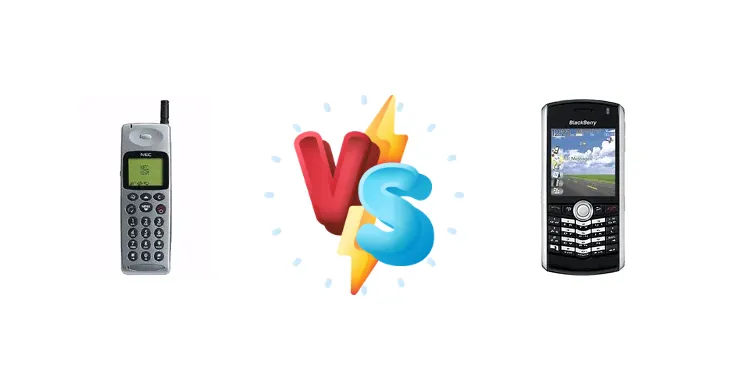
Comparing the NEC G9D+ and the BlackBerry Pearl 8100 is a study in mobile evolution. The Pearl 8100, released in 2006, represented a peak in the feature phone era, prioritizing email and efficient communication. The NEC G9D+, while details are scarce, likely emerged as NEC attempted to compete in the burgeoning smartphone market, representing a shift towards more complex functionality. This comparison explores how these devices addressed the needs of their respective times.
🏆 Quick Verdict
For the average user today, the BlackBerry Pearl 8100 holds more historical interest than practical value. Its 312 MHz Intel XScale processor is severely underpowered by modern standards. The NEC G9D+, despite limited available information, likely offered a more contemporary experience, even if it didn't achieve widespread recognition. The Pearl 8100 wins on nostalgia, but the G9D+ likely wins on usability, assuming it functioned as intended.
| Network |
|---|
| 2G bands | GSM 900 | GSM 850 / 900 / 1800 / 1900 |
| EDGE | No | Yes |
| GPRS | No | Yes |
| Technology | GSM | GSM |
| Launch |
|---|
| Announced | 1997 | 2006, September |
| Status | Discontinued | Discontinued |
| Body |
|---|
| Dimensions | 145 x 49 x 22.5 mm (5.71 x 1.93 x 0.89 in) | 107 x 50 x 14.5 mm (4.21 x 1.97 x 0.57 in) |
| Keyboard | - | QWERTY |
| SIM | Mini-SIM | Mini-SIM |
| Weight | 200 g (7.05 oz) | 89.5 g (3.14 oz) |
| Display |
|---|
| Resolution | 4 x 12 chars | 240 x 260 pixels (~161 ppi density) |
| Size | - | 2.2 inches, 15.6 cm2 (~29.1% screen-to-body ratio) |
| Type | Alphanumeric | 65K colors |
| | - | Wallpapers |
| Platform |
|---|
| CPU | - | 32-bit Intel XScale PXA272 312 MHz |
| OS | - | BlackBerry OS |
| Memory |
|---|
| Card slot | No | microSD (dedicated slot) |
| Internal | - | 64MB |
| Main Camera |
|---|
| Features | - | LED flash |
| Single | - | 1.3 MP |
| Video | - | No |
| Sound |
|---|
| 3.5mm jack | - | No |
| 35mm jack | No | No |
| Alert types | Vibration; Monophonic ringtones | Vibration; Downloadable polyphonic, MP3 ringtones |
| Loudspeaker | No | Yes |
| Comms |
|---|
| Bluetooth | No | 2.0 |
| Positioning | No | No |
| Radio | No | No |
| USB | - | Proprietary |
| WLAN | No | No |
| Features |
|---|
| Alarm | No | - |
| Browser | - | HTML |
| Clock | No | - |
| Games | No | - |
| Java | No | - |
| Messaging | SMS | - |
| | - | Document viewer (Word, Excel, PowerPoint, PDF)
Media player
SureType keyboard software
Organizer |
| Battery |
|---|
| Stand-by | 56 h | Up to 360 h |
| Talk time | 210 min | Up to 3 h 30 min |
| Type | Removable NiMH battery | Removable Li-Ion 900 mAh battery |
| Misc |
|---|
| Colors | - | Black, White, Red |
| Price | - | About 200 EUR |
NEC G9D+
- Potentially more modern processor architecture
- Likely offered a more contemporary smartphone experience
- May have included features absent in the Pearl 8100
- Limited information available
- Likely lacked the polish of established smartphone brands
- Potential software and support issues
BlackBerry Pearl 8100
- Iconic BlackBerry trackball interface
- Excellent keyboard for its time
- Strong focus on email and communication
- Underpowered processor by modern standards
- Limited app ecosystem
- Small screen size
Display Comparison
Without specific display details for the NEC G9D+, it's difficult to make a direct comparison. However, the BlackBerry Pearl 8100 featured a 2.26-inch TFT LCD screen with a resolution of 240x320 pixels. This was standard for the time, prioritizing readability over immersive visuals. Given NEC's history with displays, the G9D+ likely aimed for a similar or slightly improved pixel density, but would have lacked the advancements in color accuracy and brightness seen in later smartphone displays. The Pearl 8100's screen size was optimized for one-handed use and text-based communication.
Camera Comparison
Details regarding the NEC G9D+'s camera are unavailable. The BlackBerry Pearl 8100 featured a 2-megapixel camera, typical for its era. Image quality was limited by the sensor size and lack of advanced image processing. While capable of capturing basic photos, it wasn't a primary selling point. The G9D+, if equipped with a camera, likely offered a similar resolution, but potentially with slightly improved image processing capabilities, though significant advancements in camera technology wouldn't arrive until later smartphone generations.
Performance
The BlackBerry Pearl 8100's performance is defined by its 32-bit Intel XScale PXA272 processor clocked at 312 MHz. This CPU was designed for efficient power consumption and handling email and basic applications. It would struggle with modern web browsing or multitasking. The NEC G9D+, appearing later in the smartphone timeline, likely utilized a more powerful processor, potentially an ARM-based solution, though specifics are unavailable. The architectural difference – XScale being a legacy architecture – means the G9D+ likely had a performance advantage, even with a similar clock speed, due to instruction set improvements.
Battery Life
Battery capacity for both devices is difficult to ascertain precisely. The BlackBerry Pearl 8100, prioritizing long standby times, likely featured a battery around 900-1100 mAh. The NEC G9D+, potentially with a more power-hungry processor and larger display, may have required a similar or slightly larger battery. However, the efficiency of the Intel XScale processor in the Pearl 8100 likely translated to longer battery life under typical usage scenarios, focusing on email and calls, compared to the G9D+ if it attempted more complex tasks.
Buying Guide
Buy the NEC G9D+ if you are a collector interested in early attempts at smartphone design from a lesser-known manufacturer, and are willing to accept limited functionality and potential software issues. Buy the BlackBerry Pearl 8100 if you are a collector specifically interested in the BlackBerry ecosystem and the iconic trackball interface, valuing its historical significance as a business-focused mobile device.
Frequently Asked Questions
❓ Was the BlackBerry Pearl 8100 a good phone for its time?
Absolutely. The Pearl 8100 was highly regarded for its efficient email capabilities, comfortable keyboard, and iconic trackball. It was a staple for business professionals who needed to stay connected on the go, and its focus on communication set it apart from early smartphones.
❓ What operating system did the NEC G9D+ likely run?
Given its likely release timeframe, the NEC G9D+ probably ran a version of Windows Mobile, or potentially an early iteration of Android. NEC had experience with Windows Mobile devices, and this was a common OS for smartphones before Android's dominance. However, without specific details, this remains speculative.
❓ Could the BlackBerry Pearl 8100 browse the internet effectively?
While the Pearl 8100 *could* browse the internet, the experience was limited. The 312 MHz processor and small screen made loading complex webpages slow and cumbersome. It was best suited for accessing simple text-based websites or using BlackBerry's optimized mobile browser.